Drying Aral Sea Emerges as Major Carbon Emission Source, Warns New Study
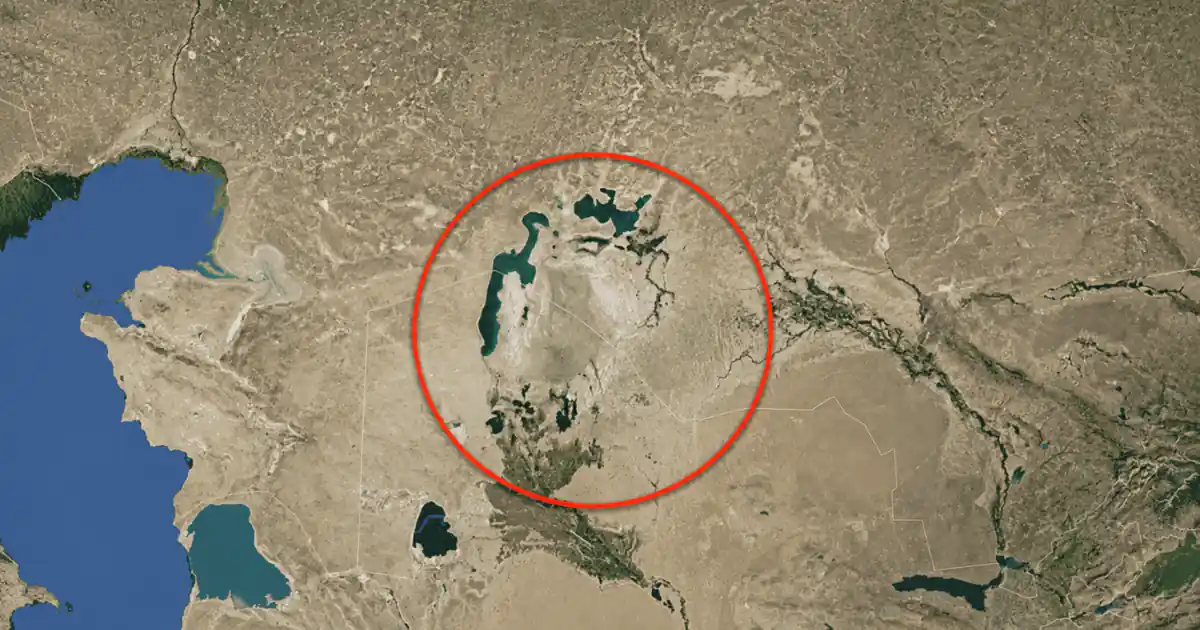
The Aral Sea has once again drawn global attention after a recent study found that its drying lake bed has released more than 200 teragrams (Tg) of carbon, transforming what was once a stable carbon sink into a significant source of greenhouse gas emissions. The finding highlights the long-term climatic consequences of large-scale environmental degradation.
Aral Sea's Drying Turns a Carbon Sink into a Major Emissions Source
A Reservoir Reversed
A new study published in the journal Science has found that the drying of the Aral Sea has released more than 200 teragrams of carbon, roughly 204 teragrams with an uncertainty margin of 53, from exposed lake-bed sediments since the desiccation began in the early 1960s. In carbon dioxide terms, this amounts to around 748 million metric tonnes released into the atmosphere, a quantity the researchers note is roughly three times Spain's annual emissions. The finding matters because lakes typically function as carbon sinks, trapping organic matter in their sediments for centuries; the Aral Sea's collapse has inverted that role entirely, turning a stable carbon reservoir into an active greenhouse gas source.
About the Aral Sea
The Aral Sea is a saline lake straddling the border between Uzbekistan and Kazakhstan, nestled in the climatically harsh heart of Central Asia to the east of the Caspian Sea. It was once the world's fourth-largest inland body of water, formed toward the end of the Neogene Period roughly 2.6 to 23 million years ago, fed by glacial meltwater carried through the Syr Darya and Amu Darya rivers. The region experiences a desert-continental climate marked by hot summers, cold winters, and sharp diurnal temperature swings, conditions that have only accelerated the lake's decline once its river inflows were disrupted.
How the Lake Disappeared
At its peak, the Aral Sea covered around 68,000 square kilometres across Kazakhstan's Kyzylorda and Aktobe regions and Uzbekistan's Karakalpakstan region. Its shrinkage began in the 1960s when the Soviet government diverted the Syr Darya and Amu Darya to irrigate surrounding desert land, primarily for cotton cultivation. By the 1980s, the lake had lost 80% of its volume, driving the extinction of native fish species and giving rise to the Aralkum Desert, a salt-crusted expanse now roughly the size of Ireland. Today the Aral Sea stands on the verge of complete disappearance, and the newly exposed lakebed continues to generate both ecological and atmospheric consequences.
Why the Carbon Release Matters
The study's lead author, Rafael Marcé of the Centre for Advanced Studies of Blanes, described the phenomenon in stark terms.
"There is a hidden carbon treasure beneath the Aral Sea. If these sediments remain exposed, carbon will continue to be released into the atmosphere," Marcé said, adding that reflooding the sea could shift that same carbon "from being a source of emissions to becoming part of the climate solution."
Co-author Núria Catalán framed the broader significance of the finding by noting that a drying lake is not merely a hydrological or ecological problem but one that alters the carbon cycle in ways climate accounting has largely overlooked. The research team also found that vegetation growth on the exposed lakebed offsets less than 1% of the released carbon, meaning natural regrowth offers essentially no mitigation. Significantly, the study estimates that around 605 megatonnes of CO2-equivalent carbon remains locked in the sediments that are still submerged, meaning emissions could as much as triple if the remaining water body also dries out completely.
Significance and the Way Forward
This research reframes the Aral Sea disaster from a purely regional ecological and humanitarian tragedy into a case study with global climate implications, since it demonstrates that desiccating lakes worldwide can convert into meaningful sources of greenhouse gas emissions, a pathway current climate accounting frameworks do not adequately capture. The findings strengthen the case for treating lake and wetland conservation as climate policy rather than solely as biodiversity or water-security concern, and open a potential avenue for carbon-credit financing tied to reflooding or rehabilitation efforts in Central Asia. For India and other regions grappling with shrinking inland water bodies, from the Sambhar Lake to depleting Himalayan glacial lakes, the study offers a cautionary parallel on the hidden atmospheric cost of water mismanagement.
Conclusion
The Aral Sea's transformation from the world's fourth-largest inland sea into a dust-choked desert has long stood as a textbook example of unsustainable water diversion, but this study adds a critical new dimension by quantifying its role as an active contributor to climate change. With over 200 teragrams of carbon already released and a comparable quantity still locked in submerged sediments, the case for revisiting water-sharing arrangements among Central Asian states and exploring partial reflooding gains fresh urgency, not only for regional ecological restoration but for global carbon accounting as a whole.