Hoollongapar Gibbon Sanctuary Emerges as Assam’s Rich Butterfly Biodiversity Hotspot
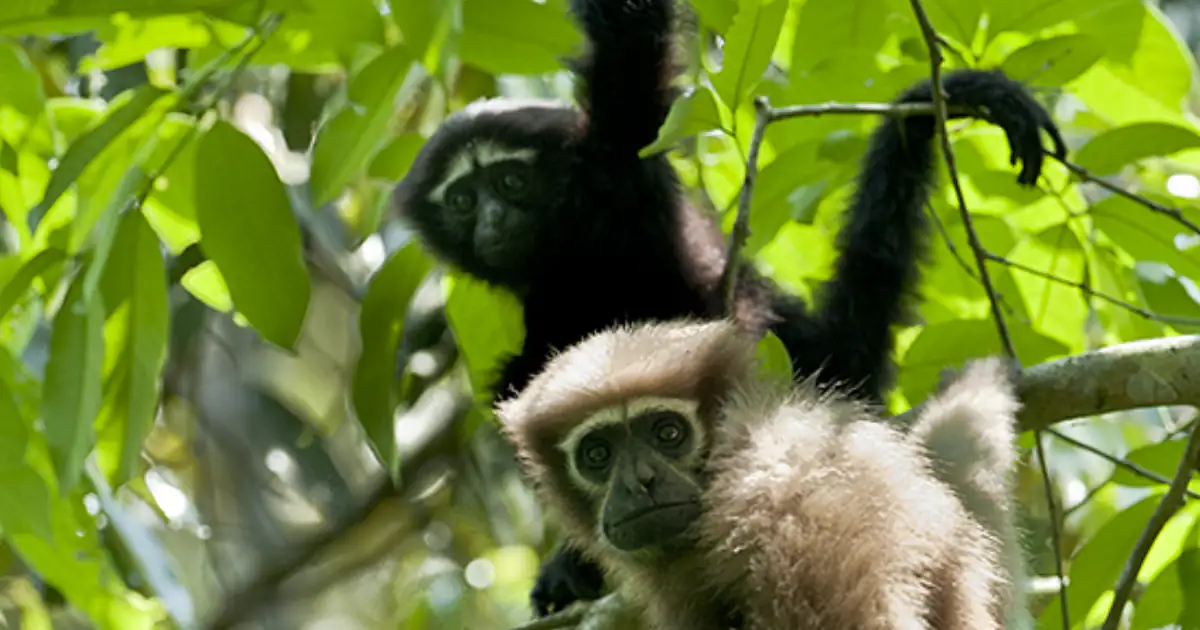
Hoollongapar Gibbon Wildlife Sanctuary in Assam has recently gained attention following the publication of a book highlighting its exceptional butterfly diversity. Besides being India's most important habitat for the endangered western hoolock gibbon, the sanctuary is also one of Assam's richest butterfly hotspots, supporting numerous rare and endemic species.
Hoollongapar Sanctuary: A Hidden Butterfly Paradise Beyond Its Famous Gibbons
A New Book Reveals a Hidden Diversity
Assam's Hoollongapar Gibbon Wildlife Sanctuary, long celebrated as home to the endangered western hoolock gibbon, has now been documented as one of the state's richest butterfly habitats through a new book by naturalist and wildlife photographer Sarangapani Neog. Titled Butterflies of Gibbon Wildlife Sanctuary, the 321-page work catalogues 281 butterfly species recorded across the sanctuary's 20.98 square kilometres, the product of survey work conducted between 2012 and 2024. The manuscript was reviewed by prominent lepidopterists including Isaac Kehimkar, Peter Smetacek, Purnendu Roy, and Saito Motoki before publication, and the book was formally launched by Assam's Education Minister, with the state's Governor and Chief Minister both praising it as a significant contribution to biodiversity documentation.
Neog notes that rare species such as the Assam Forest Bob, Red-veined Lancer, and Yellow-veined Lancer are found within the sanctuary, many of which lepidopterists regard as "dream butterflies" owing to their rarity and elusive nature.
According to Neog, the sanctuary's layered forest structure, ranging from towering Hollong trees in the upper canopy to dense shrubs and herbs closer to the ground, combined with its rich diversity of climbers and grasses, creates the ecological conditions that support such an unusually varied butterfly population within a comparatively small protected area.
About the Sanctuary
Hoollongapar Gibbon Wildlife Sanctuary is located in Assam's Jorhat district and takes its name from the hoolock gibbon, India's only ape species, of which it hosts one of the state's densest populations. The Bhogdoi River creates a waterlogged zone along the sanctuary's border, supporting semi-hydrophytic plant life. Vegetation across the reserve is predominantly evergreen and structured in distinct canopy layers, with tall hollong trees forming the upper canopy at around 90 feet, nahar trees occupying a middle canopy near 30 feet, and shrubs completing the lower layer.
A Rich Mammalian and Avian Community
Beyond its gibbons and butterflies, the sanctuary supports the Bengal slow loris, the only nocturnal primate found anywhere in northeast India, alongside six other primate species including the stump-tailed macaque, northern pig-tailed macaque, eastern Assamese macaque, rhesus macaque, and capped langur, making it one of the few sanctuaries in the country hosting seven primate species together. Indian elephants, tigers, leopards, jungle cats, wild boar, three types of civet, and four types of squirrel also inhabit the reserve. Its avian diversity is equally significant, with over 200 recorded bird species, including rare and threatened ones such as the white-winged wood duck, the Bengal florican, and the great hornbill.
Significance and the Way Forward
The book's findings reposition Hoollongapar as more than a single-species conservation success story centred on the hoolock gibbon; they reveal it as a multi-layered biodiversity hotspot whose butterfly wealth had gone comparatively undocumented for years. This kind of comprehensive species inventory carries direct conservation value, since establishing a documented baseline is essential for tracking future habitat degradation, informing forest management decisions, and building the scientific case for stronger protection of small, fragmented sanctuaries increasingly surrounded by tea estates and human settlement. It also strengthens the potential for ecotourism built around butterfly-watching, an activity that could diversify visitor interest beyond primate sightings alone and generate additional local economic incentive for conservation.
Conclusion
The documentation of 281 butterfly species within a sanctuary better known for its gibbons illustrates how India's protected areas frequently harbour ecological richness that extends well beyond their headline species, richness that citizen science and dedicated field research alone can bring to light. As Hoollongapar continues to face pressure from surrounding tea gardens and habitat fragmentation, this kind of granular biodiversity documentation becomes not just of academic interest but a practical tool for guiding conservation priorities in one of Assam's smallest yet most ecologically dense protected forests.