3-Tonne Scindia-Era Cannon Stolen from Historic Narwar Fort in Madhya Pradesh
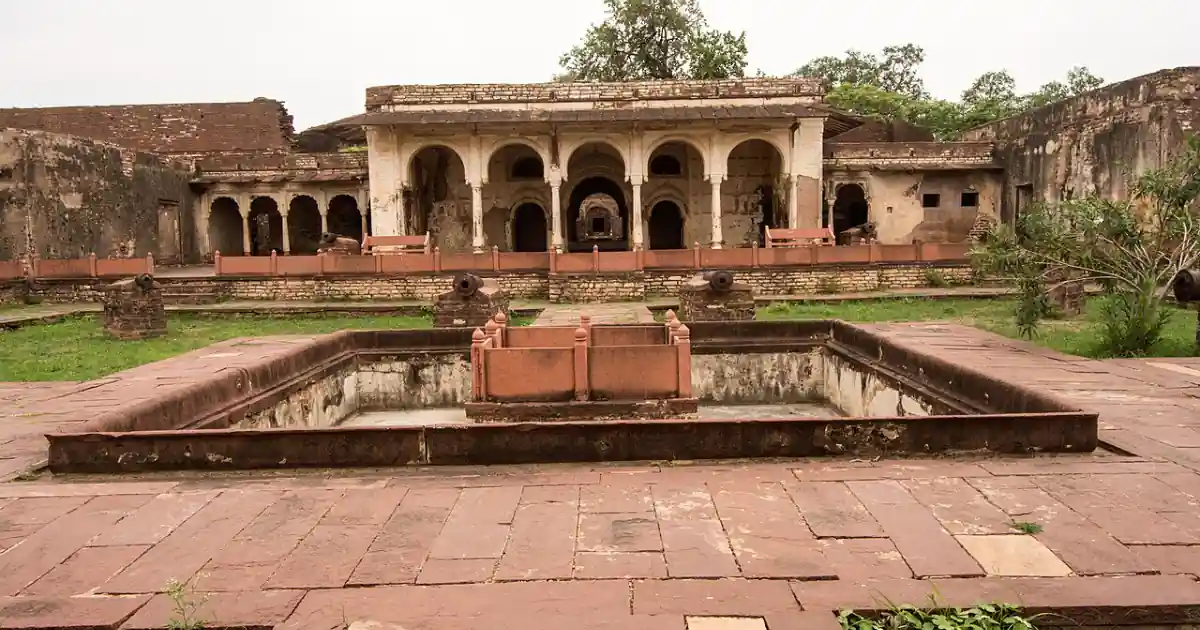
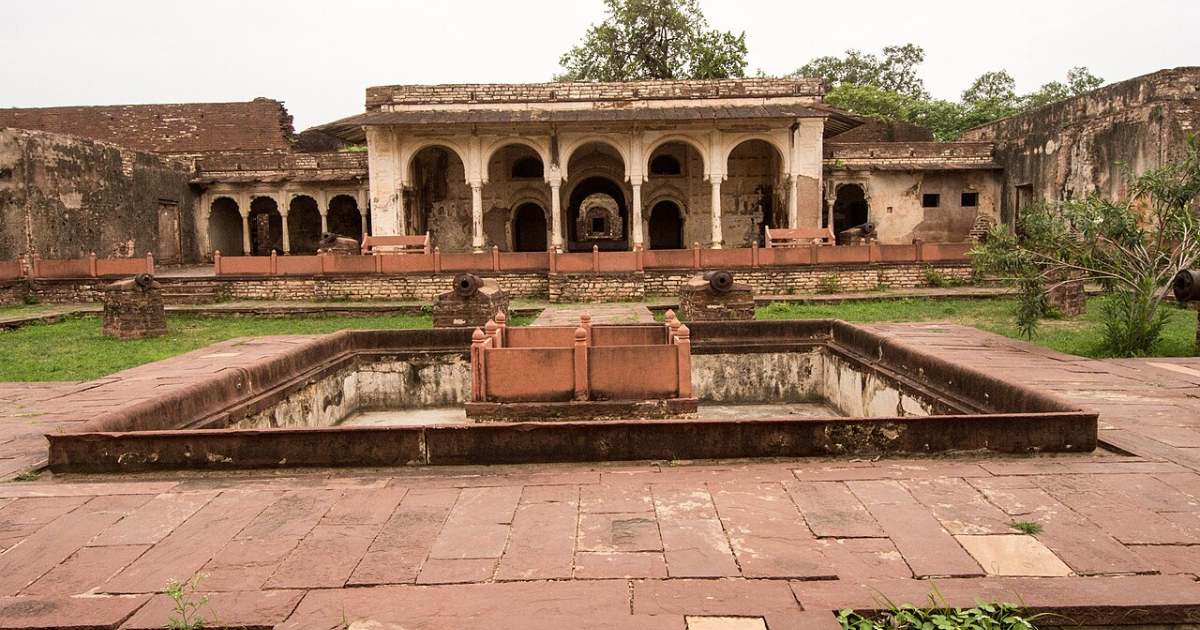
A 3,000 kg Scindia-era cannon was recently stolen from Narwar Fort in Madhya Pradesh, drawing attention to this historic hill fort and the need for stronger protection of India's cultural heritage.
The Narwar Fort Cannon Heist
Context
A brazen, meticulously planned theft has struck one of Madhya Pradesh's most historically layered monuments. On the intervening night of July 15-16, 2026, an armed gang of roughly 25 to 30 men entered Narwar Fort in Shivpuri district through its rear entrance in a loading vehicle, overpowered the lone security guard on duty, and made away with a nearly 3,500-kilogram, 400-year-old Scindia-era cannon. The incident has exposed severe gaps in the protection afforded to India's centrally and state-protected monuments, and has raised fears of a link to organised antique-smuggling networks operating across state and international borders.
About Narwar Fort
Narwar Fort stands in Shivpuri district of Madhya Pradesh, perched roughly 500 feet above the surrounding plains atop a steep scarp of the Vindhya range, and its grounds sprawl across nearly 8 square kilometres. Madhav National Park lies a short distance to its west. The town below the fort is traditionally identified with Nalapura, the legendary capital of Raja Nala from the Mahabharata, a name it retained until around the 12th century. The fort itself is said to have been constructed by the Kachwaha Rajputs in the 10th century, and it subsequently passed through the hands of the Parihara and Tomara Rajputs before falling to Mughal control in the 16th century. It was eventually annexed by the Scindia rulers of Gwalior in the early 19th century, a period whose legacy is precisely what the stolen cannon represents.
Architectural Character
The fort's interior is divided by cross walls into four sections known as the ahata and dholaahata, reflecting a defensive layout typical of medieval Rajput hill forts. Its architecture favours flat ceilings, fluted columns, and multifold arches, all rendered in a distinctly Rajput idiom, while the inner walls of its palaces carry decorative work in bright paint and inlaid glass beads. Outside the fort's walled town stand memorial pillars dedicated to the Tomar chiefs, adding a commemorative layer to the site's built heritage.
Details of the Theft
The stolen artefact was one of fourteen historic cannons displayed together in the fort's Open Kacheri, or open court complex, a structure believed to date to the 16th century and renovated in 1925 on the orders of Maharaja Madhavrao Scindia. Investigators reconstructing the crime found that the thieves wrapped the cannon in mattresses and quilts, mounted it on an improvised iron trolley fitted with bearings, and rolled it downhill for roughly 3,000 feet before loading it onto a waiting vehicle.
the lone guard on duty, armed with nothing but a stick and no torch, said the men threatened to kill him, leaving him no option but to move away
Police recovered a mattress, a quilt, a length of pipe, and heavy-vehicle tyre marks along the escape route, suggesting the operation was executed in two coordinated stages. The remaining thirteen cannons, made of mixed metals including brass, copper, and bronze and some inscribed in Persian and Devanagari, continue to stand at the site.
Significance of the Stolen Artefact
The missing cannon measured approximately five feet ten inches in length and thirty inches in width, and was reportedly forged using the traditional Ashta Dhatu, or eight-metal alloy, technique associated with historic Indian artillery casting. Its rarity, inscriptions, and craftsmanship make it far more valuable than its raw metal content; local estimates suggest such a piece could fetch several crores of rupees on the illegal international antiquities market. Officials from the State Archaeology Department have described its disappearance as a significant loss to Madhya Pradesh's cultural heritage, and a criminal complaint has been registered at Narwar police station, with the Karera Sub-Divisional Police Officer confirming that a possible link to an international antique-smuggling gang is being investigated.
Way Forward
The incident has starkly exposed the inadequacy of security arrangements at protected but remote heritage sites, many of which rely on a skeletal, poorly equipped watch staff wholly mismatched against organised, armed criminal groups. A credible response would require the State Archaeology Department, in coordination with the Archaeological Survey of India where applicable, to urgently audit security at all monuments housing movable heritage objects of comparable value, install perimeter surveillance and access-control infrastructure at remote forts, and coordinate with state police and central agencies on tracking possible antiquities-smuggling networks. Cataloguing and photographic documentation of movable artefacts at heritage sites, often absent or outdated, would also aid both recovery efforts and future deterrence.
Conclusion
The overnight disappearance of a three-and-a-half-tonne cannon from a fortified hilltop monument is not merely a sensational crime story; it is a pointed reminder of how exposed India's dispersed and often under-resourced heritage sites remain to organised theft. Narwar Fort's long history, spanning Rajput dynasties, Mughal conquest, and Maratha consolidation under the Scindias, makes every artefact within it a fragment of a larger civilisational record, and its loss diminishes that record irreversibly unless swiftly recovered. The episode should serve as a trigger for a systematic strengthening of heritage security across Madhya Pradesh and beyond, rather than a one-off scramble limited to Narwar alone.