Mangal Pandey: Pioneer of the Revolt of 1857 and India's First War of Independence
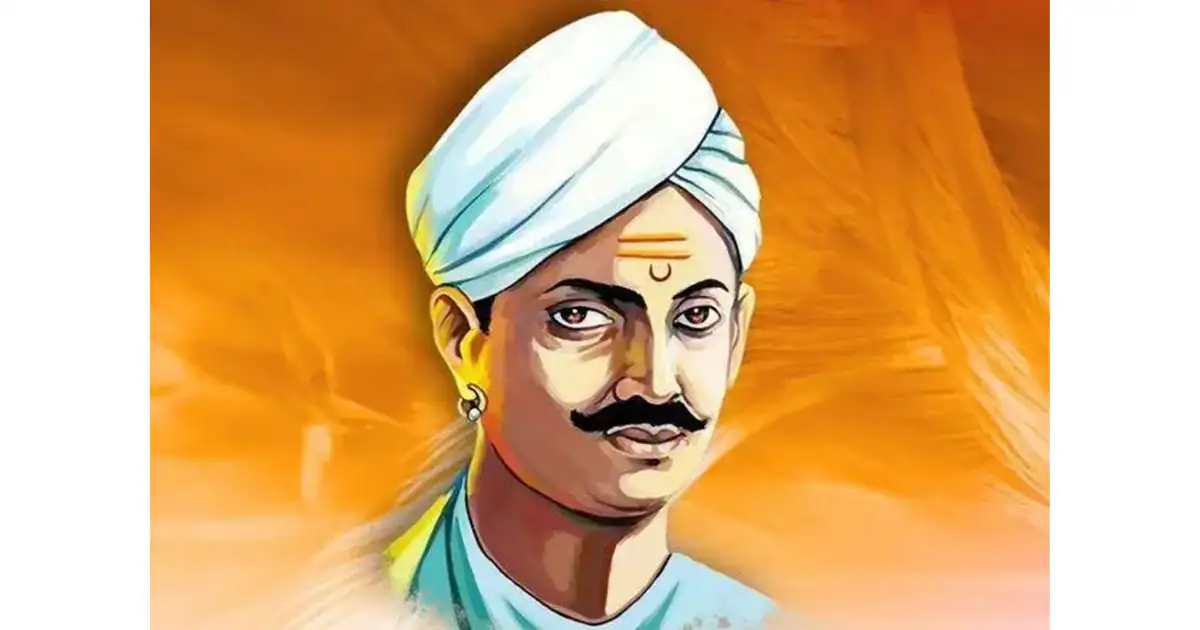
Mangal Pandey was one of the earliest and most celebrated revolutionaries of India's freedom struggle. His defiance against the British East India Company in 1857 became the spark that ignited the Revolt of 1857, regarded as India's First War of Independence.
Mangal Pandey: The Spark of 1857
The Prime Minister recently paid tributes to the great revolutionary Mangal Pandey on his birth anniversary, observed on July 19. In a message shared on social media, the Prime Minister said Mangal Pandey's courageous life continues to fill every Indian with pride even today, adding:
for the protection of the pride and honour of the motherland, he sacrificed everything he had
Union Home Minister Amit Shah, Defence Minister Rajnath Singh, Lok Sabha Speaker Om Birla, and Union Health Minister J.P. Nadda also paid homage on the occasion, with Shah noting that the spark of revolution ignited by Pandey's sacrifice later transformed into the mighty flame of independence. These annual tributes reflect the enduring symbolic weight Mangal Pandey continues to hold in India's collective memory of its freedom struggle.
Early Life
Mangal Pandey was born on July 19, 1827, in Ballia district of present-day Uttar Pradesh. He joined the army of the British East India Company in 1849 at the age of 22, going on to serve as a sepoy in the 6th company of the 34th Bengal Native Infantry stationed at Barrackpore, near Calcutta. Little in his early record distinguished him from thousands of other native soldiers then serving under Company colours, yet within eight years of enlistment he would become the flashpoint for the most significant armed challenge the East India Company had faced in India.
The Immediate Trigger
The proximate cause of Pandey's revolt was the introduction of the new Pattern 1853 Enfield rifle cartridges, which were widely believed to be greased with animal fat, a combination of cow and pig tallow. This deeply offended the religious sentiments of both Hindu and Muslim sepoys, since the cartridges had to be bitten open before loading, and rumours of this practice spread rapidly through cantonments across northern India. For soldiers already uneasy about the erosion of their customs and status under Company rule, the greased cartridge became the immediate provocation for open defiance.
The Act of Revolt
On March 29, 1857, Mangal Pandey attacked two British officers at Barrackpore, an act widely regarded as the first major incident of what came to be known as the Revolt of 1857, the Sepoy Mutiny, or India's First War of Independence. He was overpowered, arrested, and subsequently court-martialled. Pandey was hanged to death on April 8, 1857, in Barrackpore, at the age of 29, an execution intended by the Company to deter further unrest among the ranks.
Consequences and Legacy
Far from suppressing rebellion, Pandey's defiance and subsequent execution triggered a wave of uproar that spread rapidly across northern and central India, drawing in disaffected sepoys, deposed rulers, and peasants alike into what became a broad-based uprising against Company rule. The scale of the revolt forced the British Crown to fundamentally reassess its administration of India.
the mass upheaval that followed compelled the British to pass the Government of India Act, 1858, formally ending Company rule and transferring governance directly to the Crown
This legislative aftermath marked one of the most consequential institutional shifts in colonial India, ending over a century of East India Company administration and inaugurating the era of direct Crown rule that would persist until 1947.
Significance
Mangal Pandey's act is significant less for its immediate military consequence, since his individual attack was quickly contained, and more for its symbolic role as the spark that exposed deep-seated grievances among Indian soldiers over religious sensitivity, social dignity, and the erosion of traditional privileges under an increasingly intrusive colonial administration. His story has since become emblematic of individual courage catalysing collective resistance, a theme that recurs throughout India's freedom movement and continues to be invoked by political leaders during commemorative tributes.
Conclusion
Mangal Pandey's brief life and dramatic act of defiance at Barrackpore occupy an outsized place in India's national memory precisely because they crystallised years of accumulated grievance into a single, unmistakable act of rebellion. His execution did not end the unrest he ignited; instead, it accelerated a nationwide uprising that reshaped the constitutional foundations of British rule in India. Annual tributes from the nation's leadership to Mangal Pandey are, therefore, not merely ceremonial gestures but a continuing acknowledgment of how individual acts of courage can alter the course of a nation's history.