India Approves QDENGA, First Dengue Vaccine for Prevention of All Four Serotypes
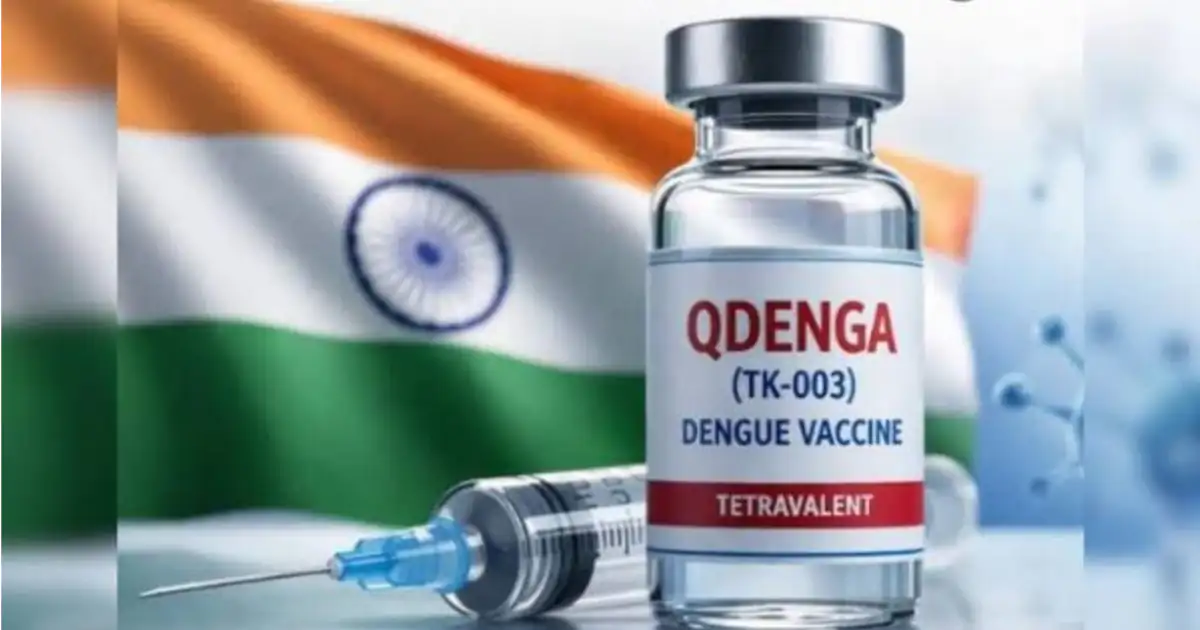
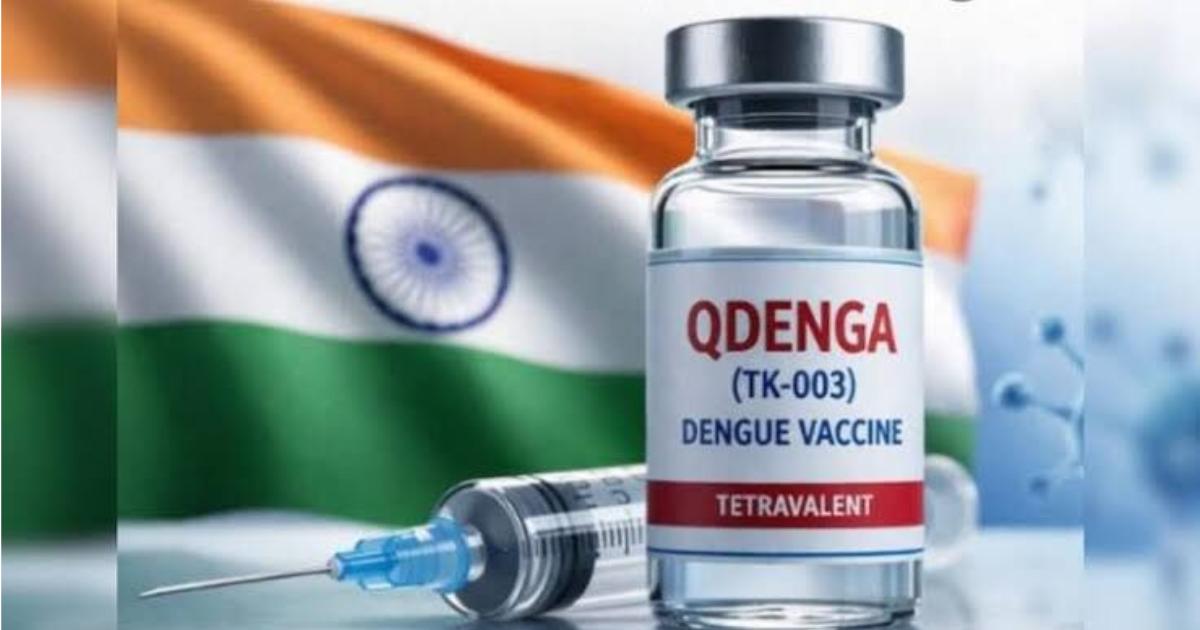
The Drug Controller General of India (DCGI) has granted market authorisation to QDENGA (TAK-003), developed by Takeda Biopharmaceuticals, making it the first dengue vaccine approved in India.
DCGI Grants Market Authorisation to QDENGA — India's First Dengue Vaccine
The Development
The Drug Controller General of India (DCGI) has granted market authorisation to QDENGA (TAK-003), Takeda Biopharmaceuticals India's dengue vaccine, making it the first dengue vaccine ever approved for use in the country. The approval was formally granted on 20 July 2026 under Form CT-20 of the New Drugs and Clinical Trials Rules, 2019, following clearance by the Subject Expert Committee (SEC), and covers use in individuals aged four to sixty years. Announcing the milestone, Takeda noted that the approval comes at a critical juncture, since reported dengue cases in India have risen roughly elevenfold over the past two decades.
"TAK-003 is India's first-ever approved dengue vaccine and was approved for use in individuals regardless of previous dengue exposure, without the need for pre-vaccination testing."
This framing from Takeda's own announcement captures the vaccine's most practically significant feature for a country of India's scale: the absence of any pre-screening requirement removes what has historically been the single largest operational obstacle to dengue vaccination in high-burden, high-population settings. As part of the approval conditions, the SEC has mandated that the manufacturer conduct post-marketing safety and effectiveness studies within six months of rollout, covering different regions and circulating serotype patterns, to validate real-world performance specific to India.
About QDENGA (TAK-003)
QDENGA is a dengue vaccine developed by the Japanese pharmaceutical company Takeda. It is a live-attenuated, tetravalent vaccine, meaning it uses a weakened virus formulation engineered to provide protection against all four circulating dengue virus serotypes — DENV-1 through DENV-4 — all of which are present in India. The vaccine's design is built around a live-attenuated dengue serotype-2 virus, which supplies the genetic "backbone" shared across all four vaccine components. It is administered as a two-dose regimen given three months apart, and critically, it can be given to individuals irrespective of whether they have had a prior dengue infection, with no pre-vaccination screening required — a distinct advantage over some earlier dengue vaccine candidates that mandated seropositivity testing before administration.
QDENGA has been evaluated across Phase 1, 2, and 3 clinical trials involving more than 28,000 participants worldwide, including the pivotal TIDES (Tetravalent Immunization against Dengue Efficacy Study) trial.
Ahead of the Indian approval, QDENGA had already secured authorisation in more than 40 countries, including the European Union, the United Kingdom, Brazil, Indonesia, and Argentina, and has been distributed through public immunisation programmes in several of these, including Brazil's National Immunization Program. India's approval is expected to be followed by a rollout in the first half of 2027, positioned as a shift from India's traditionally reactive vector-control approach toward a preventive public-health strategy against dengue.
Understanding Dengue as a Disease
Dengue is a mosquito-borne tropical disease caused by the dengue virus and transmitted primarily through the bite of infected Aedes aegypti and, to a lesser extent, Aedes albopictus mosquitoes. In most infected individuals, the disease produces mild, flu-like symptoms such as fever, headache, and joint pain. However, a subset of patients progresses to severe dengue, characterised by potentially fatal internal bleeding, plasma leakage, and organ damage, which can be life-threatening without timely medical care.
Dengue has become one of the most widespread and rapidly increasing vector-borne diseases globally, with endemic transmission recorded in over 100 to 125 countries across Asia, Africa, the Americas, and the Western Pacific. India carries a disproportionately large share of this global burden: various epidemiological estimates place India's contribution at around one-third of global dengue infections, driven by its tropical and sub-tropical climate, dense urban mosquito-breeding conditions, and the co-circulation of all four viral serotypes across different regions, which raises the risk of more severe secondary infections.
Significance and Way Forward
The approval of QDENGA carries several layers of significance for India's public health landscape. First, it marks India's transition from a purely vector-control-based response to dengue — fogging, larvicide use, and surveillance — toward a preventive immunisation-based strategy, which is a meaningfully different public-health paradigm for a neglected tropical disease of this scale. Second, the vaccine's design, which requires no pre-vaccination screening and works regardless of prior exposure, is particularly well-suited to India's operational realities, where mass seroprevalence testing before vaccination would be logistically and financially prohibitive across a population as large and geographically dispersed as India's.
At the same time, several challenges will shape how effectively this approval translates into on-ground impact. QDENGA is understood to be a disease-modifying vaccine rather than a transmission-blocking one — it reduces the severity of clinical illness and hospitalisation risk but does not prevent infection outright or eliminate outbreaks entirely. Pricing, cold-chain logistics for a live-attenuated product, and integration into India's existing immunisation infrastructure (whether through the private market initially or eventual inclusion in public programmes) will determine how quickly and equitably the vaccine reaches India's dengue-endemic states. The SEC-mandated six-month post-marketing study will also be an important checkpoint, given that serotype circulation patterns and population immunity profiles in India differ from the settings in which much of QDENGA's global trial data was generated.
Conclusion
The DCGI's approval of QDENGA represents a landmark moment in India's fight against dengue, introducing the country's first vaccine-based tool against a disease that has grown from a periodic urban outbreak into a major recurring public-health burden over the past two decades. While the vaccine does not offer complete protection against infection, its tetravalent, no-screening design makes it uniquely practical for deployment at India's scale, and its rollout — expected through 2027 — will be a closely watched test of how effectively immunisation can complement India's long-standing vector-control efforts in reducing the country's outsized share of the global dengue burden.