Moldova: Eastern European Nation Hosts First-Ever Visit by an Indian President
The President of India recently visited Moldova, marking the first-ever visit by an Indian President to the country, reflecting the growing diplomatic engagement between India and Moldova.
President Droupadi Murmu's Historic Visit to Moldova
The Development
President Droupadi Murmu arrived in Chisinau, Moldova, on 20 July 2026, marking the first-ever visit by an Indian Head of State to the country since the establishment of diplomatic relations between the two nations on 20 March 1992. The visit, spanning 19–21 July 2026, forms the first leg of a three-nation European tour that will also take President Murmu to North Macedonia and Romania. On arrival at Chisinau International Airport, she was received by Moldova's Deputy Prime Minister and Foreign Minister, Mihai Popșoi. Her itinerary includes bilateral talks with President Maia Sandu, engagement with Parliament Speaker Igor Grosu, an interaction with the Moldova–India Parliamentary Friendship Group, a keynote address at a business forum, and a meeting with the local Indian diaspora.
"This landmark visit reflects the importance India attaches to its friendship with Moldova and our shared aspiration to build a forward-looking partnership for the twenty-first century."
This assessment, offered by India's Ambassador to Romania and Moldova ahead of the visit, frames the trip as more than ceremonial — it signals India's intent to formalise a relationship that had, until recently, remained largely dormant. Notably, bilateral political consultations between the two countries had resumed in New Delhi in October 2024 after a gap of 21 years, and the current visit is intended to elevate ties from what one Moldovan official statement described as "political goodwill" to a broader, sector-driven partnership. The visit's substantive agenda spans expanding Moldovan agricultural exports to the Indian market, attracting Indian investment, and deepening cooperation in renewable energy, digital transformation, healthcare, and information technology. President Murmu travelled with a business delegation of several dozen Indian entrepreneurs, underscoring the commercial dimension of the trip. Moldova is also home to a small but significant Indian community of around 2,000 citizens, the majority of whom are medical students, making Indians one of the country's more prominent international student groups.
About Moldova — Location and Boundaries
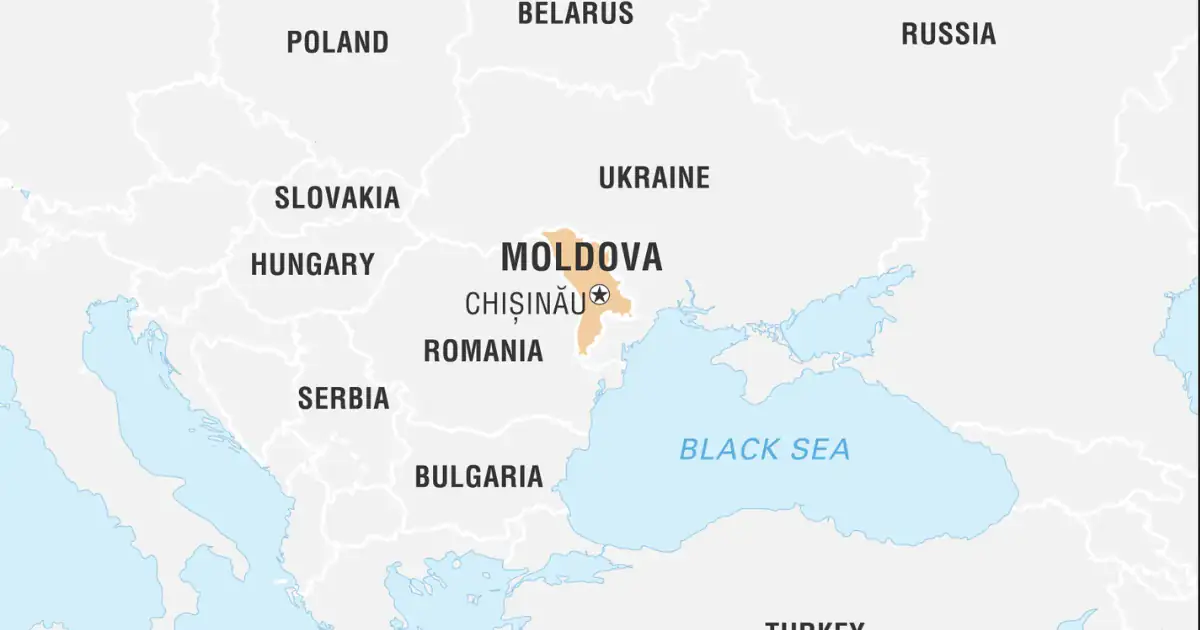
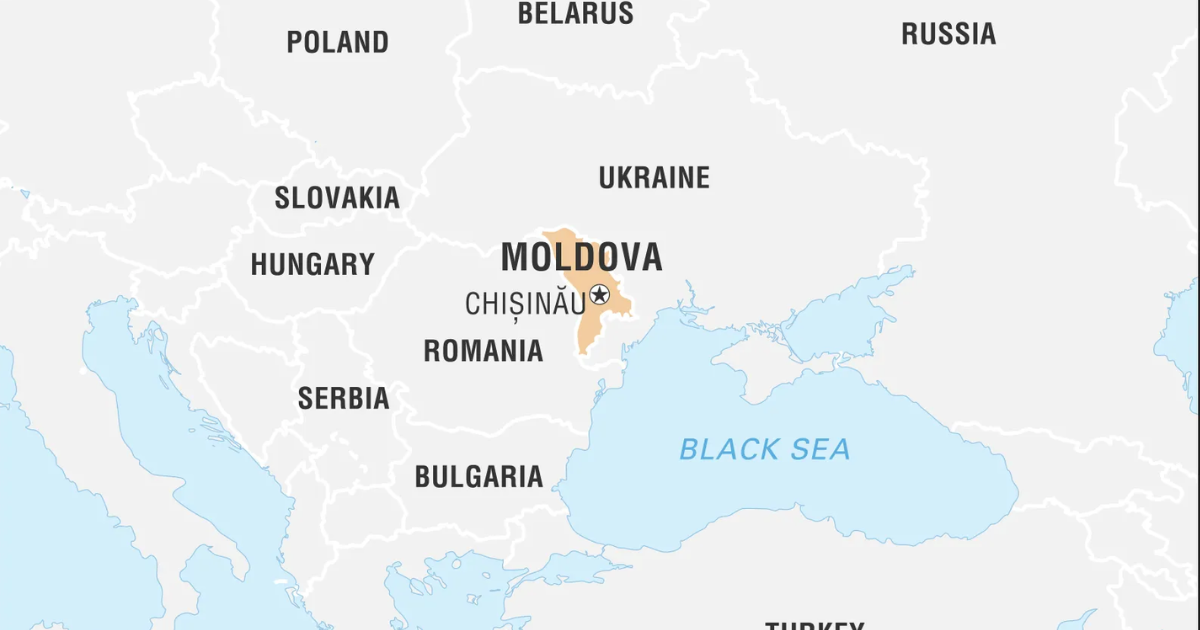
Moldova, officially the Republic of Moldova, is a landlocked country in Eastern Europe, situated east of the Carpathian Mountains between the Prut and Dniester Rivers. It shares a border with Romania to the west, while Ukraine encloses it to the north, east, and south. Moldova's total area is approximately 33,846 square kilometres, making it one of Europe's smaller states.
Historical Background
Moldova's territory was historically known as Bessarabia and formed an integral part of the Romanian principality of Moldavia until 1812, when it was ceded to the Russian Empire by the Ottoman sultan, its suzerain at the time. Bessarabia remained a province of the Russian Empire until after the First World War, when it became part of Greater Romania. It reverted to Russian control during 1940–41, and following the Second World War, it was combined with a strip of formerly Ukrainian territory — the Moldavian Autonomous Soviet Socialist Republic on the left bank of the Dniester River — to form the Moldavian Soviet Socialist Republic. Upon the Soviet Union's collapse in August 1991, this republic declared independence and adopted the name Moldova, a lineage that continues to shape its contested Transnistria region east of the Dniester to this day.
Governance, Economy, and Society
Moldova functions as a republic, with a president serving as head of state and a prime minister as head of government. Its capital is Chisinau, and its currency is the Moldovan Leu (MDL). Romanian is the official language, while Russian, Gagauz, and Ukrainian are spoken as significant minority languages, reflecting the country's layered demographic history. Moldova's economy remains predominantly agricultural, and wine production occupies a central place in its national identity, with the country internationally recognised for its extensive vineyards and centuries-old winemaking traditions.
Significance and Way Forward
President Murmu's visit carries meaningful strategic significance for India's broader Eastern European engagement. Moldova occupies a geographically sensitive position between Romania, an EU and NATO member, and Ukraine, currently at war — making it a country of growing geopolitical relevance despite its small size. For India, deepening ties with Moldova offers an entry point into a region where Indian diplomatic and commercial presence has traditionally been limited, while for Moldova, India represents access to one of the world's largest and fastest-growing economies at a moment when the country is also pursuing closer integration with the European Union.
Going forward, the relationship's trajectory will likely depend on translating this visit's symbolic weight into concrete outcomes — expanded market access for Moldovan agricultural and wine exports, Indian investment inflows, and structured cooperation in renewable energy and digital transformation, as flagged during the visit. Sustaining momentum will require follow-through mechanisms such as regular political consultations, given that the two countries had gone over two decades without formal dialogue before the 2024 resumption.
Conclusion
President Droupadi Murmu's visit to Moldova is a landmark moment in India's diplomatic outreach to Eastern Europe, closing a 34-year gap since the establishment of bilateral relations without a single presidential visit. Beyond its ceremonial significance, the trip signals India's intent to build a substantive, sector-driven partnership with a strategically positioned but historically overlooked European nation, and its long-term success will be measured by whether the trade, investment, and cooperation commitments made during this visit are institutionalised in the years ahead.