Pachycheles ravichandrani: New Porcelain Crab Species Discovered in Lakshadweep Coral Reefs
Scientists have recently discovered Pachycheles ravichandrani, a new species of porcelain crab, from the shallow coral reefs of the Lakshadweep Islands, adding to India's rich marine biodiversity.
New Porcelain Crab Species Discovered in Lakshadweep — Pachycheles ravichandrani
The Development
Scientists have described a new species of porcelain crab, Pachycheles ravichandrani, discovered living in the shallow coral reefs surrounding the Lakshadweep Islands. The species was identified during a survey of the rocky shores of Agatti Island and has been formally published in the taxonomic journal Zootaxa. The description was authored by researchers Balamurugan Sureandiran, Divya Prema Radhakrishnan, Sendhil Kumar, and Thipramalai Thangappan Ajith Kumar, and appeared in Zootaxa volume 5849, in July 2026.
"Pachycheles ravichandrani sp. nov. shares similar morphology with P. garciaensis and P. setiferous... however, is differentiated by the presence of setae along lateral ridges and posterior margin of carapace, minor cheliped with distinct gap between fingers and cutting edge of minor cheliped truncate."
This description from the original species account establishes precisely why the crab qualifies as a distinct new species rather than a variant of already-known relatives. To validate its taxonomic status beyond morphological comparison alone, researchers additionally conducted molecular analysis using COI and 16S rRNA genes, and the resulting phylogenetic reconstruction consistently placed P. ravichandrani as a distinct, well-supported evolutionary lineage separate from all its congeners — a level of genetic confirmation that strengthens the case for its recognition as an entirely new species rather than a regional colour variant.
What Porcelain Crabs Are
Although porcelain crabs resemble true crabs in general body shape, they are taxonomically placed closer to squat lobsters within the broader decapod order. They belong to the family Porcellanidae, distinguishable from true crabs (Brachyura) by features such as a reduced and often carapace-hidden fifth pair of legs, elongated antennal flagella, and an abdomen that does not tuck closely beneath the body the way it does in true crabs. The family's common name draws from the fragility of these animals' bodies, likened to porcelain, and their pronounced tendency to shed limbs readily — a defensive strategy known as autotomy — when threatened by predators, allowing them to escape at the cost of a claw or leg that can later regenerate.
Discovery Context and Morphological Features
Pachycheles ravichandrani was found during a survey of Agatti Island's rocky intertidal shores, hiding among rock boulders covered in coralline algae at depths of less than one metre — a habitat niche typical of many porcellanid species, which favour crevices and algal-covered substrates in the shallow reef zone. The crab is notably small and possesses a distinctive sub-circular shell shape. A key identifying feature is the presence of specialised hair-like structures, called setae, distributed along the ridges and posterior margin of its carapace — a trait absent in its closest morphological relatives, P. garciaensis and P. setiferous. It is further distinguished by a clear gap between the fingers of its smaller (minor) claw and a uniquely truncate cutting edge on that claw, a combination of features not observed in comparable species from the same genus.
Visual Description
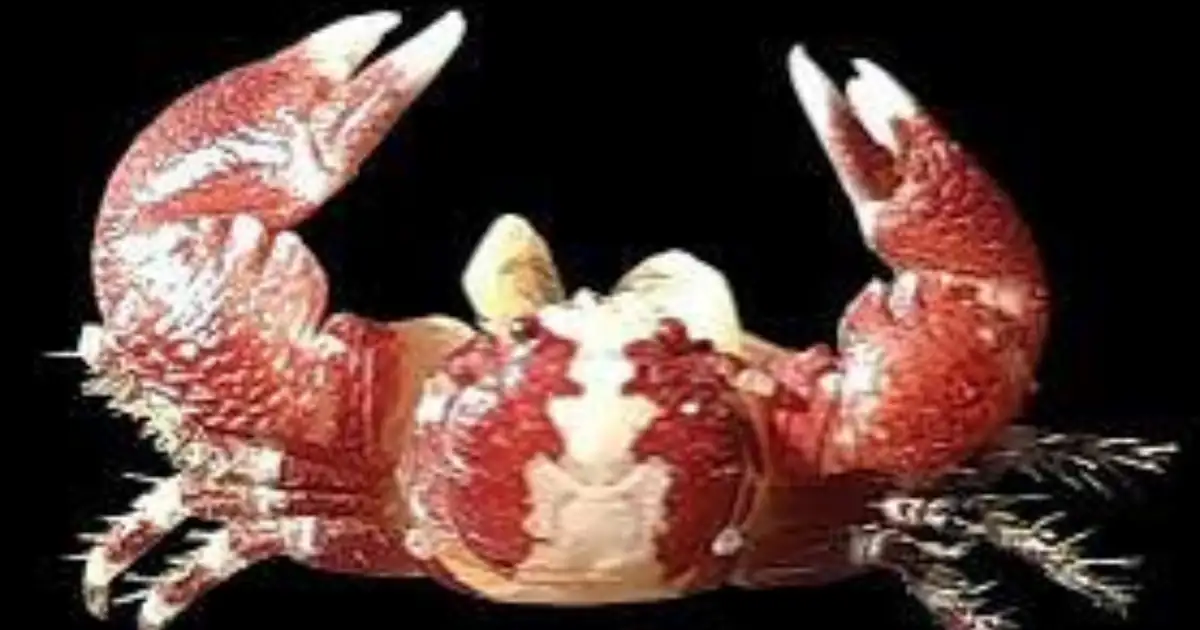
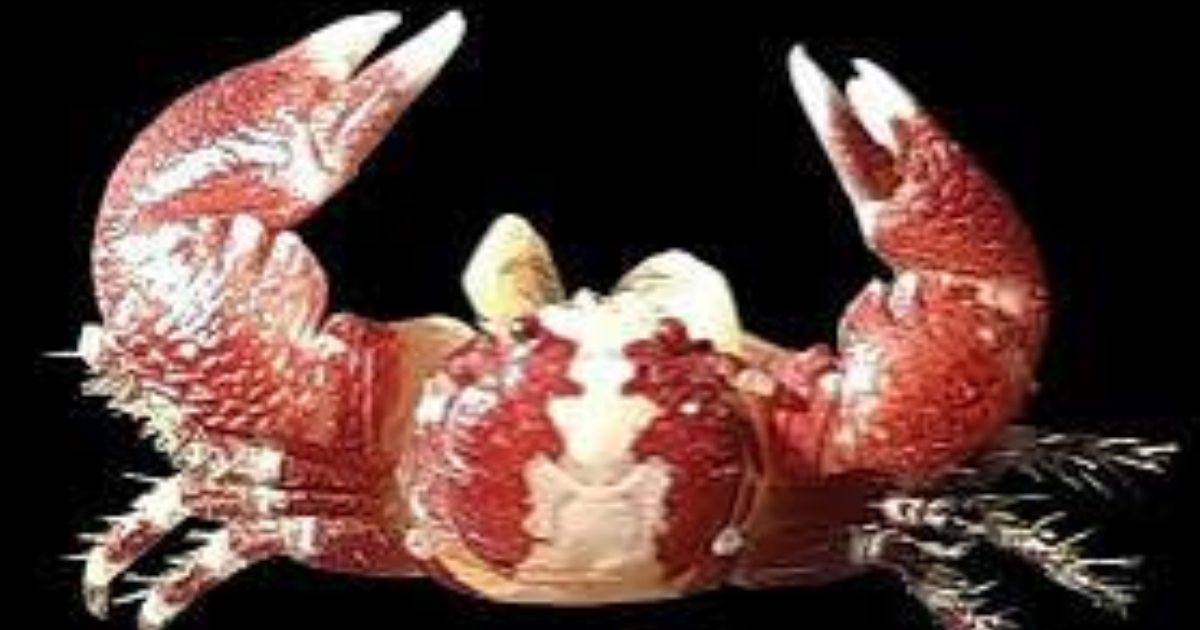
In its natural habitat, Pachycheles ravichandrani is visually striking, sporting a deep, dark carmine-red shell adorned with a white blotch running down its back and white spots scattered across its claws. Its walking legs carry a distinctive pattern of horizontal carmine stripes, making the species readily recognisable in the field even before formal taxonomic examination — a colouration pattern that likely serves a camouflage or signalling function within the coralline-algae-covered rocky habitats it occupies.
Significance and Way Forward
The discovery of Pachycheles ravichandrani adds to a small but growing body of taxonomic work documenting the porcellanid crab fauna of India's western coast and island territories, an area that has historically been under-surveyed relative to its actual biodiversity. Earlier studies from Agatti Island and the broader Lakshadweep archipelago have similarly reported first records of related Petrolisthes and Pachycheles species, suggesting that Lakshadweep's shallow reef and intertidal rocky-shore habitats continue to harbour undocumented crustacean diversity. This pattern underscores the ecological importance of India's coral reef systems not merely as fisheries or tourism assets, but as reservoirs of taxonomic novelty that remain incompletely catalogued.
Going forward, continued systematic surveys of Lakshadweep's intertidal and shallow subtidal zones, combined with molecular barcoding techniques of the kind used to validate this species, are likely to reveal further undescribed porcellanid and other crustacean diversity. Such documentation also carries conservation relevance, since formally described species can be more effectively factored into marine protected area planning and reef conservation policy for the Lakshadweep Islands, which face ongoing pressures from coral bleaching and coastal development.
Conclusion
The description of Pachycheles ravichandrani from the shallow coral reefs of Agatti Island represents a meaningful addition to India's marine biodiversity record, combining classical morphological taxonomy with modern molecular validation to confirm a genuinely new porcelain crab species. Its discovery reinforces the broader scientific case for sustained biodiversity surveys of India's island ecosystems, which continue to yield previously unrecorded species even in relatively well-visited locations such as Lakshadweep.