Chabahar Port: India’s Strategic Gateway to Afghanistan and Central Asia Faces Fresh Uncertainty
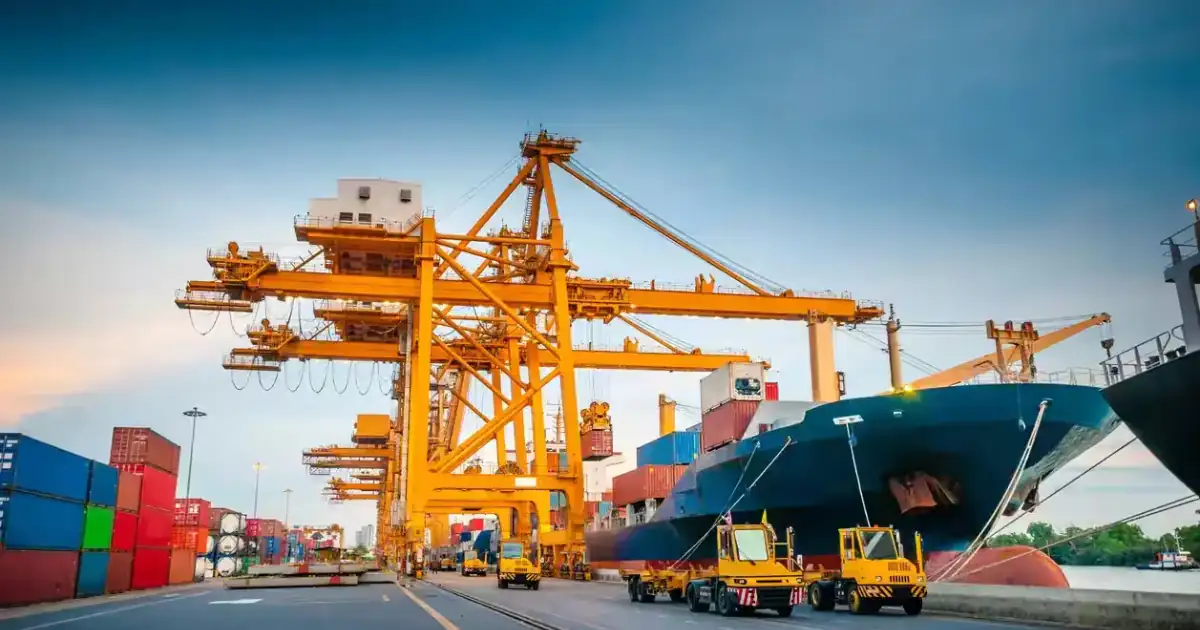
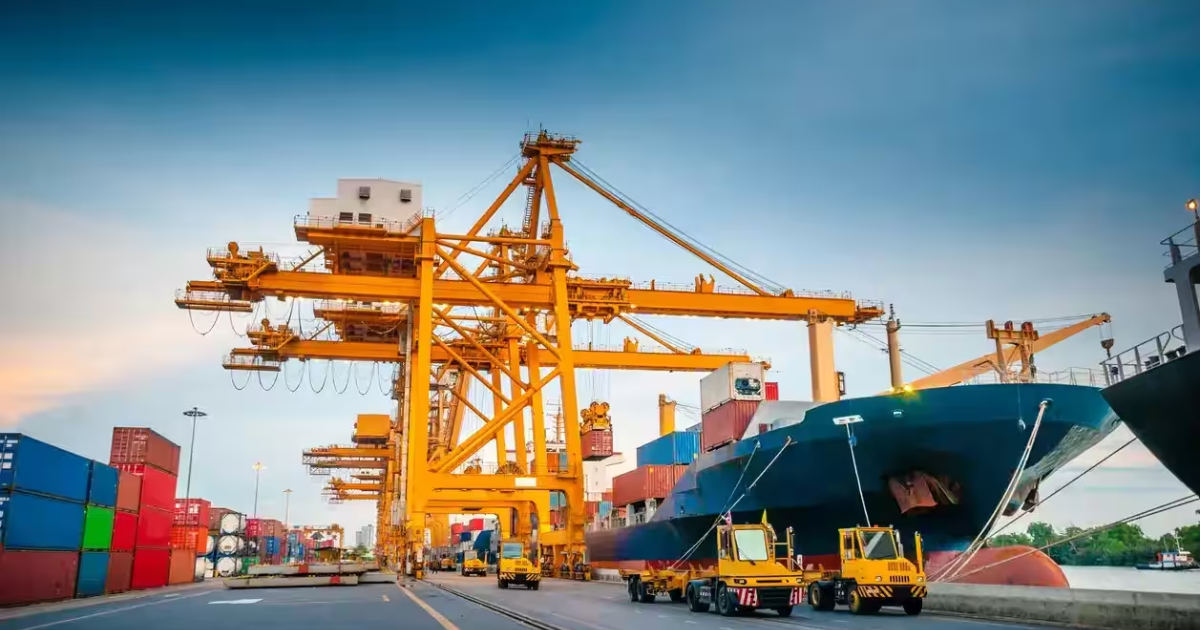
A dramatic image shared by the US Secretary of War showing damage to the maritime control tower at Iran's Chabahar Port after US military strikes has renewed concerns over the future of India's strategic investment in the port. Although India's operational terminal escaped damage, escalating regional tensions and renewed US sanctions continue to threaten the long-term viability of the project.
Chabahar Port: US Strikes, Sanctions Fallout, and India's Strategic Dilemma
Background of the Attack on Chabahar
Iran's Chabahar port came under repeated American military strikes in July 2026, with US Secretary of War Pete Hegseth posting a widely circulated image showing the port's maritime control tower collapsing after the strikes. The tower, located at the Shahid Kalantari section of the port, was targeted on multiple occasions in the same week, with US Central Command confirming it had "successfully destroyed" the surveillance structure, describing it as part of an Iranian maritime surveillance network used by the IRGC to monitor shipping through the Strait of Hormuz. The strikes formed part of a much broader American military campaign against Iranian coastal, naval, and surveillance infrastructure amid an escalating West Asia conflict.
Clarification on the Indian Terminal
Given India's long-standing stake in Chabahar, the strikes triggered immediate concern in New Delhi. The Ministry of External Affairs moved quickly to clarify the situation.
"On your question about the reported attack, yes, we have seen those reports. However, we can confirm that the terminal itself did not suffer any damage."
MEA spokesperson Randhir Jaiswal, addressing the issue at a press briefing, distinguished between the Shahid Kalantari terminal — where the control tower was struck — and the Shahid Beheshti terminal, which India has operated. The ministry reiterated that civilian infrastructure should never be targeted in the course of armed conflict, a position India has consistently maintained through the ongoing US-Iran confrontation.
India's Stakes in the Port
Chabahar Port comprises two terminals: Shahid Beheshti, developed and operated by India, and Shahid Kalantari, which remains under Iranian control. India's presence at Shahid Beheshti has been managed through India Ports Global Limited (IPGL), a wholly owned subsidiary of India Ports Global Chabahar Free Zone (IPGCFZ), functioning under a ten-year renewable agreement with Iran's Ports and Maritime Organisation.
The strategic logic behind Indian involvement has always rested on two pillars. For India, Chabahar offers a route to Afghanistan and Central Asia that bypasses Pakistan entirely, since Islamabad has refused to permit the transit of Indian goods through its territory. For Iran, the port is its only oceanic gateway with direct access to the Indian Ocean, allowing it to bypass the congested and geopolitically fraught Strait of Hormuz.
The 2024 Contract and India's Financial Exit
India and Iran signed a landmark ten-year contract in May 2024 for equipping and operating the Shahid Beheshti terminal, replacing the shorter-term arrangements that had governed the relationship since 2018. As part of this agreement, India committed $120 million toward port equipment along with a $250 million line of credit for broader port development.
"There is no further financial commitment from the Government of India towards the port."
This assurance, given by Minister of State for External Affairs Kirti Vardhan Singh in Parliament, reflected the reality that India had already prepaid its financial obligations well ahead of the sanctions deadline, in order to insulate itself from exposure once American waivers lapsed.
The Sanctions Timeline
American sanctions on Chabahar trace back to Washington's broader campaign against Tehran. The Trump administration withdrew from the Iran nuclear deal in 2018 and reimposed sanctions, but granted a targeted waiver for Chabahar in recognition of the port's humanitarian role in delivering wheat and medical supplies to Afghanistan.
This arrangement held for years, but came under renewed pressure through 2025 and 2026. On 16 September 2025, the US State Department revoked the sanctions exception, effective 29 September, citing alignment with the administration's "maximum pressure" policy against Iran. Facing diplomatic pushback, Washington subsequently granted a six-month conditional waiver in October, extending relief until 26 April 2026. That waiver was explicitly designed to allow India an orderly wind-down of its Chabahar activities rather than an indefinite continuation. When the waiver expired on 26 April 2026 without renewal, India effectively lost its sanctions-protected footing at the port, and reports indicated that IPGL moved to transfer its holding in IPGCFZ to a local Iranian entity, with the possibility of reverting control to India only if sanctions were eventually lifted.
Strategic Importance for India and Iran
For India, Chabahar has represented secure, direct access to Afghanistan and Central Asia, and a geographic counterweight to China's Gwadar port in Pakistan, situated barely 140 kilometres away. The port also forms a key node in the International North-South Transport Corridor (INSTC), a multi-modal network linking India with Iran, Russia, Europe, and Central Asia. For Iran, Chabahar serves as an economic lifeline for the underdeveloped Sistan-Baluchistan province and a gateway connecting the country to landlocked Central Asian states, Afghanistan, and Russia.
Budgetary Signals and the Fading Commitment
Beyond the sanctions timeline, domestic budgetary signals have reinforced the sense of Indian disengagement. Chabahar had received an allocation of ₹400 crore in the previous financial year, but the Union Budget for 2026-27 made no allocation for the port at all, raising pointed questions in strategic circles about whether India's decade-long connectivity vision through Chabahar is being quietly wound down rather than merely paused.
Significance and Way Forward
The Chabahar situation illustrates the structural vulnerability of Indian infrastructure investments that sit at the intersection of great-power sanctions regimes and active regional conflict. Without Chabahar, India loses its primary non-Pakistani corridor into landlocked Afghanistan and Central Asia, undoing years of connectivity planning built around the INSTC. The port had reduced transit times by roughly 40 percent and costs by nearly a third, benefits that are now at risk of being reversed. There is also a wider balance-of-power dimension: a diminished Indian role at Chabahar creates space for China to deepen its footprint in Iran, complementing Beijing's existing leverage through the China-Pakistan Economic Corridor and Gwadar port. Going forward, India's options are constrained but not entirely closed — a revival of the project remains contingent on any future easing of US-Iran tensions or a fresh sanctions waiver, and in the interim New Delhi has already begun hedging by exploring alternative connectivity options, including Sabang port in Indonesia, to diversify its access to Southeast and Central Asian markets.
Conclusion
Chabahar embodies India's long-term vision of connectivity beyond Pakistan, a vision built patiently over nearly two decades of negotiation, investment, and diplomatic balancing between Washington and Tehran. Yet its fate today remains entangled in a US-Iran standoff that has moved from sanctions pressure to open military conflict, leaving Indian infrastructure vulnerable even when not directly targeted. With sanctions waivers lapsed, financial commitments wound up, and budgetary support withdrawn, India risks losing not merely an infrastructure investment but strategic ground to China and Pakistan in one of the most consequential geopolitical spaces in its extended neighbourhood.