Mission Golden Spice Launched to Boost Lakadong Turmeric Value Chain in Meghalaya
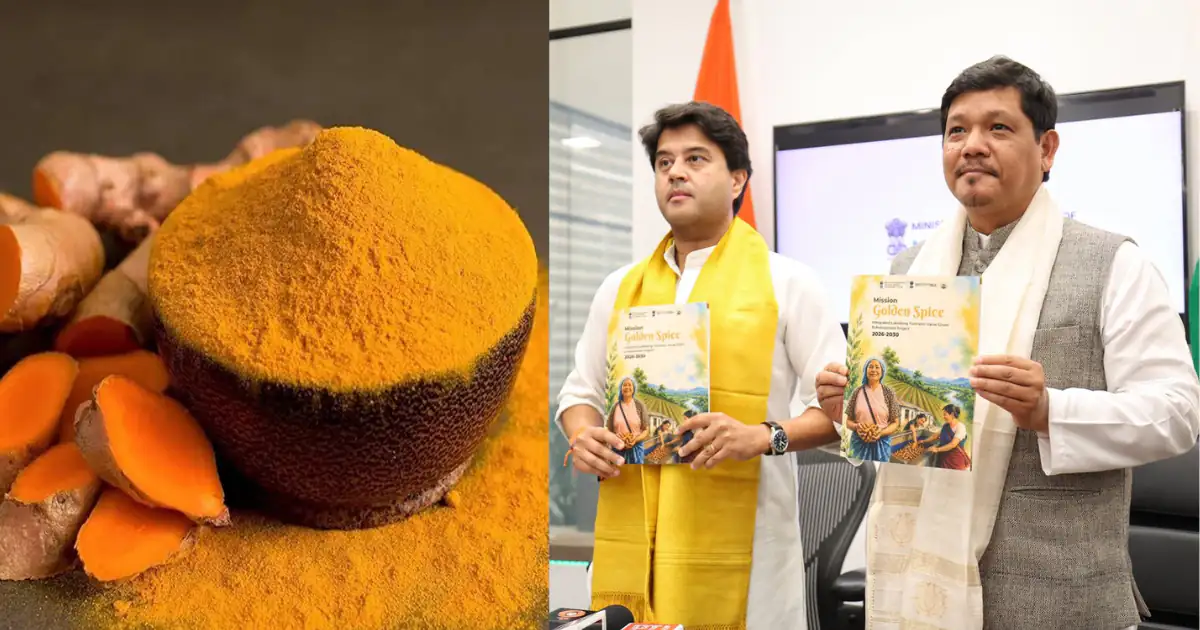
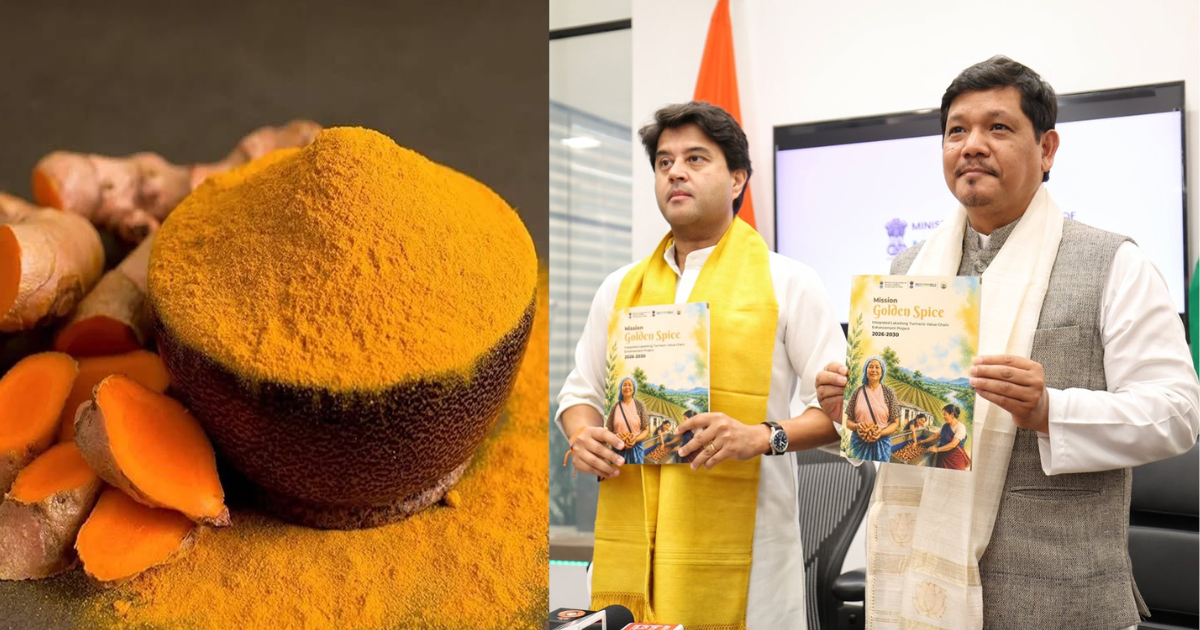
The Union Minister for Communications and Development of North Eastern Region (MDoNER) recently launched Mission Golden Spice, an integrated initiative to strengthen the Lakadong Turmeric value chain in Meghalaya. The mission aims to transform Meghalaya into a global hub for premium turmeric production by improving cultivation, processing, branding, and exports while enhancing farmers' incomes.
Mission Golden Spice
The Union Minister for Communications and Development of North Eastern Region (MDoNER) has launched Mission Golden Spice, a new initiative aimed at strengthening the turmeric value chain in Meghalaya.
What is Mission Golden Spice?
It is an integrated Lakadong Turmeric Value Chain Enhancement Project.
It is a convergence-led initiative focused on turmeric cultivation and value-chain development in the State of Meghalaya.
It follows a five-year roadmap running from 2025 to 2030.
Implementation Phases
Phase 1, Value Chain Strengthening, focuses on building the foundational infrastructure and processes for turmeric cultivation and processing.
Phase 2, Expansion and Scale-up, focuses on widening the reach and scale of the value chain once the foundation is in place.
Institutional Framework
The Mission is anchored jointly by MDoNER and the North Eastern Council (NEC).
It builds on convergence with schemes and interventions of the Ministries of Agriculture and Farmers Welfare, Food Processing Industries, and Commerce.
Other partner bodies include APEDA, the Spices Board, the National Turmeric Board, ICAR, MeitY, NABARD, SFAC, and the Government of Meghalaya.
This convergence model is meant to pool resources and expertise from multiple departments and agencies rather than treating turmeric development as a standalone scheme.
Key Facts About Lakadong Turmeric
It is mainly cultivated in the Lakadong area of Jaintia Hills, Meghalaya.
It is distinguished by its remarkable curcumin content, ranging from 7% to 12%, among the highest of any turmeric variety grown in India.
It is darker in colour compared to other turmeric varieties.
It is grown organically, without the use of chemical fertilisers.
It received the Geographical Indication (GI) tag in 2024, recognising its unique regional identity and quality.
Health Benefits
It carries anti-inflammatory properties.
It carries antioxidant properties.
It carries neuroprotective properties.
Conclusion
Mission Golden Spice reflects a shift toward convergence-based planning in India's agricultural policy, where a single high-value crop is developed by pooling the resources of multiple ministries and agencies rather than relying on one scheme in isolation. By anchoring the initiative around Lakadong turmeric, a variety already distinguished by its exceptionally high curcumin content and GI-tag recognition, the government is positioning Meghalaya's turmeric as a premium, export-worthy product rather than just a subsistence crop. The phased five-year roadmap, moving from value-chain strengthening to expansion and scale-up, signals an intent to first build robust cultivation, processing, and market linkages before widening the initiative's reach. For examination purposes, the essential points to retain are the Mission's anchoring institutions, MDoNER and the NEC, its five-year 2025–2030 timeline, its two-phase structure, and Lakadong turmeric's distinguishing traits: its curcumin content, organic cultivation, and 2024 GI tag.