India Unveils First Indigenous Electric Vertical Take-off and Landing (eVTOL) Aircraft Prototype
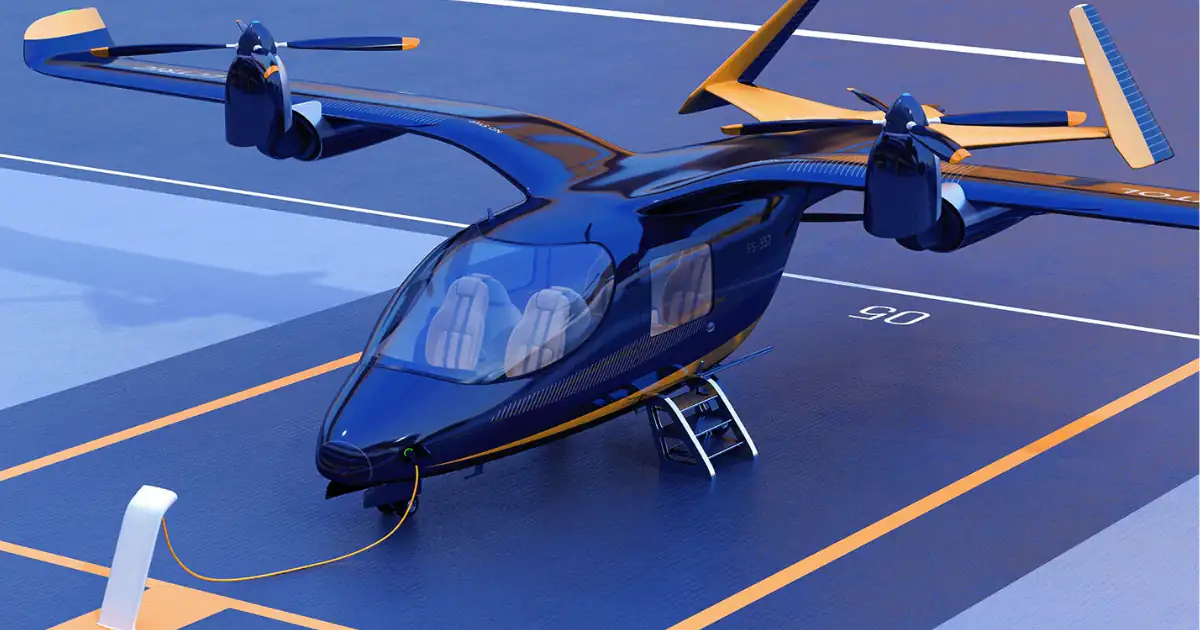
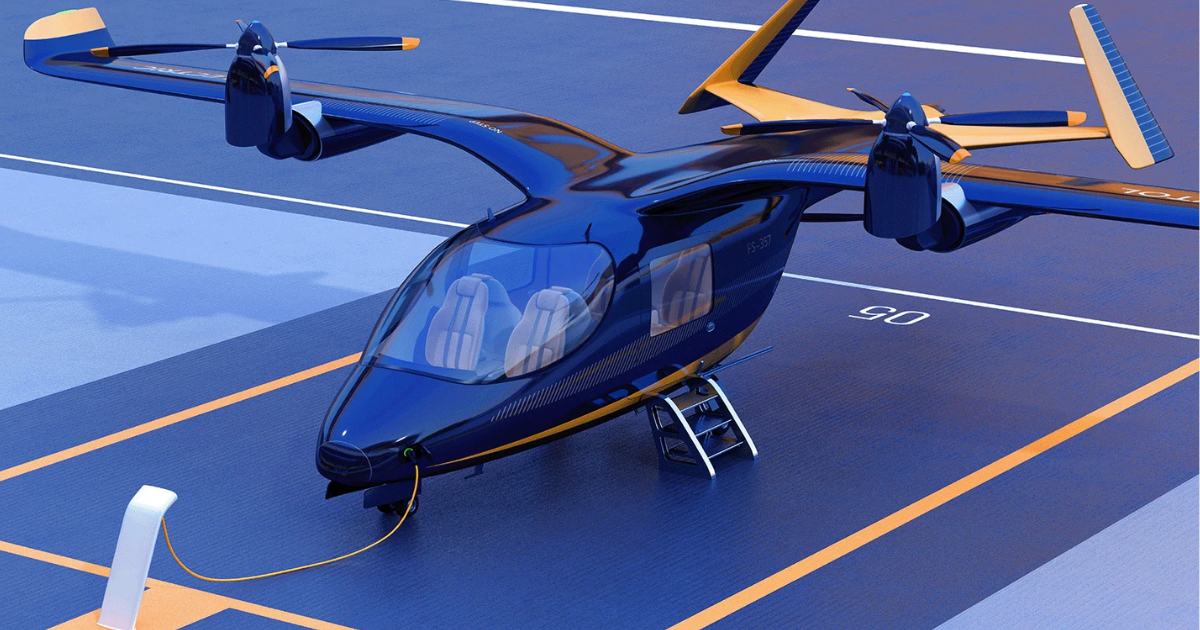
An IIT Madras-incubated startup has recently unveiled India's first Electric Vertical Take-off and Landing (eVTOL) aircraft prototype, marking a major milestone in the country's urban air mobility and electric aviation ecosystem.
India's First eVTOL Aircraft Prototype
An IIT Madras-incubated startup has launched India's first electric vertical take-off and landing (eVTOL) aircraft prototype.
What is an eVTOL Aircraft?
It is a battery-powered aircraft that can take off and land vertically, like a helicopter, before transitioning to forward flight, like a conventional airplane.
It does not require long runways, unlike conventional fixed-wing aircraft.
It is designed as a low-altitude urban air mobility aircraft.
It is capable of carrying only a few passengers, typically in six-seater or eight-seater configurations.
Design Features
Most designs use multiple electrically powered propellers instead of a single large rotor.
This multi-propeller design allows the aircraft to lift off from relatively small spaces.
eVTOL aircraft rely on multiple electric motors and propellers, all powered by batteries.
Technology Used
Most eVTOLs are built on distributed electric propulsion technology, which involves integrating a complex propulsion system directly with the airframe.
Multiple motors are used to serve different functions within the aircraft.
The use of multiple motors increases overall efficiency.
It also serves as a safety measure, since the failure of one motor does not necessarily disable the entire aircraft.
Applications
Air taxi services.
Delivery services.
Medical assistance, including emergency medical services (EMS).
Cargo transport.
Recreational use.
Conclusion
The unveiling of India's first eVTOL prototype by an IIT Madras-incubated startup marks an early but significant step toward urban air mobility in the country, an area where global players have so far led development. By replacing a single large rotor with multiple electrically powered propellers and adopting distributed electric propulsion, this class of aircraft is designed to solve two problems at once: the need for vertical take-off in space-constrained cities, and the demand for smoother, more efficient short-distance travel without long runways. The wide range of possible applications, spanning air taxis, medical evacuation, cargo transport, and recreation, suggests that eVTOLs could eventually reshape last-mile and intra-city connectivity in Indian cities facing congestion. For examination purposes, the key points to remember are the hybrid take-off-and-landing mechanism, the six- to eight-seater passenger capacity, the reliance on distributed electric propulsion with multiple motors for efficiency and safety, and the aircraft's role as a low-altitude urban air mobility solution.