Plainclothes Policing During Protests Sparks Debate on Police Identification and Accountability
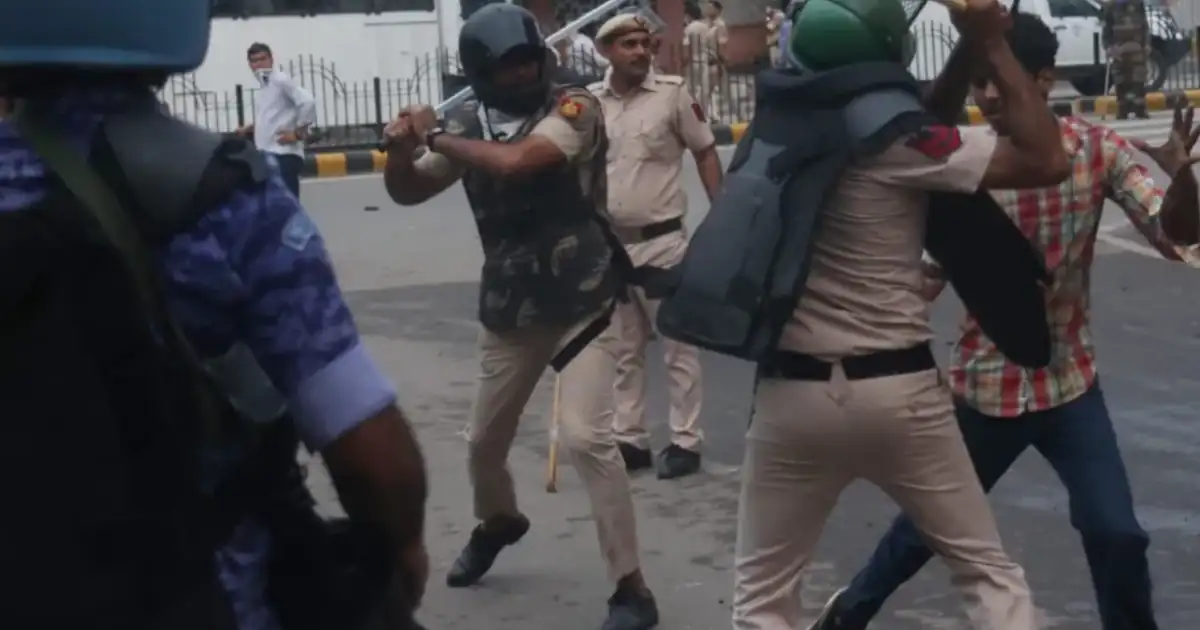
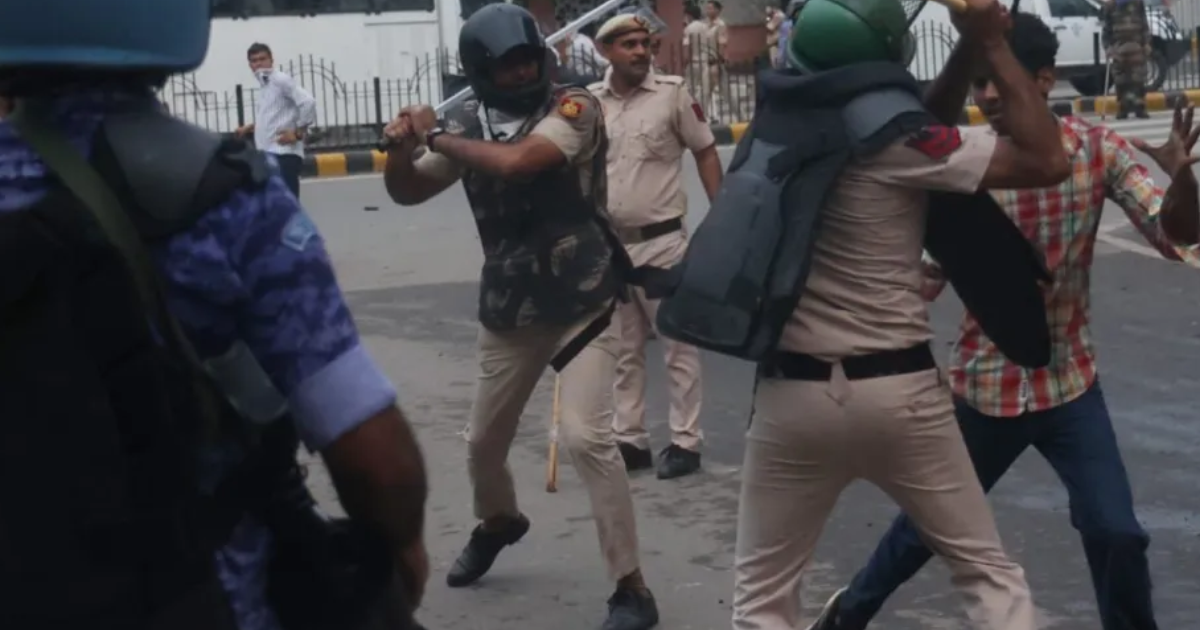
Videos from the July 20 "Sansad Chalo" protest in Delhi showed police and Rapid Action Force (RAF) personnel in civilian clothes or in uniform without visible nameplates, sparking debate over the legality of unidentified policing during public order operations.
Plainclothes Policing at the 'Chalo Sansad' Protest: The Identification Debate
Videos from the 20 July 2026 'Chalo Sansad' march in Delhi showed police and Rapid Action Force personnel operating in civilian clothes, alongside uniformed officers without visible nameplates, reopening a long-running debate on the legality of unidentified policing during crowd control operations. Students and journalists raised serious questions regarding police identification, transparency, and accountability, alleging that plainclothes personnel had infiltrated the crowd and assaulted protesters without identifying themselves.
What Triggered the Controversy
The protest, organised by the Cockroach Janta Party, saw demonstrators march toward Parliament demanding action over the NEET paper leak and the resignation of the Education Minister. As the crowd advanced, police resorted to a lathi charge, and the resulting clashes left both protesters and security personnel injured. Social media footage circulated widely showing unidentified men in civilian clothes wielding police-style batons, while several uniformed personnel were seen with nameplates and badges apparently removed. Responding to the allegations, senior Delhi Police officers acknowledged that the individuals were indeed policemen deployed in plain clothes.
They are from the special staff and from the teams which are not part of active policing duties. This is not illegal deployment.
Delhi Police has not issued a formal public statement beyond this acknowledgment, though personnel at the protest site have reportedly been directed to report in uniform going forward.
Is Hiding Identity Legal?
Certain functions, particularly intelligence gathering, genuinely require concealment of identity. Routine policing, however, is bound by statutory procedure and judicial expectation that generally favours identifiability. The maintenance of public order falls under Chapter XI of the Bharatiya Nagarik Suraksha Sanhita, Sections 148 to 160 — earlier Chapter X of the Code of Criminal Procedure. While the law does not explicitly mandate that officers display identification, only a magistrate or a "police officer" is empowered to order a crowd to disperse, which implicitly requires that the officer issuing such a command be identifiable. Legal experts have argued on this basis that a person who cannot be identified cannot lawfully exercise this statutory power.
Judicial Precedent on Police Identification
The Supreme Court's ruling in D.K. Basu v. State of West Bengal (1997) mandated that arresting officers carry clear, visible identification. Although that judgment concerned arrests rather than crowd control specifically, it reflects the judiciary's broader expectation that police remain identifiable while exercising coercive authority. More recently, in August 2025, the Andhra Pradesh High Court questioned how citizens could recognise plainclothes personnel as police while they discharged official duties, in a case involving a YSRCP MLA accused of obstructing police work — a precedent now being cited in discussions around the Delhi episode.
Protesters and legal experts pointed out that Supreme Court guidelines have mandated that all enforcement personnel should wear clear identification marks and uniforms during such crowd control.
Why Police Avoid Identification
The practice is understood to have originated in conflict zones such as Jammu and Kashmir, Punjab, and Chhattisgarh, where personnel avoided nameplates and rank insignia specifically to reduce the risk of being targeted by militants. Officers also argue that visible identification in routine duty can expose them to prolonged litigation, online harassment, and threats to their families. What began as a conflict-zone safeguard has, according to experts, gradually extended into ordinary law-and-order policing — a spread many describe as contentious once removed from a genuine security threat. There is also a logistical dimension: when additional personnel are urgently summoned to a swelling protest site, all available officers from a unit, including those not in uniform, may be required to report, often driven by the sheer scale of the crowd rather than any deliberate strategy of concealment.
Acknowledged Ambiguity
Even senior officers concede that deploying plainclothes personnel introduces ambiguity into already volatile situations. Their counter-argument is that anti-social elements can infiltrate protests and trigger violence or arson, and that special branch personnel are specifically tasked with blending into crowds to gather intelligence and monitor potential troublemakers. This tension between operational necessity and public accountability lies at the core of the current controversy — reinforced by political pressure, with Trinamool Congress MP Mahua Moitra publicly demanding that Delhi Police disclose the identity and service record of one specific plainclothes officer filmed during the crackdown.
Conclusion
The plainclothes policing debate captures a genuine tension between operational security and democratic accountability, one that recurs each time a protest turns confrontational. While Indian law does not explicitly bar unidentified policing, both statutory logic — which ties the power to disperse a crowd to an identifiable office-holder — and judicial precedent point toward identifiability as essential to the legitimate exercise of police power. The Delhi episode suggests that unless this expectation is codified more explicitly, transparency will remain a discretionary courtesy rather than the constitutional default it is meant to be, leaving citizens with little recourse when force is used by hands they cannot name.