Mission Vatsalya Scheme: Ensuring Care, Protection and Rehabilitation of Vulnerable Children
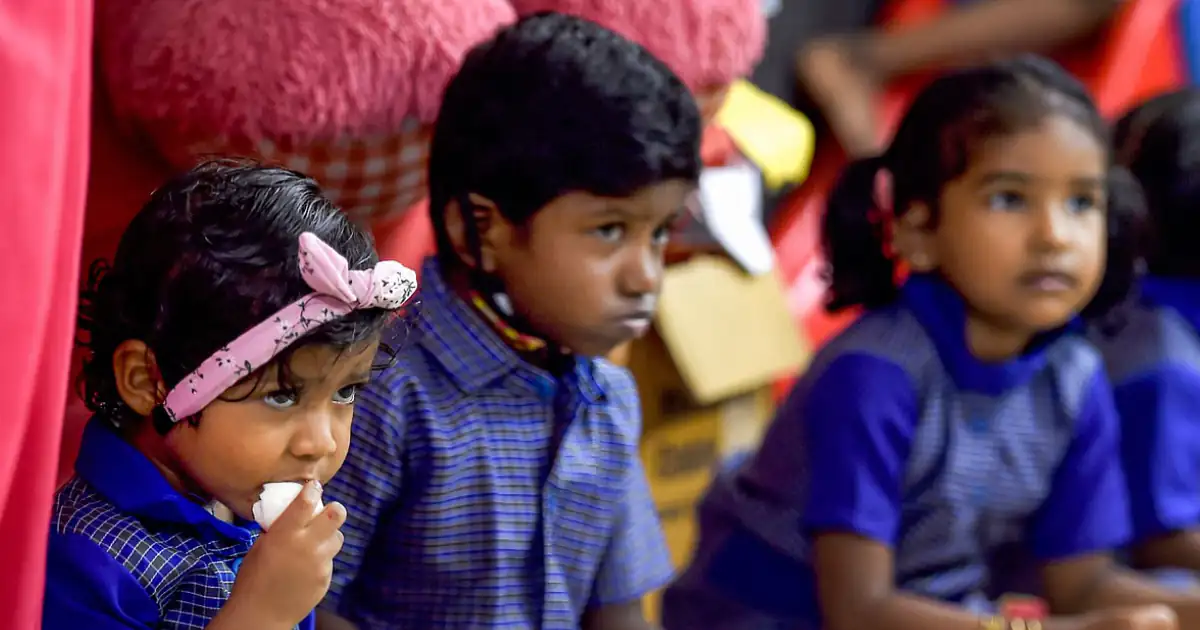
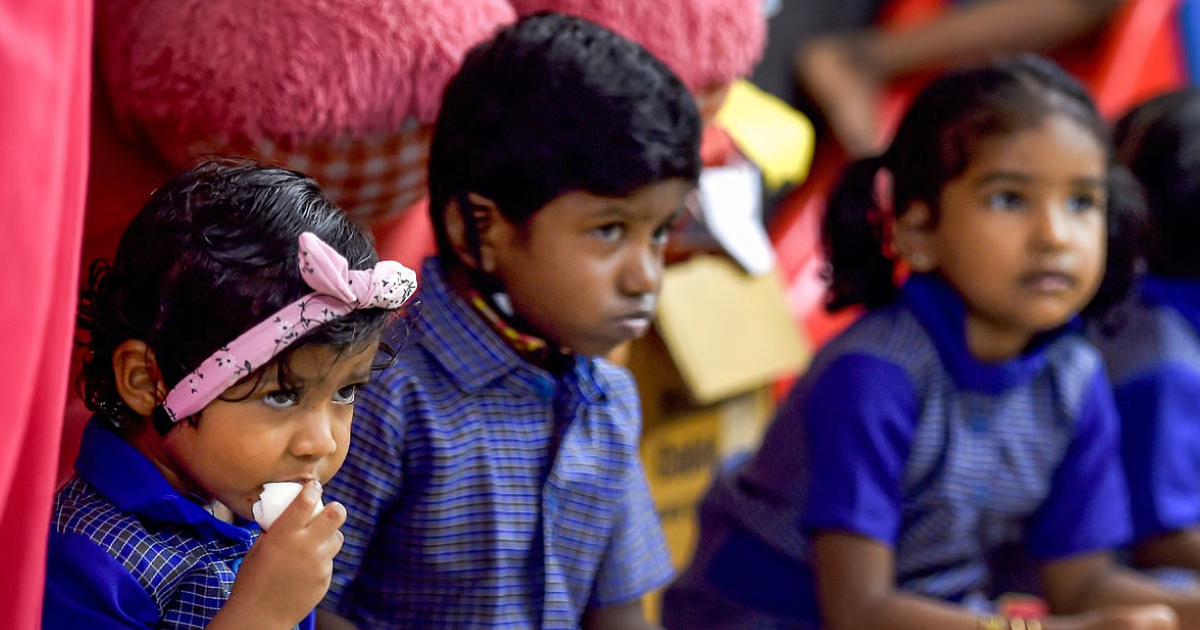
The Mission Vatsalya Scheme is a Centrally Sponsored Scheme of the Ministry of Women and Child Development (MWCD) aimed at ensuring the care, protection, rehabilitation, and reintegration of children who are in difficult circumstances. It is implemented by the State Governments and Union Territories under the provisions of the Juvenile Justice (Care and Protection of Children) Act, 2015.
Mission Vatsalya: India's Child Protection Framework Under Renewed Focus
The Minister of State for Women and Child Development, Savitri Thakur, recently informed Parliament about the current status and functioning of the Mission Vatsalya Scheme, bringing renewed attention to India's principal child protection architecture at a moment when questions of missing children, institutional care, and juvenile justice enforcement remain active concerns across states and union territories.
About Mission Vatsalya
Mission Vatsalya is a Centrally Sponsored Scheme implemented by states and union territories to support two specific categories of children: those in need of care and protection, and those in conflict with law. The scheme's central objective is to secure care, protection, rehabilitation, and reintegration for children living in difficult circumstances, extending explicitly to missing and vulnerable children as well. Rather than treating institutionalisation as the default response, it promotes family- and community-based care alongside institutional support services, counselling, and emergency outreach — reflecting the underlying principle that placing a child in an institution should be a measure of last resort, not first response.
Mission Vatsalya promotes family-based non-institutional care of children in difficult circumstances based on the principle of institutionalisation of children as a measure of last resort.
Statutory Basis and Institutional Backing
The scheme functions within the framework of the Juvenile Justice (Care and Protection of Children) Act, 2015, which gives it legal grounding rather than treating it as a discretionary welfare programme. Section 55 of the Act specifically provides for evaluation of the functioning of relevant service delivery structures, empowering the Central Government, a State Government, or a District Magistrate to independently assess how the Juvenile Justice Board, Child Welfare Committee, Special Juvenile Police Units, registered institutions, and recognised fit facilities or persons are performing, at intervals and through agencies as may be prescribed. This built-in evaluation mechanism is significant because it means the scheme is not merely a funding channel but carries an accountability loop written into statute.
Financial responsibility under the scheme is shared between the Centre and states in a 60:40 ratio for most states, though Jammu and Kashmir continues to receive funding on a more favourable 90:10 Centre-UT basis, reflecting the additional protection needs recognised for the union territory. Approval of funds to states runs through the Mission Vatsalya Project Approval Board, chaired by the Secretary of the Ministry of Women and Child Development, with a state-level committee headed by the Chief Secretary responsible for monitoring, review, and convergence.
Digital Infrastructure for Tracking and Protection
A significant recent thrust under the scheme has been digital consolidation. The Ministry has developed an integrated, unified Mission Vatsalya Portal that brings together previously separate tools — the TrackChild portal for missing and found children, and the Khoya-Paya application for missing and sighted children — into a single platform. This portal is further linked with the Crime and Criminal Tracking Network and Systems of the Ministry of Home Affairs, allowing FIRs relating to missing children to be matched against the Mission Vatsalya database by state and union territory police. The Go Home and Reunite portal has also been integrated into this ecosystem, and a round-the-clock Child Helpline, number 1098, now operates in coordination with the Emergency Response Support System, 112, giving children in distress a direct line to emergency assistance regardless of which digital touchpoint they first reach.
Guidelines have also been issued to Child Welfare Committees and Juvenile Justice Boards to ensure that information is entered and updated promptly.
Care Services Under the Scheme
Child Care Institutions established under Mission Vatsalya are expected to provide more than shelter — age-appropriate education, vocational training access, recreation, healthcare, and counselling form part of the mandated service basket. On the non-institutional side, support flows through four distinct channels: sponsorship, foster care, adoption, and after-care, giving states flexibility to match the intervention to a child's specific circumstances rather than defaulting to institutional placement.
Significance and Continuing Challenges
Mission Vatsalya's design attempts to balance two competing imperatives that have historically pulled child protection policy in different directions: the need for centralised standards and monitoring, and the reality that child welfare delivery happens almost entirely at the state and district level. Its evolution — from the Integrated Child Protection Scheme through the Child Protection Services Scheme to its current form since 2021-22 — reflects a gradual shift toward treating child protection as a rights-based, digitally traceable system rather than a scattered set of welfare interventions. The scheme's classification alongside Mission Shakti and Mission Poshan 2.0 as one of three umbrella programmes under the Ministry also signals an attempt to converge women's and children's welfare architecture more tightly, though the persistent gap between guideline and ground-level implementation — evident in continuing advisories urging states to update portal data promptly — suggests execution remains the scheme's weakest link.
Conclusion
Mission Vatsalya represents a mature articulation of India's child protection commitments, anchoring welfare delivery in statutory evaluation mechanisms rather than administrative goodwill alone. Its increasing reliance on integrated digital infrastructure — linking missing-children data with police records and emergency response systems — marks a genuine advance in traceability and responsiveness. Yet a scheme's architecture is only as strong as its weakest implementing unit, and the recurring need for the Centre to issue advisories nudging states toward timely compliance suggests that closing the distance between statutory design and district-level execution remains the scheme's most pressing unfinished task.