Sal Borer Infestation Threatens Madhya Pradesh’s Sal Forests
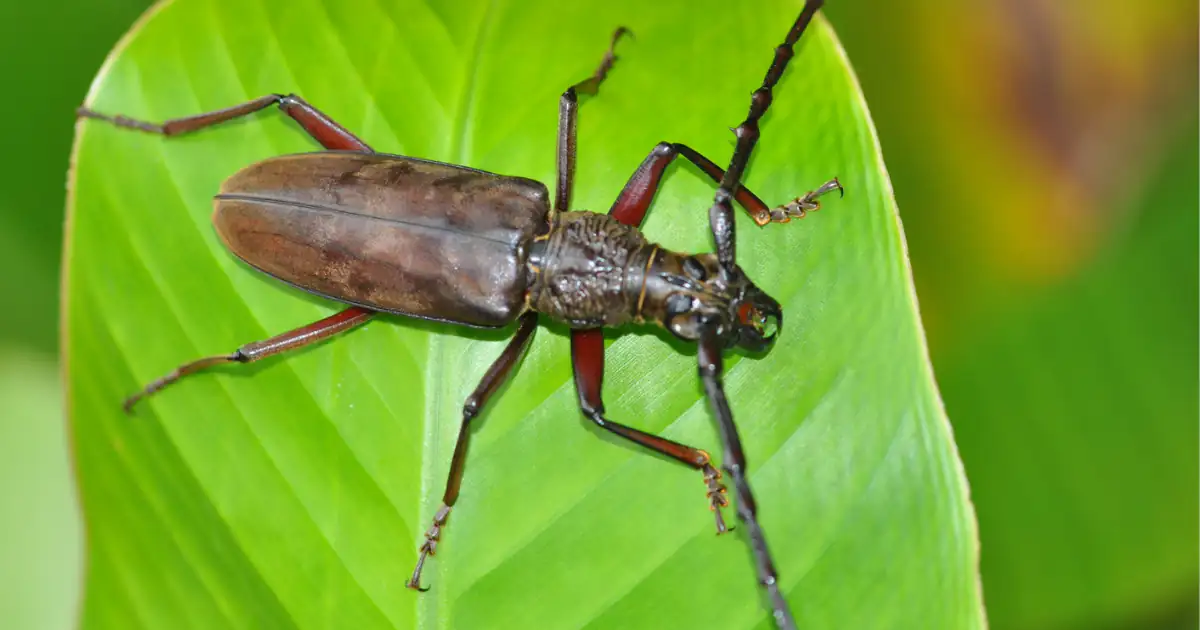
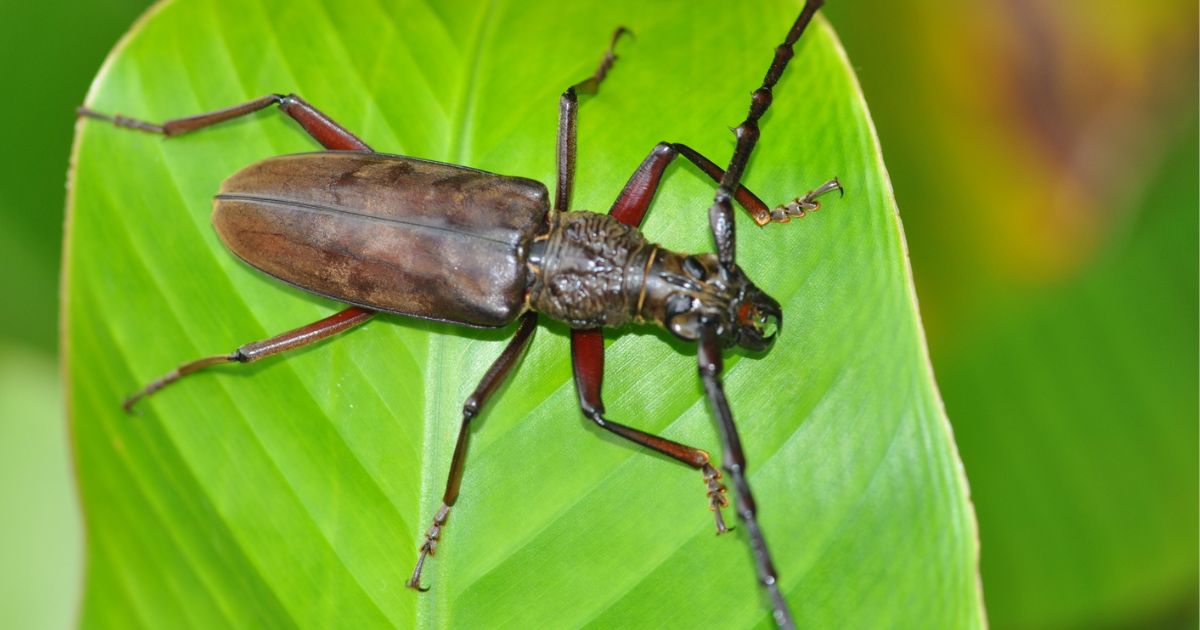
The Sal Borer is one of the most destructive insect pests affecting sal (Shorea robusta) forests in India. It is responsible for large-scale mortality of sal trees and has caused several serious outbreaks in the country's natural forests.
Sal Borer Infestation in Dindori: When a Beetle Threatens a Forest Ecosystem
The Madhya Pradesh forest department has sought permission from the central government to fell nearly 150,000 sal trees in Dindori district following a severe infestation of sal borer insects, with felling likely to begin in September or October if the Centre grants approval. Officials have identified 147,380 affected trees, and the outbreak has spread beyond Dindori into the Amarkantak region of neighbouring Anuppur district as well.
About the Sal Borer
The sal borer, scientifically known as Hoplocerambyx spinicornis, is a beetle belonging to the order Coleoptera and family Cerambycidae, and is widely regarded as the most devastating insect pest afflicting the sal forests of the country. Dark brown in colour and roughly the size of a human finger, the insect causes extensive damage both to standing trees and to freshly felled timber, burrowing into the heartwood and hollowing out even healthy green trees within days of infestation. While weak, unhealthy, or low-vitality trees are the most vulnerable, the borer is capable of attacking robust trees as well once conditions favour a population surge. An outbreak is officially classified as an epidemic once the affected trees exceed one per cent of the total tree population in a given area, a threshold Dindori's current infestation has evidently crossed.
The sal borer breeds rapidly, with its cycle lasting about 15 days, and a single insect lays 300 to 500 eggs at a time.
The Trap-Tree Campaign in Dindori
In response, the forest department has revived a control method with roots stretching back nearly a century — the trap-tree operation, in which select trees are deliberately felled to lure the beetle before it can spread further, combined this time with a direct incentive scheme paying local tribal residents two rupees per insect collected. As of 21 July 2026, the department had purchased more than 1.4 million insects in Dindori, with some residents reportedly stringing the captured beetles into garlands before selling them. This community-based approach reflects a recognition that forest department manpower alone cannot match the scale of an infestation spreading across tens of thousands of hectares, making local participation central to containment.
A Recurring Ecological Cycle
This is far from Dindori's first encounter with the sal borer. Forest officials note that outbreaks tend to follow a roughly 30-year cycle, with the last major epidemic recorded in 1997; the historical record stretches back further still, with documented infestations in 1950-51, a severe episode in 1959-62 that saw 350,000 trees felled after two million beetles were destroyed, and the particularly damaging 1996-2001 epidemic across Dindori, Mandla, Shahdol, and several other districts, in which roughly 3.5 million trees were affected and close to 1.6 million ultimately felled. That such episodes recur at fairly predictable intervals suggests the current crisis is less an anomaly than the latest turn of a well-documented ecological cycle, though scientists have also pointed to rising humidity and warmer, wetter conditions linked to climate change as factors that may be intensifying this particular outbreak.
Key Facts About the Sal Tree
The sal tree, Shorea robusta, is among the oldest and most resilient tree species found in India, often called the "Sentinel of the Forests" for its ability to live for decades while withstanding considerable environmental stress. It occurs naturally across Uttarakhand, the Terai region of Uttar Pradesh, Jharkhand, Odisha, Madhya Pradesh, Chhattisgarh, and West Bengal, and remarkably accounts for around a quarter of India's total forest cover, underscoring how consequential any large-scale threat to sal forests can be for the country's broader green cover.
Climatic Requirements
Sal trees tolerate a fairly wide temperature range, withstanding summer highs of 40-45 degrees Celsius and winter lows around 5 degrees Celsius. They grow best in light loamy soil with good drainage, in regions receiving between 1,000 and 3,000 millimetres of annual rainfall, and require a generally warm and humid climate to thrive, doing so at altitudes up to 1,500 metres above sea level. The species can live up to a century and needs comparatively little watering or maintenance once established — hardiness that makes the scale of the current threat all the more striking, since these are not fragile trees succumbing easily but resilient ones being overwhelmed by a genuinely aggressive pest.
Conclusion
The unfolding crisis in Dindori is a reminder that even the hardiest forest ecosystems remain vulnerable to specific, well-adapted threats that exploit narrow windows of weakness — and that managing such threats, once they cross the epidemic threshold, often leaves authorities with painful trade-offs between large-scale felling and containing further spread. With outbreaks recurring roughly every three decades, the more durable solution likely lies not merely in reactive felling campaigns but in sustained forest health monitoring and early intervention during the years between epidemics, when the borer population is still small enough to manage without resorting to felling on this scale.