US–Saudi Civil Nuclear Deal Sparks Concerns Over Nuclear Proliferation in West Asia
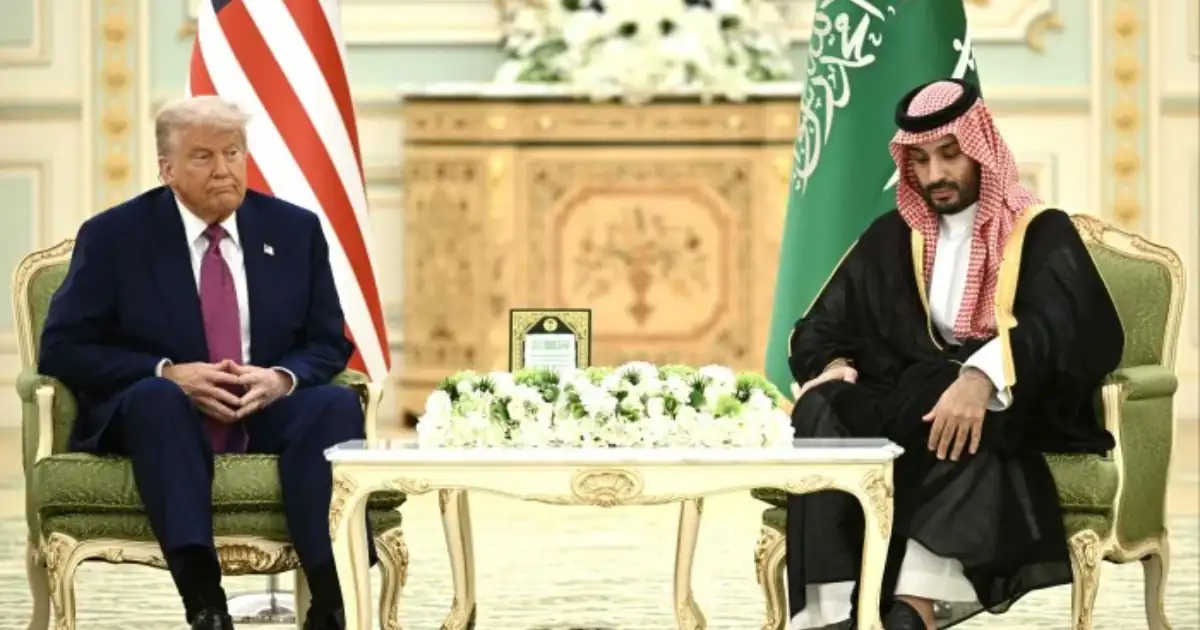
The United States and Saudi Arabia have signed a landmark 30-year Civilian Nuclear Cooperation Agreement to strengthen cooperation in the peaceful use of nuclear energy.
Democratisation of Nuclear Access: The US-Saudi 123 Agreement
The United States and Saudi Arabia have concluded a landmark civilian nuclear cooperation agreement, formally a "123 Agreement" under Section 1954 of the US Atomic Energy Act, signed on 22 July 2026 by US Secretary of Energy Chris Wright and Saudi Minister of Energy Prince Abdulaziz bin Salman. The Department of Energy has described the pact as laying "the legal foundation for a decades-long, multi-billion-dollar partnership" advancing economic and strategic objectives, including nuclear nonproliferation.
"The 123 agreement provides great access for American companies in the Saudi nuclear energy program, benefiting American industry, workers, and supply chains while helping to meet Saudi energy needs." — US Department of Energy
Structure of the Agreement
The deal rests on two linked instruments: the 123 Agreement itself, and an accompanying bilateral safeguards agreement, the full text of which has not been made public. Section 123 mandates such an agreement before Washington can undertake significant civil nuclear cooperation with any state, requiring the President to certify that cooperation will not pose an unreasonable risk to common defence and security. The pact reportedly runs for roughly 30 years and must still pass Congressional review, where it can be blocked only if both chambers vote to disapprove and muster a two-thirds majority to override a presidential veto.
The Enrichment Question
The most contested feature is uranium enrichment. Reports indicate the agreement's most significant provision would permit Saudi Arabia to pursue domestic uranium enrichment following a joint US-Saudi study, even though enrichment is not inherently illegal and is routinely used for reactor fuel. This marks a sharp departure from the so-called "gold standard" of nonproliferation diplomacy established by the 2009 US-UAE 123 Agreement, under which the UAE committed to forgo domestic enrichment and reprocessing, and to sign the IAEA's Additional Protocol for stricter inspections. Saudi Arabia has pointedly declined to accept this same standard.
"Saudi Arabia has rejected the 'gold standard' commitment." — reporting on the deal's terms
The Iran Factor and Regional Stakes
The proliferation anxiety is sharpened by past Saudi statements. Then-Crown Prince Mohammed bin Salman had earlier signalled that if Iran developed a nuclear bomb, the kingdom would follow suit — notwithstanding Saudi Arabia's own ratification of the Nuclear Non-Proliferation Treaty in 1988. The timing compounds this concern: the deal emerges against a backdrop of sustained regional hostility, with researchers attributing more than 1,200 missile and rocket attacks on Saudi energy infrastructure and government facilities to Iran or Iran-backed groups between February and May 2026 alone. A Saudi enrichment capability, layered onto an already tense West Asia housing one declared nuclear power (Israel) and one threshold state (Iran), raises the spectre of a wider proliferation cascade across the region.
Congressional and Domestic Hurdles
Unlike Israel, Saudi Arabia does not command reflexive bipartisan backing in the US legislature, and past attempts to constrain this very cooperation illustrate the resistance. During Trump's first term, Senator Ed Markey and then-Senator Marco Rubio had jointly introduced legislation seeking to require Congressional approval before any civilian nuclear deal with Saudi Arabia could proceed, and Markey has reintroduced a similar bill this year. Lawmakers from both parties are expected to scrutinise the adequacy of the safeguards regime once fuller details reach Congress.
Significance and Way Forward
For Washington, the agreement opens substantial commercial terrain for American nuclear firms — Westinghouse foremost among them — reinforcing US industrial primacy in an increasingly contested global reactor-export market against Russian and Chinese rivals. For Riyadh, it advances Vision 2030's energy diversification goal, freeing domestic crude currently burned for electricity for export instead, while feeding rising power demand. Yet the durability of this partnership will depend on three unresolved variables: the actual stringency of the still-undisclosed bilateral safeguards text, the outcome of Congressional review in an unusually polarised environment, and whether Riyadh's enrichment ambitions provoke matching moves from Iran or other regional states. The precedent set here — a 123 Agreement without the UAE's "gold standard" renunciation — could reshape the baseline expectations future nuclear-aspirant states bring to their own negotiations with Washington.
Conclusion
The US-Saudi 123 Agreement represents a consequential recalibration of American nonproliferation policy, trading the UAE-era "gold standard" for a more permissive enrichment pathway in exchange for strategic and commercial gain. Whether it strengthens the global nonproliferation architecture, as its framers claim, or instead becomes the trigger point for a West Asian arms race hinges on details that remain, for now, undisclosed — making the safeguards agreement's eventual publication, and Congress's response to it, the two developments worth tracking closely in the months ahead.