Black Sea: Strategic Inland Sea Linking Europe, Asia and Global Maritime Trade
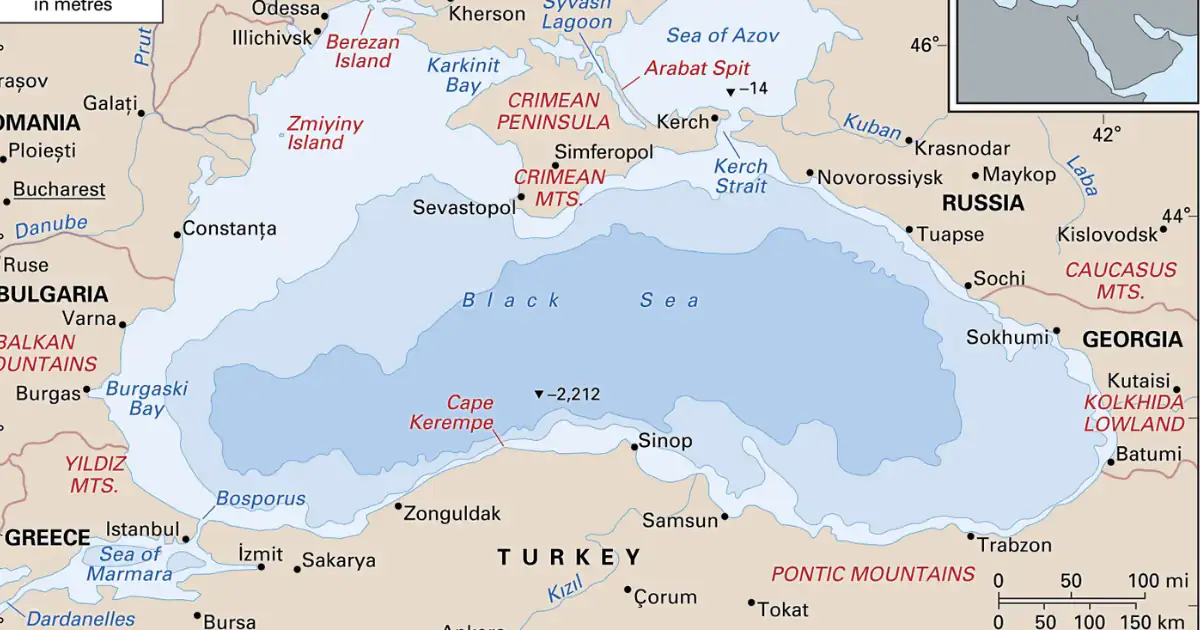
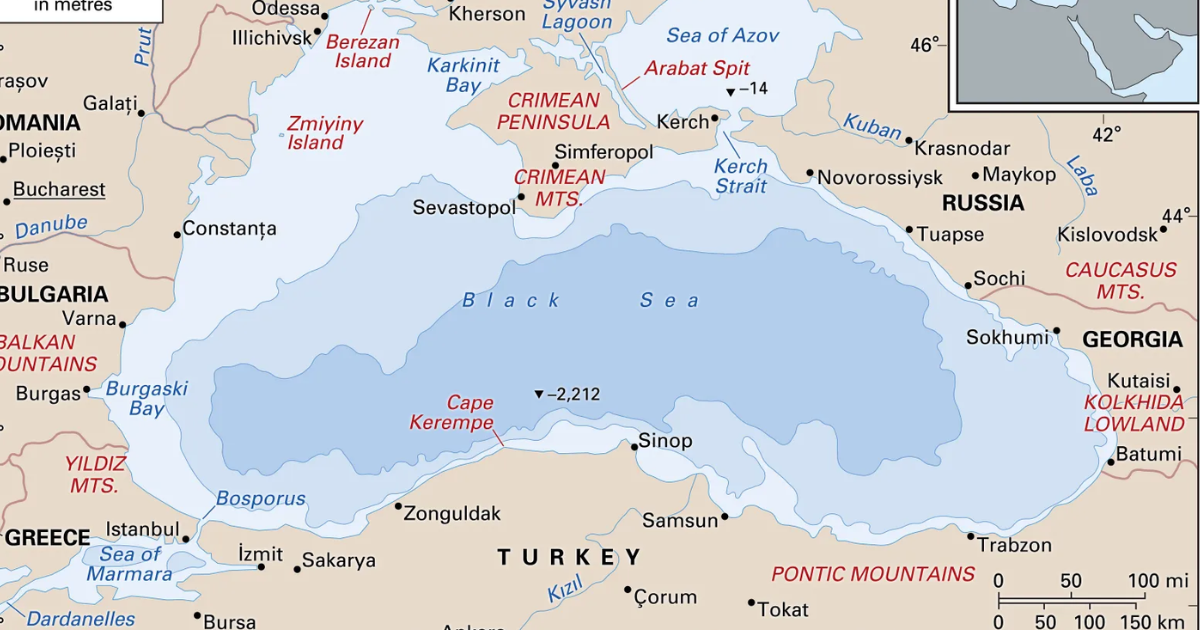
India recently issued a security advisory for ships flying the Indian flag or employing Indian seafarers operating in the Black Sea due to heightened regional security risks. The Black Sea is a strategically important inland sea that serves as a vital maritime corridor connecting Eastern Europe, the Caucasus, and global trade routes.
India's Black Sea Advisory: Seafarer Safety Amid a Widening War Zone
India issued a security warning for ships venturing into the Black Sea that are locally flagged or employ Indian seafarers, following a deadly attack that has renewed concern over the safety of Indian maritime personnel operating in an increasingly volatile conflict zone.
What Prompted the Advisory
The warning came in the wake of a fatal Russian strike on a cargo ship departing Ukraine's port of Odesa. The advisory follows a Russian attack on Sunday on a cargo ship leaving Ukraine's port of Odesa that killed four Indian nationals. India's Directorate General of Maritime Administration has now called for the "highest degree of caution" to be exercised while operating in the Black Sea, and asked that "voyage-specific security risk assessments" be undertaken before entering the region.
"The highest degree of caution should be exercised while operating in the Black Sea." — India's Directorate General of Maritime Administration
The scale of the risk is not isolated to a single incident. The maritime authority noted there had been 10 attacks in the region since April this year involving Indian seafarers aboard foreign-flagged ships, including strikes on the tankers MT Asia, MT Louise-1, and MT Nelsa near Novorossiysk, which damaged the vessels and forced Indian crew members to disembark. India has already registered formal protest over the Odesa strike, with the vessel identified as the MV Golden Leo — New Delhi summoned Russia's top envoy to convey its "unequivocal condemnation" of the attack.
A Wider Pattern of Maritime Risk
The Black Sea advisory is not an isolated measure but part of a broader pattern of caution India has adopted for its seafarers across multiple conflict-adjacent waters in 2026. It came just a week after India's maritime authority had already asked local and foreign shipowners not to deploy Indian seafarers on vessels transiting the Strait of Hormuz, reflecting the compounding strain the Iran-linked hostilities and the Ukraine war have placed on India's large seafaring workforce, which forms a significant share of global merchant shipping crews.
Domestic Criticism
The advisory has drawn some criticism for being seen as reactive rather than preventive. Commentary in the regional press has argued that the response has stopped short of an outright restriction, noting the absence of any advisory barring Indian crews from vessels transiting active war zones altogether, and questioning whether India has full visibility into how many of its seafarers remain aboard foreign-flagged ships sailing through such waters at any given time.
About the Black Sea
The Black Sea is a large inland sea situated at the southeastern extremity of Europe, sitting at the meeting point of Europe and Asia, and is classified as one of the marginal seas of the Atlantic Ocean. Roughly oval in shape, it covers a surface area of 436,000 square kilometres. It is flanked by the Balkan Peninsula to the west, the Caucasus Mountains to the east, the East European Plains of Russia and Ukraine to the north, and Anatolia in Turkey to the south. The sea borders Ukraine to the north, Russia to the northeast, Georgia to the east, Turkey to the south, and Bulgaria and Romania to the west, with the Crimean Peninsula projecting into it from the north.
Though landlocked in appearance, the Black Sea connects to the wider Atlantic system through a chain of straits — the Bosporus, the Sea of Marmara, and the Dardanelles link it successively to the Aegean and Mediterranean seas before reaching the Atlantic Ocean. To its east, the Kerch Strait connects it to the smaller Sea of Azov. Major rivers draining into the Black Sea include the Danube, Dnieper, Southern Bug, Rioni, and Dniester.
Ukraine holds the largest number of islands in the Black Sea, including its biggest island, Dzharylhach. The sea's salinity is notably lower than that of the world's oceans, owing to its relative isolation from the Mediterranean. Russia has the longest coastline along the Black Sea at 2,300 km, followed by Turkey at 1,329 km and Ukraine at 1,282 km. Strategically, it serves as a critical departure point for goods shipped from Eastern Europe to the rest of the world, making its safety a matter of direct consequence for global grain and energy trade, not just regional security.
Significance and Way Forward
For India, the advisory underscores the growing exposure of its seafaring workforce to geopolitical conflict zones that lie well beyond its immediate strategic neighbourhood, from the Strait of Hormuz to the Black Sea. A durable response would likely need to move beyond advisories urging caution towards clearer mechanisms for tracking Indian nationals aboard foreign-flagged vessels, coordinated diplomatic engagement with conflict parties to secure safe maritime corridors, and possibly stronger negotiating leverage with shipping companies over crew deployment in high-risk zones, given how central Indian seafarers are to global shipping crews.
Conclusion
India's Black Sea advisory reflects an attempt to safeguard its seafarers amid a conflict that shows no sign of abating, but its reactive framing — arriving after a fatal strike rather than ahead of one — highlights the limits of advisory-based protection when Indian nationals remain scattered across foreign-flagged vessels in active war zones. Strengthening real-time monitoring and crew-deployment safeguards, alongside diplomatic pressure for safer transit corridors, will be essential if India is to move from responding to tragedies towards genuinely preventing them.