Sarnath Inscribed on UNESCO World Heritage List as India’s 45th World Heritage Site
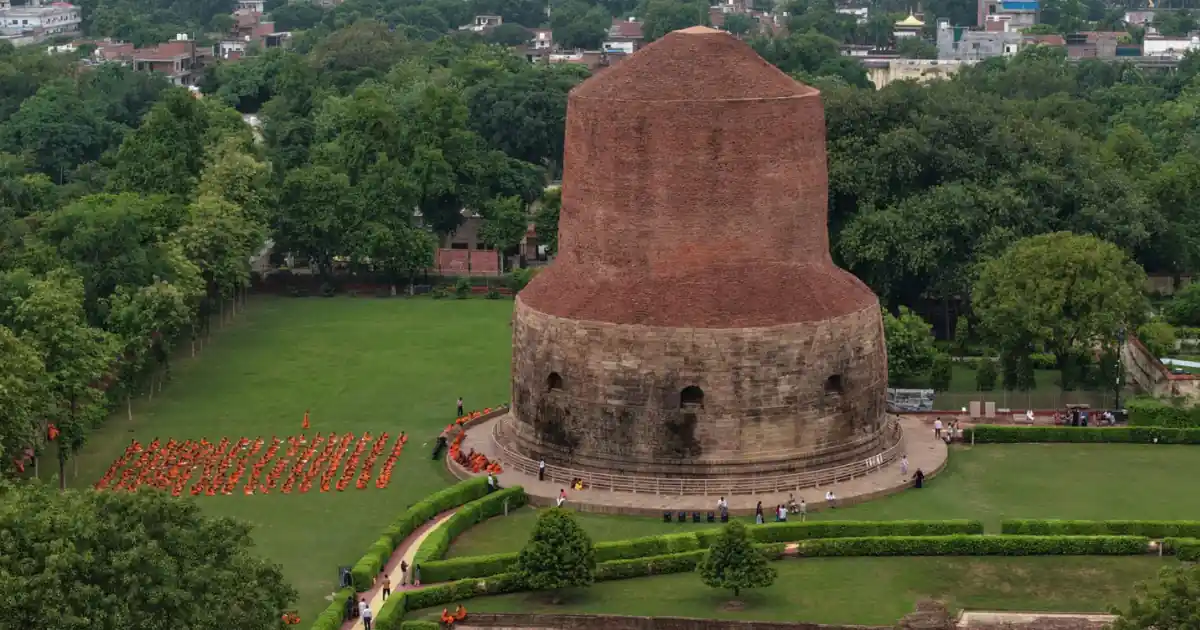
Recently, the Ancient Buddhist Site of Sarnath was inscribed on the UNESCO World Heritage List, recognizing its outstanding universal value as one of the most sacred Buddhist pilgrimage centres in the world.
Sarnath Enters the UNESCO World Heritage List: India's Fourth Buddhist Pilgrimage Site to Receive Global Recognition
The Ancient Buddhist Site of Sarnath, located in Varanasi, Uttar Pradesh, was inscribed on the UNESCO World Heritage List on 25 July 2026, during the 48th session of the World Heritage Committee held in Busan, South Korea. With this inscription, India now has 45 World Heritage sites, and UNESCO's Director-General extended congratulations to the government and people of India, noting that for more than 2,500 years Sarnath has been a place of pilgrimage and inspiration for Buddhists around the world.
"It is here that the Buddha delivered his first sermon, sharing teachings of compassion, wisdom and peace that continue to resonate today."
The inscription brings to a close a notably long journey through UNESCO's nomination process. The recognition ends a twenty-eight-year wait since Sarnath was first placed on UNESCO's tentative list in July 1998, and it also marks Uttar Pradesh's fourth recognised heritage location, with the state's previous entries confined to the Agra region and its Taj Mahal, Agra Fort, and Fatehpur Sikri. India formally submitted the nomination dossier for the 2025-26 cycle in 2025, and Prime Minister Narendra Modi described the inscription as a proud moment for every Indian, linking it to the Buddha's enduring message of wisdom and harmony.
Sarnath: Geography, Textual Names, and Buddhist Significance
Sarnath sits close to Varanasi, one of the world's oldest continuously inhabited cities, and is counted among the four principal holy pilgrimage sites of Buddhism. Ancient Buddhist scriptures refer to the location by several names, including Rishipattan, Ishipatana, and Mrigadava, the latter meaning "deer park," a term still used today for the site's protected grounds.
"According to sacred Buddhist texts, the Buddha travelled to Sarnath in the sixth century BCE after attaining enlightenment, where he met his first disciples and delivered his first sermon."
This event, traditionally dated to around the sixth century BCE, is central to Sarnath's spiritual identity. It was here, after attaining enlightenment, that Lord Buddha delivered his first sermon to humanity, setting in motion what Buddhist tradition calls the Dharmachakra Pravartana, or the turning of the wheel of law, an act regarded as the formal beginning of the spread of Buddhist teaching across the world.
The Inscribed Property: Monuments Spanning Sixteen Centuries
The World Heritage listing covers a serial property made up of two component parts, the Chaukhandi Stupa and the Archaeological Remains of Sarnath, the latter encompassing the Dhamekh Stupa, believed to mark the spot of the first sermon, the Dharmarajika Stupa, the Mulagandhakuti Vihara, and the remains of the Ashokan Pillar, whose Lion Capital today serves as India's National Emblem. Over the centuries, the site grew through sustained royal, monastic, and lay patronage, with successive rulers and communities erecting stupas, temples, and viharas that transformed a simple deer park into a major centre of Buddhist learning and devotion.
"The site comprises an ensemble of monuments constructed from the pre-Mauryan period, spanning the 5th and 4th centuries BCE, through to the 3rd century BCE, continuing until Sarnath's destruction in the 12th century CE."
This continuous architectural development, stretching across roughly sixteen centuries of settlement, makes Sarnath one of the most extensively excavated sites under the Archaeological Survey of India, whose stratified digs have revealed layer upon layer of religious and civic activity. Following its destruction in the 12th century CE, the site fell into obscurity and was only rediscovered in the 18th century, after which systematic excavation gradually revealed the scale of its ancient significance.
Significance and the Way Forward
The inscription carries significance well beyond ceremonial recognition. It formally affirms Sarnath's Outstanding Universal Value under UNESCO's criteria, placing it alongside the world's most treasured cultural sites and offering it a heightened degree of international visibility and protective status. For India, it strengthens the country's already prominent position in global heritage diplomacy, while for Uttar Pradesh specifically, it is expected to substantially boost the state's Buddhist Circuit tourism initiative, drawing pilgrims and visitors from Buddhist-majority nations across Asia who already regard Sarnath as one of the faith's four essential pilgrimage destinations.
The way forward will require translating this global recognition into sustained conservation practice. UNESCO status typically brings closer international scrutiny of a site's preservation standards, and Sarnath's ancient stupas and excavated remains, having survived destruction, obscurity, and centuries of exposure, will need continued, carefully managed archaeological stewardship by the Archaeological Survey of India, alongside infrastructure planning that can absorb rising pilgrim and tourist footfall without compromising the fragile monuments themselves.
Conclusion
The inscription of the Ancient Buddhist Site of Sarnath on the UNESCO World Heritage List closes a nearly three-decade wait and formally recognises a site that has stood, in one form or another, at the heart of Buddhist spiritual life for over two and a half millennia. As India's 45th World Heritage property and Uttar Pradesh's fourth, Sarnath's elevation is both a tribute to its unparalleled religious legacy and a renewed responsibility to safeguard the physical remains through which that legacy survives.