ASEAN Regional Forum: Key Indo-Pacific Platform for Security Dialogue and Cooperation
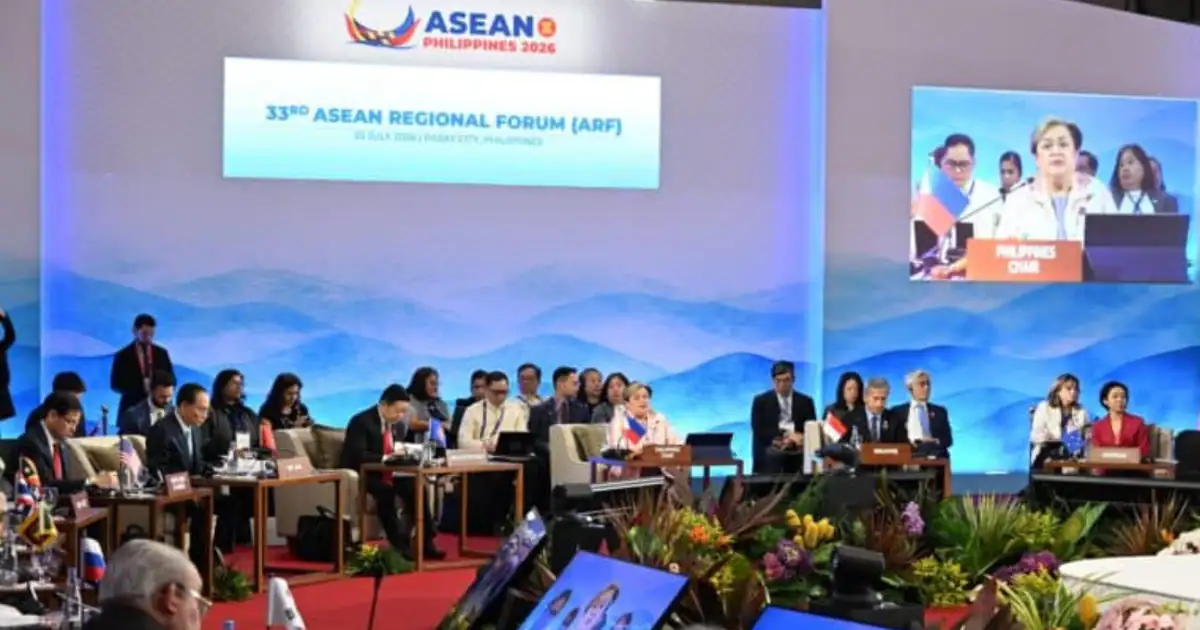
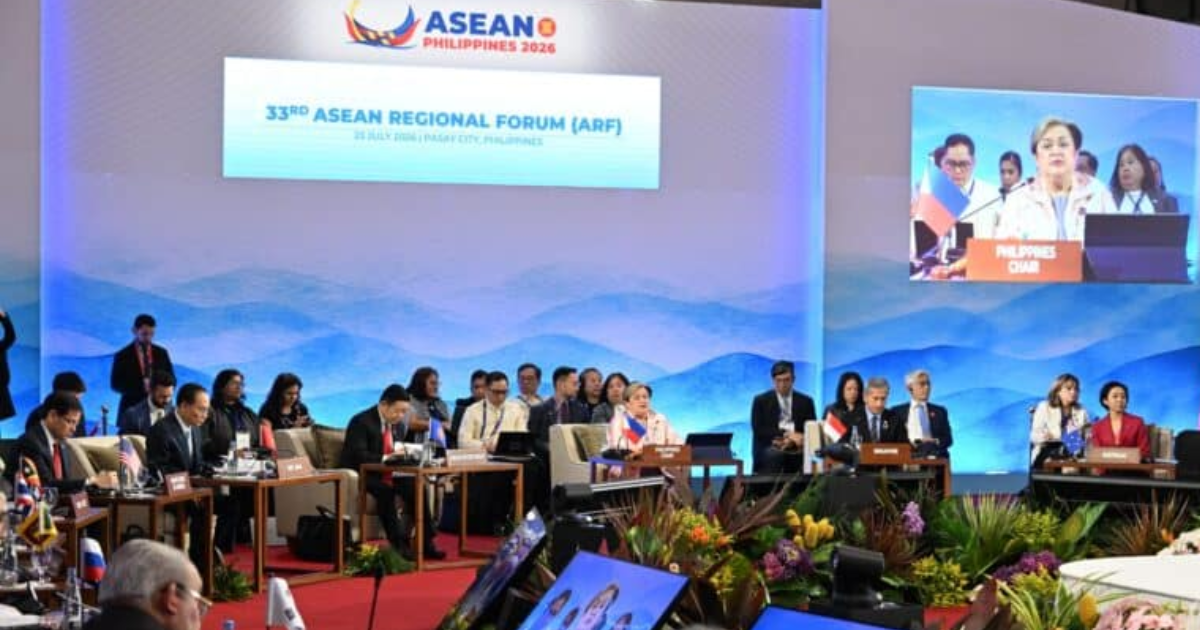
The ASEAN Regional Forum (ARF) is a multilateral security dialogue established in 1994 to promote peace, stability, and confidence-building in the Indo-Pacific region. It serves as the principal forum where ASEAN and its partners discuss political and security challenges through dialogue, consultation, and preventive diplomacy.
ASEAN Regional Forum: India's Continued Engagement with the Indo-Pacific's Premier Security Dialogue
External Affairs Minister S. Jaishankar recently reaffirmed that the ASEAN Regional Forum remains an important platform for discussions on political and security issues in the Indo-Pacific, a statement made during India's active participation in the 33rd ARF Ministerial Meeting held in Manila. Jaishankar visited Manila, Philippines, on 22-23 July 2026 to participate in a series of Foreign Minister-level meetings under the ASEAN framework, including the ASEAN-India, East Asia Summit, and ASEAN Regional Forum meetings. He attended and spoke at the 33rd ASEAN Regional Forum Ministerial Meeting in Manila on 23 July 2026.
"Only deeper cooperation can de-risk and diversify in an increasingly turbulent world."
The visit carried added weight given the Philippines' current role as ASEAN Chair. Speaking on the Philippines' priorities for its 2026 chairmanship, officials described Manila's theme of "Navigating Our Future Together" as reflecting the shared responsibility of member states and partners in addressing geopolitical challenges, with three key priorities identified as "Peace and Security Anchors," "Prosperity Corridors," and "People Empowerment," aligning with ASEAN's political-security, economic, and socio-cultural pillars. The Ministry of External Affairs noted that the visit underscores India's commitment to strengthen the ASEAN-India Comprehensive Strategic Partnership, coming at a time when 2026 has been designated the ASEAN-India Year of Maritime Cooperation. On the sidelines, Jaishankar also held a Quad Foreign Ministers' meeting and a bilateral engagement with US Secretary of State Marco Rubio, reflecting the layered diplomacy that now surrounds ARF gatherings.
Origins and Purpose of the ASEAN Regional Forum
The platform at the centre of these discussions was established in 1994 as an important mechanism for security dialogue in the Indo-Pacific, filling a gap in the region's institutional architecture at a time when no dedicated multilateral forum existed for discussing political and security concerns across Asia-Pacific. It provides a setting in which member countries can discuss current security issues and jointly develop cooperative measures aimed at enhancing peace and stability across the region.
"The forum was created to foster constructive dialogue and consultation on political and security issues of common interest and concern."
The ARF's founding objectives centre on two complementary goals: fostering constructive dialogue on shared political and security concerns, and making meaningful contributions to confidence-building and preventive diplomacy efforts across the Asia-Pacific. These objectives are pursued through a distinctive working method, one characterised by consensus-based decision-making and frank, informal dialogue rather than binding resolutions or adversarial negotiation, an approach often described as the "ASEAN Way" of diplomacy.
Membership and Institutional Structure
The ARF's composition reflects its ambition to be a genuinely pan-regional security forum. It comprises 27 members in total: the 11 ASEAN member states, 10 ASEAN Dialogue Partners, namely Australia, Canada, China, the European Union, India, Japan, New Zealand, the Republic of Korea, Russia, and the United States, along with additional participating members. This broad membership, spanning rival powers and smaller regional states alike, is part of what gives the ARF its unique convening value, bringing together countries that might otherwise lack a shared platform for security dialogue.
"The ARF is chaired by the ASEAN Chair of that year, giving the forum's agenda and priorities a rotating character shaped by the presiding member state."
For 2026, this chairing role falls to the Philippines, whose stated priorities around peace, prosperity, and people empowerment are shaping the tenor of this year's ARF and related ASEAN-led meetings, including the one Jaishankar attended in Manila.
Significance and the Way Forward
The ARF's continued relevance lies in its role as one of the few forums where major and middle powers with competing interests in the Indo-Pacific, including India, China, the United States, and Russia, sit at the same table for security dialogue. For India, sustained engagement with the ARF reinforces its Act East Policy and its broader Indo-Pacific vision, complementing bilateral and Quad-level engagement with a multilateral platform that upholds ASEAN centrality. The synergy repeatedly invoked between India's Indo-Pacific Oceans Initiative and the ASEAN Outlook on the Indo-Pacific reflects a deliberate Indian strategy of anchoring its regional security posture within ASEAN-led frameworks rather than parallel structures.
Going forward, the ARF's consensus-based model, while valuable for inclusivity, faces persistent questions about its ability to produce substantive outcomes on pressing security concerns, from maritime disputes in the South China Sea to broader geopolitical tensions among its major-power members. As the Philippines steers the forum through 2026 under its "Navigating Our Future Together" theme, the test will be whether the ARF can move beyond dialogue toward more concrete confidence-building measures, even as India continues to use the platform to advocate for a rules-based, open Indo-Pacific order.
Conclusion
The ASEAN Regional Forum, now in its fourth decade, continues to serve as one of the Indo-Pacific's few genuinely inclusive security dialogue platforms, and India's active participation in its 33rd ministerial meeting in Manila underscores the continuing centrality of ASEAN to New Delhi's regional strategy. As the forum navigates an increasingly complex geopolitical landscape under the Philippines' 2026 chairmanship, its consensus-driven, dialogue-first approach remains both its defining strength and its principal limitation.