South China Sea: Strategic Maritime Region Amid Rising Regional Concerns
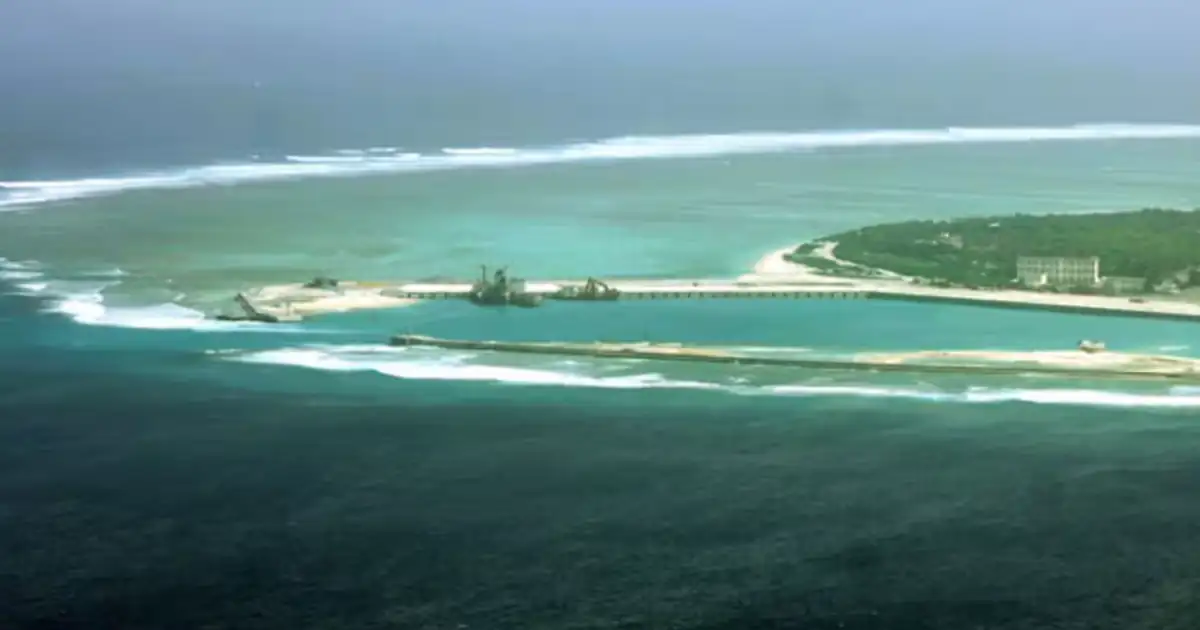
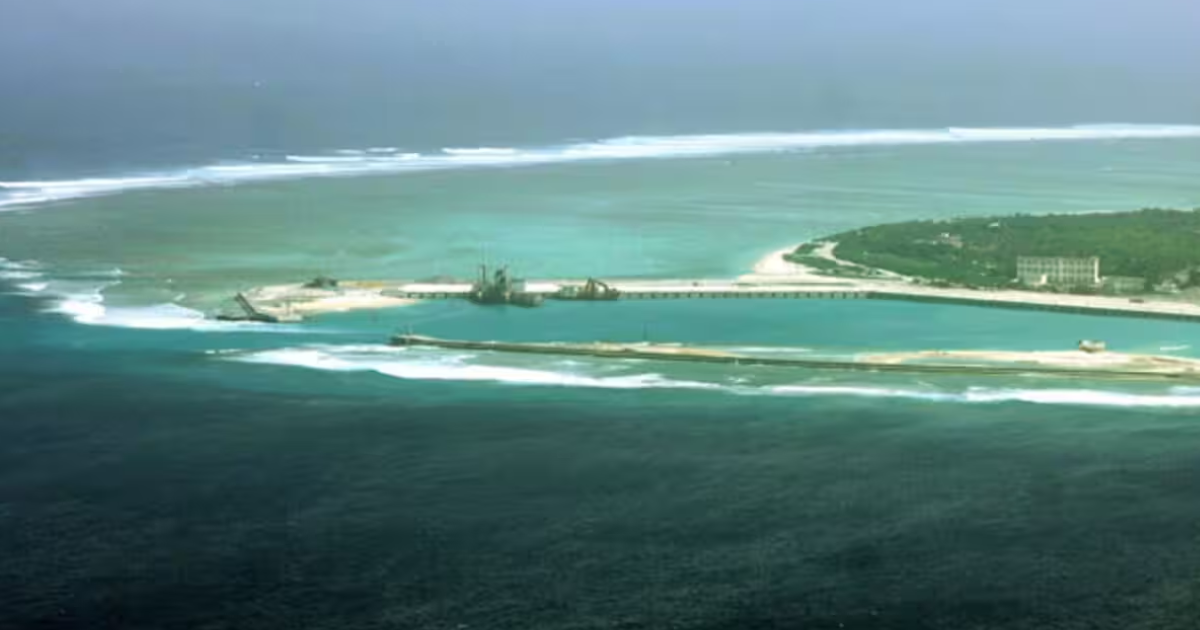
The South China Sea is an arm of the western Pacific Ocean located between East Asia and Southeast Asia. It is one of the world's most strategically and economically important seas due to its vast shipping routes, rich fisheries, hydrocarbon resources, and overlapping territorial claims.
Vietnamese Cargo Ship Sinking Near Fiery Cross Reef: A Human Tragedy in the Contested South China Sea
A Vietnamese cargo ship carrying 62 people sank during stormy weather in the contested South China Sea, triggering a multinational search and rescue operation involving Vietnamese, Chinese, and Philippine forces. The vessel, identified as Khoi Nguyen 18, went down near Fiery Cross Reef, which China administers as Yongshu Reef, with Vietnam's Ministry of Foreign Affairs confirming that 45 people had been rescued and 17 remained missing as of midday on 26 July.
"The vessel sank while operating in bad weather conditions in the East Sea."
Vietnamese Foreign Ministry spokesperson Pham Thu Hang said Vietnamese authorities launched rescue operations immediately after the incident and coordinated closely with Chinese rescue forces operating near the scene, with China dispatching six vessels and one rescue helicopter while seven Vietnamese ships joined the on-site search. The Philippine Coast Guard also deployed a patrol vessel and an aircraft to assist after receiving a request from Vietnam, making the operation a rare instance of trilateral cooperation among claimant states that otherwise dispute sovereignty in these waters. Survivors told rescuers that the ship had sunk on Friday night roughly 220 nautical miles east of Vietnam's Khanh Hoa Province, and Chinese and Vietnamese rescue forces subsequently set up a joint, unified search and rescue command system. The incident occurred within days of a separate, unrelated sinking of a Vietnamese fishing vessel near the Spratly Islands, underscoring the hazardous maritime conditions in the region during this stormy stretch.
The South China Sea: Geography of a Contested Waterway
The waters in which this tragedy unfolded form one of the world's most strategically significant and geopolitically fraught maritime spaces. The South China Sea is an arm of the western Pacific Ocean bordering the Southeast Asian mainland, and it is bounded by China, Taiwan, the Philippines, Malaysia, Indonesia, Brunei, and Vietnam, a configuration that places overlapping territorial claims from multiple nations within a single, densely used body of water.
"The sea connects to the East China Sea through the Taiwan Strait and to the Philippine Sea through the Luzon Strait, both marginal seas of the Pacific Ocean."
Together, the South China Sea and the East China Sea are collectively referred to as the China Sea. Within its waters lie two major archipelagos central to the region's territorial disputes, the Paracel Islands, controlled by China, and the Spratly Islands, where sovereignty is contested among China, Vietnam, the Philippines, Taiwan, and others. Fiery Cross Reef, the site of the recent sinking, sits within the Spratly chain and has been transformed by China into an artificial island hosting a significant military outpost, making it emblematic of the broader militarisation disputes that define this waterway.
Climate and Economic Significance
The sea's weather patterns played a direct role in the recent tragedy. Its climate is tropical and largely governed by the monsoon cycle, producing seasonal storms capable of imperilling vessels of all sizes, from fishing boats to cargo ships, a pattern reflected in the cluster of maritime accidents reported across Vietnamese waters in recent days.
"The sea serves as a vital corridor for crude oil shipments from the Persian Gulf and Africa, transiting the Strait of Malacca en route to Singapore, Thailand, Hong Kong, Taiwan, South Korea, and Japan."
This role as an energy and trade corridor, anchored by major ports including Hong Kong, Singapore, and Kaohsiung in southern Taiwan, is precisely what elevates disputes over the sea's islands and waters from a bilateral or regional matter into one with global economic stakes, since any disruption to shipping through these waters would reverberate across Asia's energy security and supply chains.
Significance and the Way Forward
The rescue operation's cross-border character carries significance beyond the immediate human tragedy. The willingness of Vietnamese, Chinese, and Philippine forces, three states that hold competing sovereignty claims in these very waters, to cooperate on a joint search and rescue mission offers a rare example of functional, humanitarian cooperation cutting across an otherwise adversarial territorial dispute. Such incidents periodically demonstrate that maritime safety and humanitarian imperatives can create space for cooperation even where political and legal disagreements remain intractable.
At the same time, the sinking underscores the human cost borne disproportionately by fishing and cargo crews operating in a sea whose weather volatility is compounded by contested administration, where questions of jurisdiction can complicate the speed and coordination of emergency response. Going forward, strengthening standing multilateral search and rescue protocols among South China Sea claimant states, independent of their territorial disputes, could help ensure faster, better-coordinated responses to future maritime emergencies in these waters.
Conclusion
The sinking of the Khoi Nguyen 18 near Fiery Cross Reef is a stark reminder that the South China Sea, so often discussed through the lens of territorial rivalry and military posturing, remains first and foremost a working sea whose storms and currents pose real dangers to the people who sail it. The trilateral rescue effort that followed offers a modest but meaningful example of humanitarian cooperation persisting even amid one of the world's most contested maritime disputes.