
Global Forest Goals (GFG) Report 2026 Released
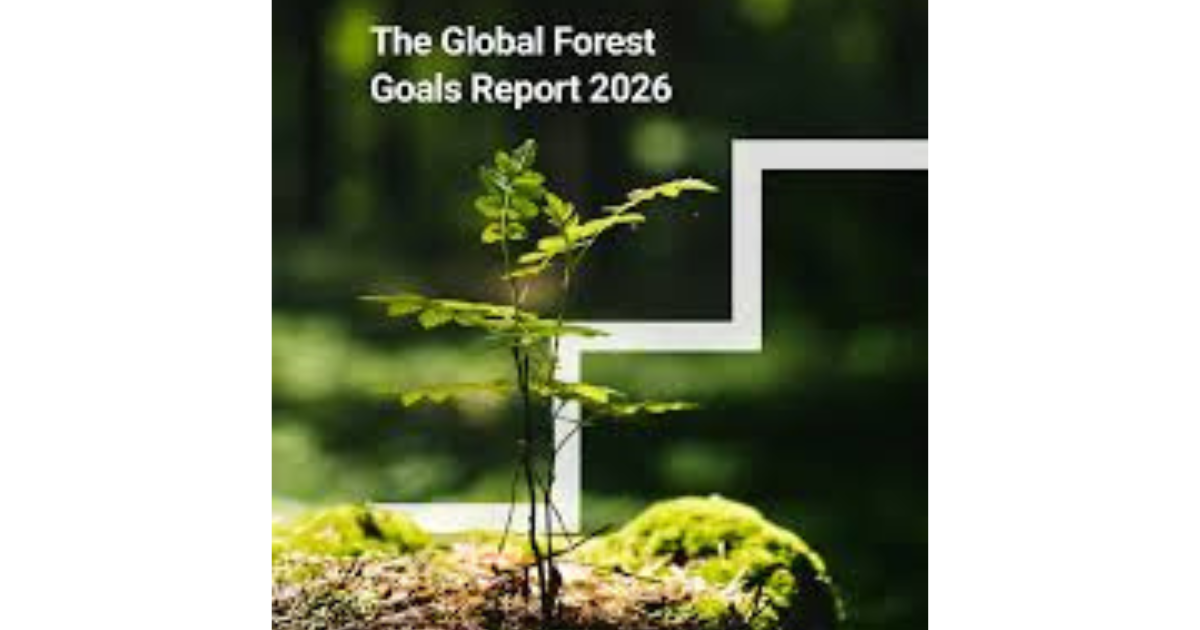
The report prepared by the United Nations Department of Economic and Social Affairs (UN DESA) and the United Nations Forum on Forests (UNFF) Secretariat evaluates global progress toward the six Global Forest Goals (GFGs) set for 2030 under the United Nations Strategic Plan for Forests (2017–2030).
UN Forests Report 2026
Prepared by the United Nations Department of Economic and Social Affairs and the United Nations Forum on Forests Secretariat.
The report assesses progress toward the 6 Global Forest Goals (GFGs) under the United Nations Strategic Plan for Forests (2017–2030).
About UN Forum on Forests (UNFF)
AspectDetailsEstablished2000NatureIntergovernmental body under the UNMembersAll UN member states and specialized agenciesObjectivePromote sustainable management, conservation, and development of forestsSecretariat SupportUN DESA
United Nations Strategic Plan for Forests (2017–2030)
Main Aim
To strengthen sustainable forest management and increase the contribution of forests toward:
Climate action
Biodiversity conservation
Sustainable development
Livelihood security
“Forests are not only environmental assets but also pillars of economic and social stability.”
Six Global Forest Goals (GFGs)
1. Reverse Forest Loss
Reduce deforestation.
Restore degraded forests.
Increase global forest cover.
2. Enhance Forest-Based Benefits
Improve environmental benefits.
Strengthen forest-based livelihoods.
Support economic development.
3. Expand Protected Forest Areas
Increase sustainably managed forests globally.
Improve conservation of biodiversity-rich areas.
4. Mobilize Financial Resources
Increase forest-related investments.
Support restoration and conservation projects.
5. Strengthen Governance Frameworks
Improve forest policy coordination.
Enhance institutional effectiveness.
6. Promote Cooperation and Awareness
Encourage international partnerships.
Increase awareness about forest conservation.
“Sustainable forest management is central to climate resilience and inclusive growth.”
Key Highlights of the Report
1. Reduction in Forest Area
Global forest area declined by more than 40 million hectares between 2015–2025.
Major Drivers
Agricultural expansion
Infrastructure development
Urbanization
Rising demand for fuelwood and charcoal
Impacts
Habitat destruction
Biodiversity decline
Soil degradation
Reduced carbon sink capacity
“Deforestation is not merely loss of trees; it is loss of ecological security.”
2. Intensification of Forest Degradation
Climate-Linked Pressures
Droughts
Heatwaves
Wildfires
Pest outbreaks
Forest diseases
Effects
Ecosystem imbalance
Reduced forest productivity
Increase in greenhouse gas emissions
3. Barriers to Sustainable Forest Management
Governance Challenges
Weak governance systems
Illegal logging
Illegal forest trade
Insecure land tenure
Corruption
Limited institutional capacity
Consequences
Unsustainable resource exploitation
Weak conservation outcomes
Increased land conflicts
“Weak governance remains one of the greatest threats to global forest sustainability.”
Sustainable Forest Management (SFM)
Meaning
Management of forests in a way that:
Conserves biodiversity
Maintains ecological balance
Supports livelihoods
Ensures long-term productivity
Core Principles
Ecological sustainability
Economic viability
Social equity
Forest Finance Gap
IndicatorAmountForest Finance in 2023US$84 BillionEstimated Need by 2030US$300 Billion annually
Why More Finance is Needed?
Reforestation
Afforestation
Restoration of degraded forests
Climate adaptation
Biodiversity conservation
“Without adequate finance, global forest restoration goals may remain unreachable.”
Recommendations of the Report
1. Stronger International Coordination
Improve cooperation among nations.
Align forest policies with climate and biodiversity goals.
2. Increase Forest Financing
Mobilize public and private investments.
Provide support to developing countries.
3. Deforestation-Free Supply Chains
Target Commodities
Palm oil
Timber
Soy
Cocoa
Goal
Ensure production systems do not contribute to forest destruction.
4. Cleaner Energy Access
Reduce dependence on fuelwood and charcoal.
Promote renewable and clean cooking energy.
Benefits
Reduced pressure on forests
Better public health
Lower indoor air pollution
“Energy poverty and forest degradation are closely interconnected challenges.”
5. Strengthen Governance Systems
Improve forest monitoring.
Enforce environmental laws effectively.
Protect indigenous and community rights.
Importance of Forests
Environmental Importance
Carbon sequestration
Climate regulation
Soil conservation
Water cycle maintenance
Biodiversity protection
Economic Importance
Timber and forest products
Employment generation
Ecotourism
Social Importance
Livelihoods for tribal and indigenous communities
Food and medicinal resources
Cultural significance
“Protecting forests means protecting biodiversity, livelihoods, and future generations.”
Forests and Climate Change
Forests act as major carbon sinks and are crucial for achieving:
Paris Agreement targets
Sustainable Development Goals (SDGs)
Biodiversity conservation goals
Continued Deforestation Can Lead To
Accelerated global warming
Water scarcity
Food insecurity
Species extinction
India and Forest Conservation
Major Initiatives
National Mission for a Green India
Focus on afforestation and ecosystem restoration.
CAMPA Funds
Compensatory afforestation mechanism.
Nagar Van Scheme
Promotion of urban forests.
Joint Forest Management (JFM)
Community participation in forest protection.
Forest Survey of India (FSI)
Publishes the India State of Forest Report (ISFR).
Challenges Before India
Forest fires
Mining pressure
Encroachment
Human-animal conflict
Development versus conservation debate
Shifting cultivation
Way Forward
Policy Measures
Strengthen forest governance.
Improve implementation of environmental laws.
Technological Measures
Satellite monitoring
GIS mapping
Early wildfire warning systems
Community Participation
Involve tribal and local communities.
Promote sustainable livelihoods.
Environmental Measures
Restore degraded forests.
Encourage agroforestry and social forestry.
“The future of climate security depends significantly on the future of forests.”
Important Terms
TermMeaningCarbon SinkSystem absorbing more carbon than it emitsREDD+UN initiative to reduce emissions from deforestationAfforestationPlanting trees in non-forest areasReforestationReplanting trees in degraded forest areasSustainable Forest ManagementBalanced use and conservation of forests
Conclusion
The UN Forests Report 2026 highlights that global deforestation and forest degradation continue despite international commitments. Climate change, weak governance, and inadequate financing remain major barriers. Achieving the Global Forest Goals by 2030 requires stronger cooperation, sustainable production systems, increased investments, and active participation of local communities in forest conservation.