Asiatic Wild Dogs: Study Reveals Hypercarnivorous Diet and Conservation Status
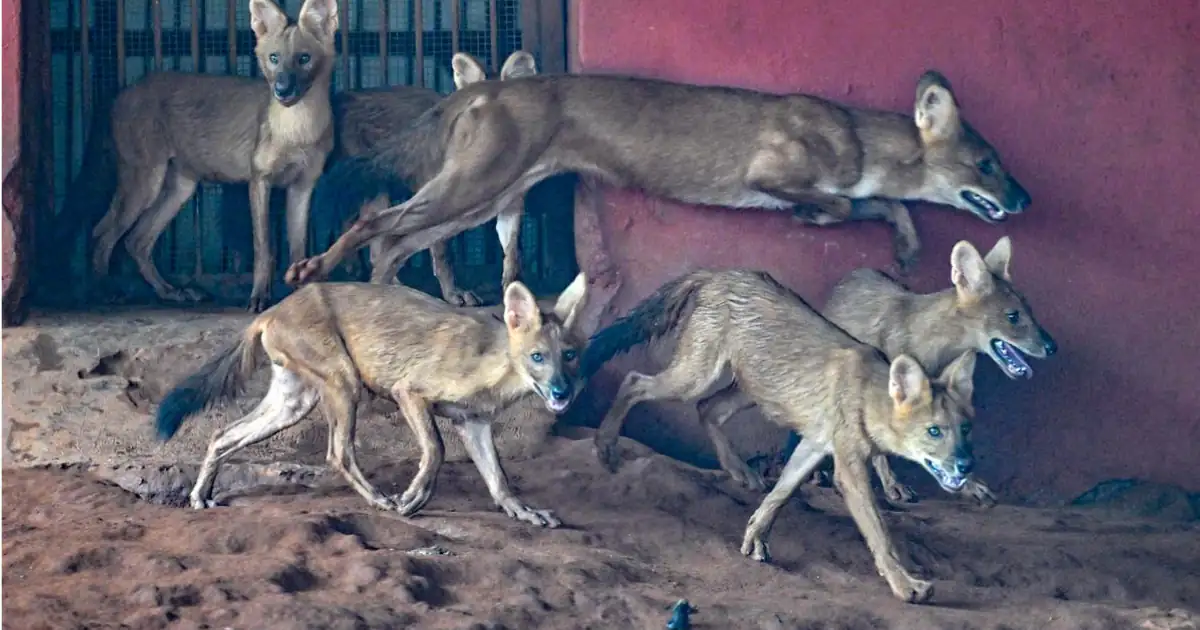
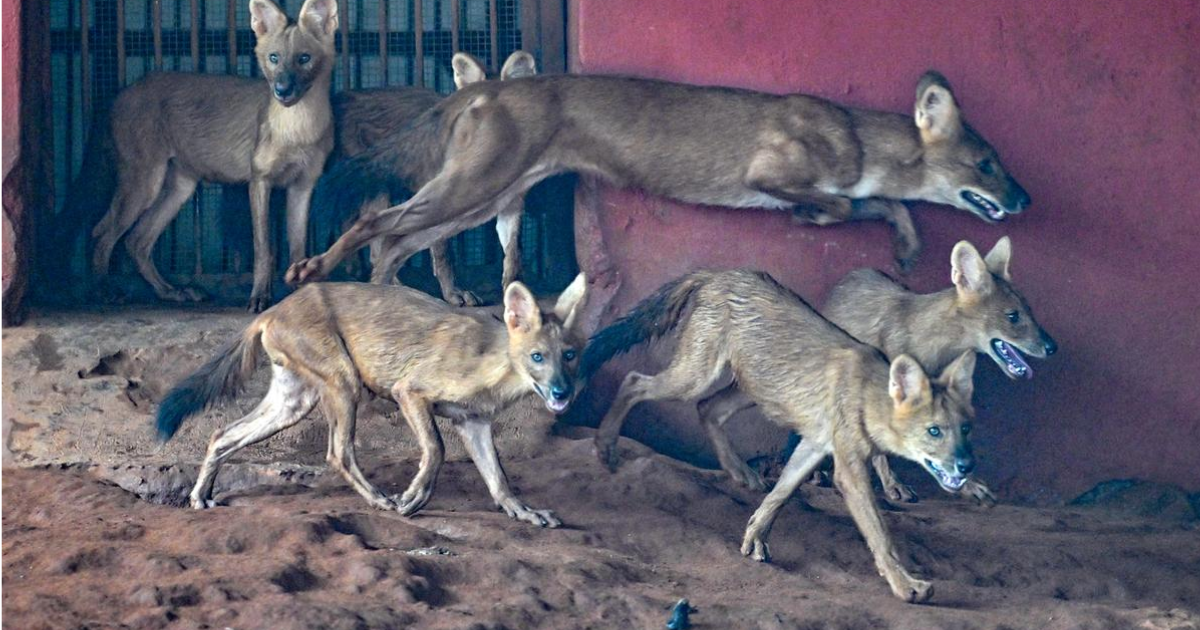
A recent study has found that the Asiatic wild dog (Dhole) is a hypercarnivore, with over 70% of its diet consisting of meat. In Central India, dholes primarily prey on sambar and chital, while livestock forms only a very small part of their diet.
Dhole Diet Study: DNA Metabarcoding Confirms Asiatic Wild Dogs as Hypercarnivores in Central India
A recent study has shown that Asiatic wild dogs are hypercarnivores, canids in which over 70 percent of the diet consists of meat, mostly eating sambar and chital deer and very little livestock, at least in Central India. The findings emerge from a paper titled "Minimal Sample, Maximum Insight: DNA Metabarcoding Uncovers the Diet of Endangered Dholes in Central India," authored by Abhinav Tyagi, Alex M., Prajakta Hushangabadkar, Nandkishor Kale, Jitendra Ramgaokar, and Uma Ramakrishnan, published in May in the journal Environmental DNA.
"Endemic to South and Southeast Asia, dholes have suffered a substantial range contraction of over 80 percent from their historical distribution."
The researchers determined the overall diet of dholes in the Tadoba Andhari Tiger Reserve, a key stronghold for the species in Central India, using 169 samples collected across two seasons and recovering 15 unique vertebrate prey species. Based on frequency of occurrence, the most commonly detected prey species was chital, followed closely by sambar, then barking deer, black-naped hare, wild boar, and four-horned antelope, with the remaining nine species each appearing in fewer than 10 percent of samples. This DNA metabarcoding approach, which analyses genetic material in scat samples to identify consumed species with high precision, offers a more granular picture of dhole diet than earlier scat-morphology or kill-observation methods, while confirming their broader conclusions.
Understanding Hypercarnivory
The classification of dholes as hypercarnivores rests on a well-established ecological threshold: carnivores whose diet comprises more than 70 percent meat by volume fall into this category, distinguishing them from omnivorous or mesocarnivorous species that supplement animal protein with substantial plant or insect matter. For dholes, this hypercarnivorous status has been corroborated by multiple independent studies across their range.
"Ungulates constitute 85 percent of the diet of the Asiatic wild dog across its range, with sambar and chital together accounting for over half of relative prey frequency."
An earlier landscape-scale study across the Central Indian forests of Maharashtra similarly found that sambar and chital alone contributed roughly three-quarters of the biomass consumed by dholes across 861 analysed scats and 191 observed kills, with sambar alone accounting for the largest single share of both biomass and prey numbers. This consistency across independent studies, using different methodologies and sampling years, strengthens confidence that sambar and chital form the ecological backbone of dhole nutrition across Central India's tropical forests.
Livestock Predation: A Minimal Component
A particularly significant finding across these studies is the marginal role played by livestock in the dhole diet, a detail with direct implications for human-wildlife conflict management. Despite dholes inhabiting forest landscapes often bordering agricultural and pastoral communities, cattle and other domestic animals consistently register as negligible or actively avoided prey items in diet studies, standing in contrast to the sizeable role livestock predation plays in the ecology of other large carnivores sharing the same landscapes.
"Cattle were significantly avoided by the Asiatic wild dog, a finding consistent across dietary preference studies conducted in different regions of its range."
This strong preference for wild ungulates over livestock suggests that dhole populations, where adequately supported by healthy prey-rich forests, pose comparatively limited direct economic risk to local pastoral communities, a finding that could meaningfully shape how conservation and conflict-mitigation strategies are prioritised in landscapes where dholes and human settlements coexist.
About the Asiatic Wild Dog
The species at the centre of these findings, also known as the dhole, Indian wild dog, whistling dog, red wolf, red dog, or mountain wolf, is a wild Asian member of the dog family Canidae. It is found throughout Central, Eastern, and Southeastern Asia, and within India occupies three distinct population clusters: the Western and Eastern Ghats, the central Indian landscape, and Northeast India, with the Western and Eastern Ghats serving as its principal strongholds. Dholes inhabit a wide range of terrain, including dense jungles, steppes, mountains, scrub forests, and pine forests, and the species is currently listed as Endangered on the IUCN Red List.
Physically, the dhole is a sleek, reddish-brown, medium-sized canid, with males generally more muscular than females. It is a highly social species, typically living in groups ranging from 2 to 25 individuals, and is known for its athleticism, being a fast runner, an excellent swimmer, and an impressive jumper. Dholes are also notable communicators, using a distinctive, eerie whistle to coordinate with pack members, a trait that has earned them the alternate name "whistling dog."
Significance and the Way Forward
The confirmation of dholes as hypercarnivores with minimal livestock dependence carries direct conservation significance. It underscores that maintaining healthy populations of wild ungulates such as sambar and chital within protected landscapes is essential to sustaining dhole populations, since a depleted natural prey base would likely push these carnivores toward greater livestock predation and, consequently, greater conflict with surrounding human communities. This reinforces the broader ecological principle that apex and meso-predator conservation is inseparable from prey-base management.
Given the species' more than 80 percent historical range contraction, the way forward for dhole conservation lies substantially in protecting and expanding prey-rich forest habitat across their remaining Central Indian strongholds, alongside continued genetic and dietary monitoring using techniques like DNA metabarcoding to track how dhole feeding ecology responds to habitat fragmentation, prey depletion, and competitive pressure from co-occurring large carnivores such as tigers and leopards.
Conclusion
The latest DNA metabarcoding study adds further scientific weight to a consistent finding across dhole research in Central India: this endangered canid remains a committed hypercarnivore reliant on wild ungulates, particularly sambar and chital, with strikingly little dependence on livestock. As dhole populations continue to face pressure from habitat loss and range contraction, safeguarding the prey-rich forests that sustain this dietary pattern will be central to the species' long-term survival.