
Five Core Principles Guiding India’s Diplomacy
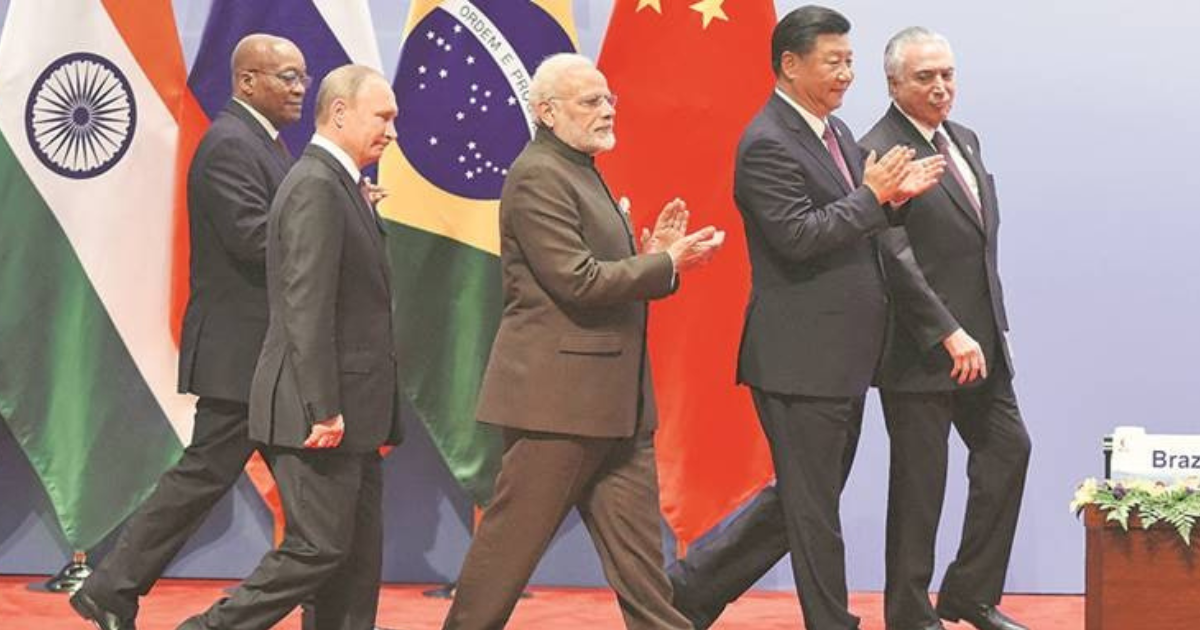
In the present international environment, the global order is undergoing rapid transformation due to geopolitical rivalries, regional conflicts, economic fragmentation, and changing power equations. In this context, India’s foreign policy must be guided by a balanced, pragmatic, and future-oriented diplomatic strategy.
Five Core Principles for India’s Diplomacy
Amid a changing global order marked by geopolitical rivalry, regional conflicts, economic uncertainty, and technological competition, India’s foreign policy must remain pragmatic, flexible, and interest-driven.
India’s diplomacy should be guided by five major strategic principles:
1. Reciprocity
Meaning
India’s foreign policy should be based on mutual trust, support, and balanced partnerships.
Countries supporting India’s core interests should receive stronger diplomatic, economic, and strategic engagement from India.
Importance
Builds reliable long-term partnerships.
Enhances strategic trust.
Strengthens India’s global bargaining power.
Example
Despite tensions arising from the Iran conflict, the Prime Minister’s visit to the United Arab Emirates reflects India’s recognition of the UAE’s support on:
Kashmir issue
Counter-terrorism cooperation
Economic and energy partnerships
“Diplomacy thrives not merely on interests, but on reciprocity and trust.”
Benefits for India
Better political support in international forums.
Enhanced defence and security cooperation.
Stable economic partnerships.
2. Diversification
Meaning
India should expand diplomatic and economic engagement beyond traditional partners to avoid excessive dependence on any one country or bloc.
Need for Diversification
Reduces strategic vulnerability.
Ensures supply chain resilience.
Creates access to new markets and technologies.
Areas of Diversification
Trade partnerships
Energy imports
Technology cooperation
Defence procurement
Semiconductor supply chains
Example
India is expanding cooperation with Europe in:
Free trade agreements
Advanced technologies
Green energy
Digital infrastructure
Strategic Significance
Reduces overdependence on major powers.
Improves India’s global economic integration.
Enhances technological competitiveness.
“In a fragmented world, diversification is the foundation of strategic autonomy.”
3. Strategic Flexibility
Meaning
India must maintain a pragmatic and interest-based foreign policy amid shifting global power equations.
Rather than rigid alliances, India follows a policy of multi-alignment.
Key Features
Issue-based partnerships
Independent decision-making
Balancing multiple power centres
Example
India simultaneously engages with:
BRICS
Quadrilateral Security Dialogue
This reflects India’s ability to work with different geopolitical groupings based on national interests.
Importance
Preserves strategic autonomy.
Avoids bloc politics.
Increases diplomatic maneuverability.
“India’s diplomacy is guided by strategic autonomy, not strategic isolation.”
4. Strategic Expansion
Meaning
India should deepen engagement with emerging regions of geopolitical and economic importance.
Focus Regions
Africa
Latin America
Central Asia
Indo-Pacific
West Asia
Objectives
Secure energy resources
Access critical minerals
Expand export markets
Improve connectivity
Example
Growing India–Africa cooperation includes:
Trade partnerships
Development assistance
Critical mineral access
Capacity-building programs
Importance for India
Strengthens Global South leadership.
Counters strategic influence of rival powers.
Enhances economic opportunities.
“The future of global influence will depend on engagement with emerging regions.”
5. Domestic Renewal
Meaning
Strong diplomacy must be supported by:
Economic resilience
Technological strength
Manufacturing capacity
Institutional reforms
Without domestic strength, external influence remains limited.
Key Areas
Economic Strength
Manufacturing growth
Infrastructure development
Export competitiveness
Technological Capability
Semiconductor ecosystem
Artificial Intelligence
Space and digital technologies
Strategic Self-Reliance
Defence manufacturing
Energy security
Supply chain resilience
Example
India’s focus on:
Make in India
Digital India
Semiconductor Mission
Technological self-reliance
supports its diplomatic and strategic ambitions.
Importance
Enhances credibility in global negotiations.
Reduces external vulnerabilities.
Improves long-term strategic capacity.
“Foreign policy ultimately rests on the foundations of domestic strength.”
Challenges Before India’s Diplomacy
Geopolitical Challenges
US–China rivalry
Russia–Ukraine conflict
West Asia tensions
Economic Challenges
Trade disruptions
Energy insecurity
Supply chain fragmentation
Strategic Challenges
Border tensions
Cybersecurity threats
Technological competition
India’s Emerging Diplomatic Approach
Key Characteristics
Multi-alignment
Strategic autonomy
Economic diplomacy
Technology partnerships
Global South leadership
Importance of India’s Diplomatic Strategy
Political Importance
Enhances India’s global influence.
Strengthens role in multilateral institutions.
Economic Importance
Expands trade and investment opportunities.
Improves energy and resource security.
Strategic Importance
Balances major power rivalries.
Protects national interests.
“India seeks partnerships without dependence and cooperation without compromise.”
Way Forward
Strengthen Economic Competitiveness
Improve manufacturing capacity.
Expand innovation ecosystem.
Deepen Strategic Partnerships
Enhance ties with trusted partners.
Expand Indo-Pacific cooperation.
Promote Technological Self-Reliance
Invest in critical technologies.
Strengthen digital infrastructure.
Enhance Global South Engagement
Increase development cooperation.
Support inclusive global governance reforms.
Conclusion
In an era of geopolitical uncertainty and economic transformation, India’s diplomacy must remain flexible, diversified, and rooted in national interest. Reciprocity, diversification, strategic flexibility, strategic expansion, and domestic renewal together form the foundation of a resilient and forward-looking foreign policy. These principles can help India strengthen its position as a leading global power while safeguarding its strategic autonomy and developmental priorities.