US Deploys Dark Eagle Hypersonic Missile in Guam: Advancing Long-Range Strike Capability
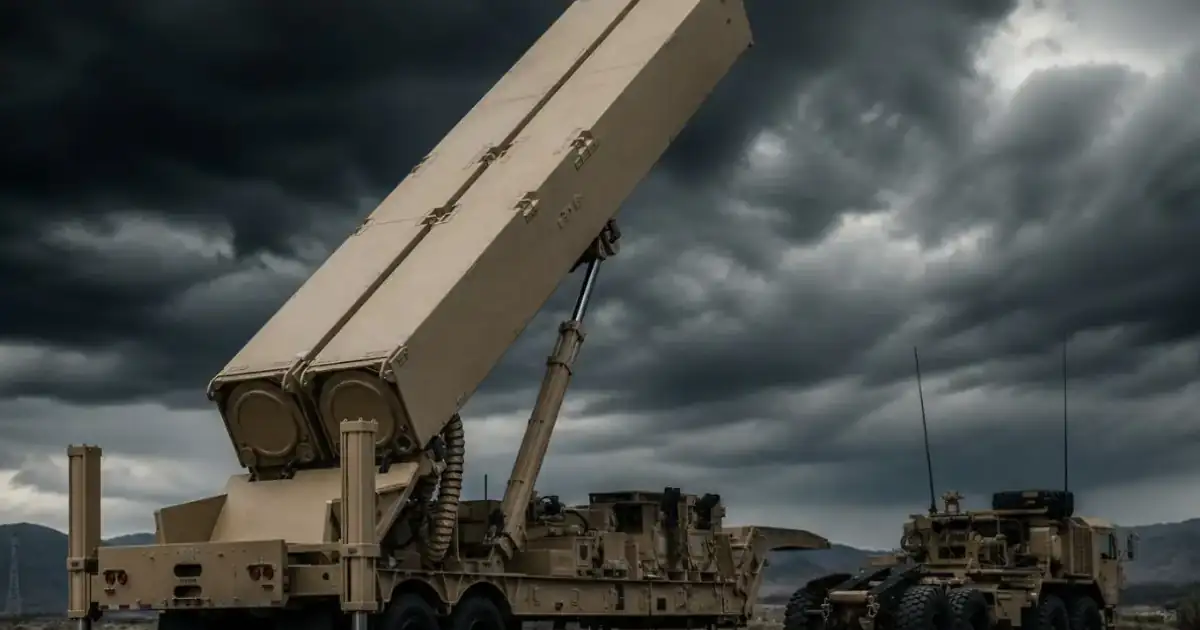
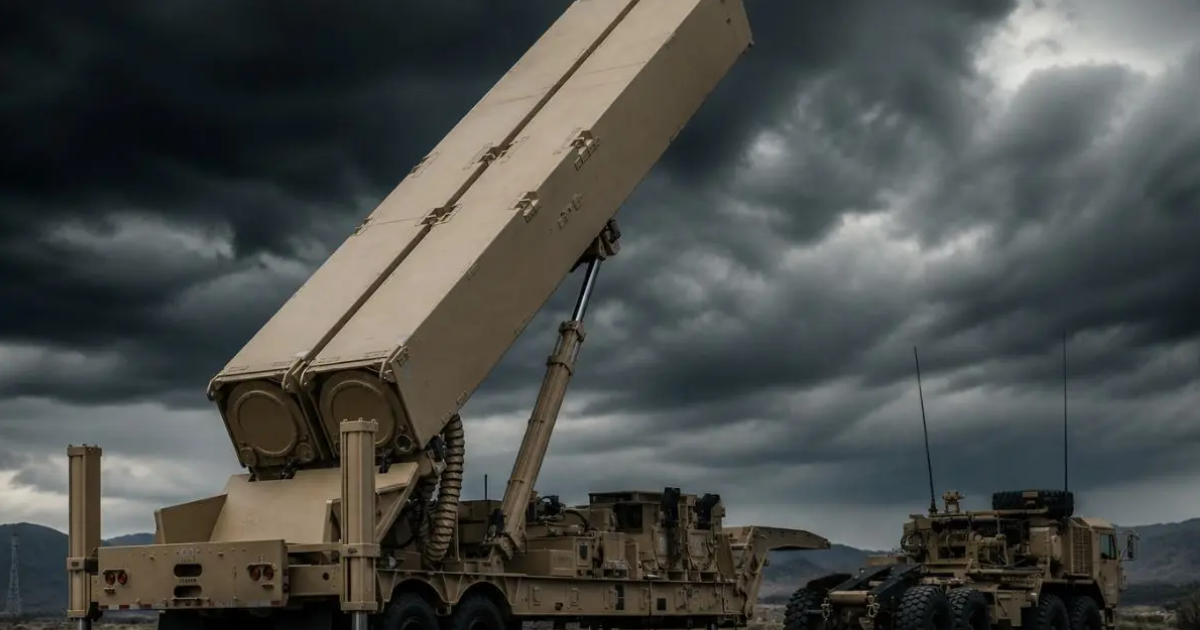
Recently, the United States deployed the Dark Eagle hypersonic missile system in Guam for the first time, marking a significant enhancement of its long-range precision strike capability in the Indo-Pacific region.
Dark Eagle Hypersonic Missile
The United States recently deployed the Dark Eagle hypersonic missile system in Guam for the first time, during Exercise Valiant Shield conducted across Japan, Guam, and the Northern Mariana Islands. The deployment was disclosed after images were posted showing the commander of U.S. Pacific Command inspecting the Long-Range Hypersonic Weapon during the exercise. This marks a significant step in strengthening U.S. deterrence capabilities against China in the Indo-Pacific region, as the location places parts of China's eastern seaboard within the system's estimated range.
About Dark Eagle Hypersonic Missile
The Dark Eagle, officially called the Long Range Hypersonic Weapon (LRHW), is a non-nuclear, ground-launched hypersonic missile system of the United States Army.
It is the U.S. Army's first operational hypersonic missile system, representing a major milestone in the Pentagon's next-generation weapons portfolio.
The Dark Eagle is among the Pentagon's highest-priority next-generation weapons systems.
The missile component is being developed jointly by Lockheed Martin and Northrop Grumman, while the booster stage originated from the Navy's Conventional Prompt Strike program.
The weapon is designed to strike heavily defended, time-sensitive targets including command centres, air defence networks, missile launchers, and naval facilities.
Key Features
Range: The system can strike targets at distances of roughly 2,776 to 3,500 kilometers, depending on the source and configuration.
Battery Composition: A battery has four transporter-erector-launchers carried on modified semitrailers, with two sealed rounds on each launcher, giving the battery eight ready missiles, one Battery Operations Center, and one support vehicle.
Core Technology: At the heart of the system is the Common Hypersonic Glide Body (C-HGB) — a boost-glide vehicle capable of exceeding Mach 5.
Launch Mechanism: The missile uses a two-stage booster that accelerates the glide body before separating, after which the glide body flies unpowered through the upper atmosphere at hypersonic speed.
Maneuverability: Unlike conventional ballistic missiles, it manoeuvres unpredictably toward its target, making interception significantly more difficult while reducing warning time for defenders.
Warhead: The glide body carries a conventional high-explosive warhead, optimized for kinetic strike effects against hardened or deeply buried targets.
Guidance: The system relies on a precision inertial navigation system, likely supplemented with GPS-based corrections during boost and glide phases.
Strategic Significance
Guam is a linchpin of the Pentagon's Indo-Pacific strategy, home to Andersen Air Force Base, Naval Base Guam, and other ports vital to supporting aircraft carrier and submarine operations.
In any potential high-end conflict with China, whether triggered by developments around Taiwan or the South China Sea, Guam would likely function as a critical staging base and power-projection node.
The deployment aligns with calls from Pacific Command's leadership to station hypersonic weapons in the theater to better deter China, which has already fielded its own hypersonic systems such as the road-mobile DF-17.
The deployment is part of a broader U.S. effort to close the hypersonic capability gap, as China has emerged as a world leader in hypersonic weapons, with a large inventory including the DF-17, the YJ-21 anti-ship missile, and the long-range DF-27.
Notably, some reports have raised ambiguity over the exact location, with one account suggesting the missile may have actually been positioned on Tinian, roughly 100 miles from Guam, rather than Guam itself.
Broader Fielding Status
The Dark Eagle program consists of two main initiatives: an initial prototype battery with four launchers and eight missiles, and a separate rapid-fielding effort to add two more batteries.
The first full battery is not expected to be fielded until at least the second quarter of fiscal year 2026, more than two years behind the original schedule.
This was not the system's first appearance overseas — the Hawaii-based 3rd Multi-Domain Task Force had earlier deployed the Dark Eagle to Australia's Northern Territory for Exercise Talisman Sabre in July 2025, marking its first overseas appearance.
Conclusion
The deployment of the Dark Eagle hypersonic missile to Guam signals Washington's intent to project credible deterrence in the Indo-Pacific amid intensifying strategic competition with China. Combining extreme speed, unpredictable maneuverability, and long-range strike capability, the system is designed to hold high-value, heavily defended targets at risk while evading advanced missile defenses. Even as questions remain over the exact deployment location and the pace of full operational fielding, the move underscores how hypersonic weapons have become central to great-power military strategy, with the U.S., China, and Russia all racing to expand their respective arsenals.