Atal Beemit Vyakti Kalyan Yojana (ABVKY): ESIC Extends Unemployment Relief Scheme Till June 2027
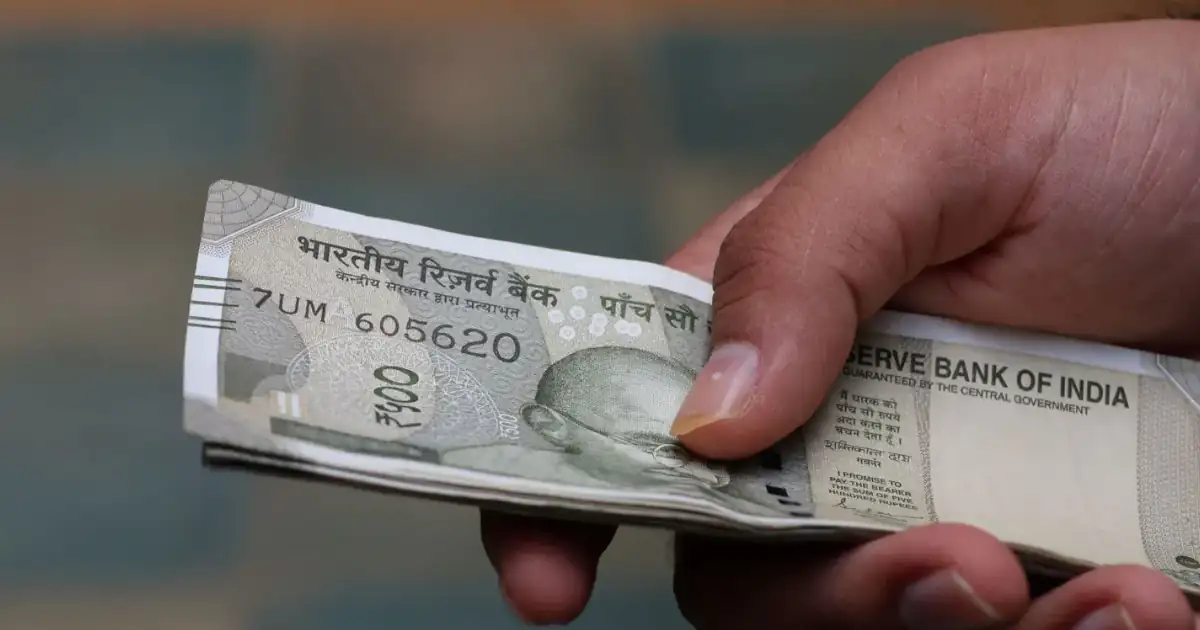
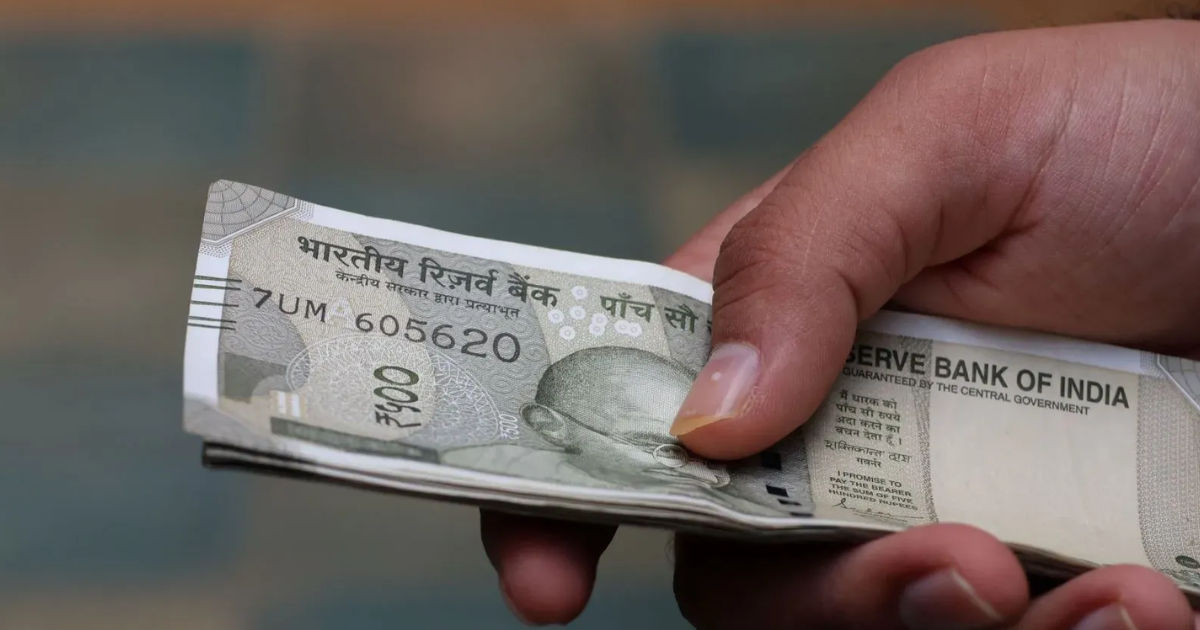
Recently, the Employees’ State Insurance Corporation (ESIC) approved the extension of the Atal Beemit Vyakti Kalyan Yojana (ABVKY) from 1 July 2026 to 30 June 2027, continuing unemployment relief for eligible insured workers under the Employees' State Insurance (ESI) framework.
ESIC Extends ABVKY: Sustaining Unemployment Relief for India's Insured Workforce
The Employees' State Insurance Corporation has approved the extension of the Atal Beemit Vyakti Kalyan Yojana from 1 July 2026 to 30 June 2027, ensuring continuity of this unemployment relief scheme for another year. The decision was taken at the 198th meeting of the Corporation, chaired by Union Labour and Employment Minister Mansukh Mandaviya in New Delhi, alongside several other measures covering healthcare infrastructure, medical education, and administration.
"The decisions covered healthcare infrastructure, medical education and administration, including a decision to directly manage all upcoming and newly commissioned ESI hospitals and extend the Atal Beemit Vyakti Kalyan Yojana by another year."
At the same meeting, ESIC decided that all upcoming and newly commissioned ESI hospitals would henceforth be managed directly by the Corporation, while hospitals currently run by state governments and undergoing reconstruction or upgradation would continue under state management unless the respective state opts to transfer them. The Corporation also approved, in principle, the establishment of a dental college with undergraduate and postgraduate programmes at ESIC Medical College and Hospital, Basaidarapur, New Delhi, along with a new medical college at Haridwar offering an annual intake of 50 MBBS seats from the 2027-28 academic session, using existing ESIC hospital infrastructure. This marks the scheme's latest extension in a pattern of periodic renewals, having previously been extended from July 2024 to June 2026 at the Corporation's 194th meeting.
Origins and Purpose of ABVKY
The scheme now extended into its ninth year traces back to 1 July 2018, when it was introduced as an unemployment relief measure for workers covered under the Employees' State Insurance Act, initially launched on a pilot basis for a two-year period before its repeated subsequent extensions. Implemented by ESIC, it is designed to provide temporary financial assistance to insured employees who lose their jobs, helping them meet essential expenses while they search for fresh employment.
"This scheme is a welfare measure for employees covered under Section 2(9) of the ESI Act, 1948, providing relief payment of up to 90 days, once in a lifetime."
During the COVID-19 pandemic, the scheme's eligibility criteria were significantly relaxed and its benefit enhanced, with relief raised from 25 percent to 50 percent of average wages and the waiting period shortened from 90 days to 30 days after job loss, changes that were later folded into the scheme's revised, more generous standard framework that continues today.
Benefits and Eligibility Framework
Under the scheme, eligible insured persons receive relief equivalent to 50 percent of their average daily earnings during the previous four contribution periods, calculated as total earnings across those periods divided by 730, payable for a maximum of 90 days of unemployment, available only once in an insured person's lifetime. To qualify, an employee must be covered under Section 2(9) of the ESI Act of 1948, must actually be unemployed during the claim period, must have worked in insurable employment for at least two years, and must have contributed for no less than 78 days in each of the four relevant contribution periods, with the employer having paid or being liable to pay the corresponding contributions. The insured person's Aadhaar and bank account must also be linked to facilitate disbursement.
"Payment shall be made directly to the insured person's bank account, with the claim submitted directly to the ESIC Branch Office."
Relief under the scheme is explicitly barred in several circumstances, including during a lockout, an illegal strike, voluntary abandonment of employment or voluntary or premature retirement, less than two years of contributory service, attaining superannuation age, conviction for a false statement under the ESI Act's provisions, re-employment elsewhere while receiving relief, dismissal or termination through disciplinary action, or the death of the insured person. Claims may be submitted at any time after becoming unemployed, but not later than one year from the date of unemployment.
Significance and the Way Forward
The continued extension of ABVKY reflects its established role as a functional social security safety net for India's formal-sector workforce, offering a structured, DBT-based unemployment cushion in a labour market where comprehensive unemployment insurance remains limited outside the ESI framework. Its periodic renewal, now spanning eight years since its 2018 launch, signals sustained governmental commitment to maintaining this benefit as a standing feature of India's social security architecture rather than a temporary, crisis-linked measure, even as the scheme's original pandemic-era justification has receded.
Going forward, the scheme's continued relevance will depend on maintaining efficient claims processing and disbursement through the Direct Benefit Transfer mechanism, alongside ensuring awareness among eligible insured persons, particularly in the informal-to-formal transition segments of the workforce, so that the benefit reaches those who need it within the one-year claim window. The parallel decisions on hospital management and medical education taken alongside this extension also suggest ESIC's broader institutional expansion, which may eventually necessitate closer coordination between its healthcare and welfare-benefit functions to serve India's insured workforce comprehensively.
Conclusion
The extension of the Atal Beemit Vyakti Kalyan Yojana through June 2027 ensures continuity of a scheme that has, since 2018, provided a meaningful financial cushion to insured workers navigating involuntary unemployment. As ESIC continues to expand its institutional footprint through direct hospital management and new medical colleges, the sustained renewal of ABVKY underscores that unemployment relief remains a core pillar of the social security net it extends to India's organised-sector workforce.