K. Radhakrishnan Committee: Blueprint for Secure, Technology-Driven and Transparent Public Examinations
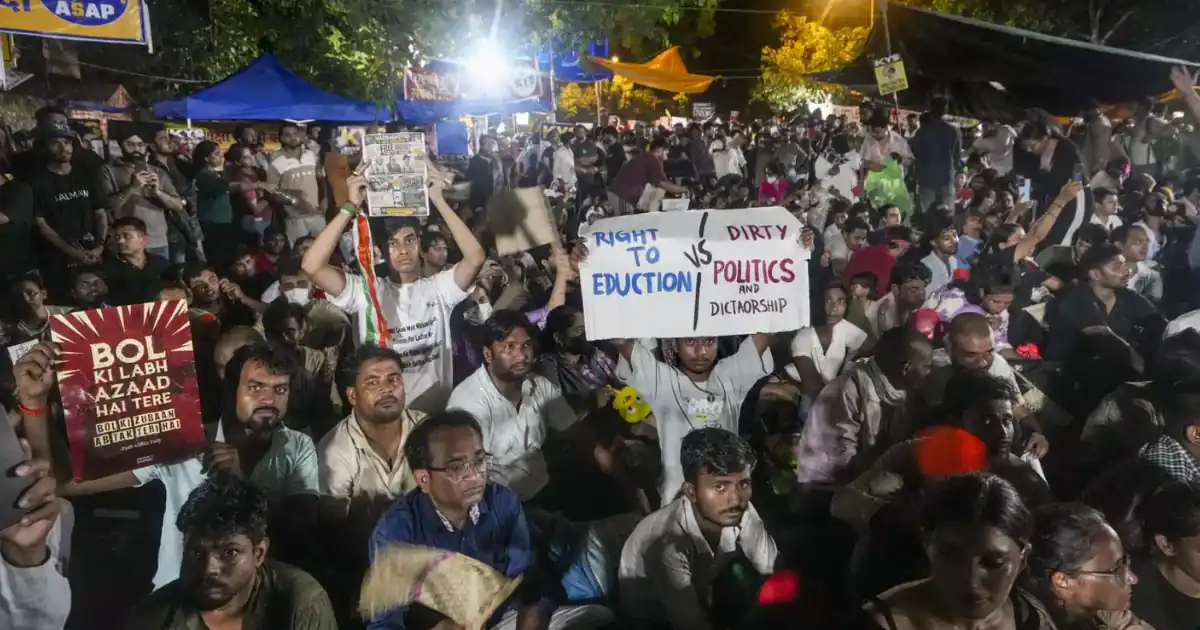
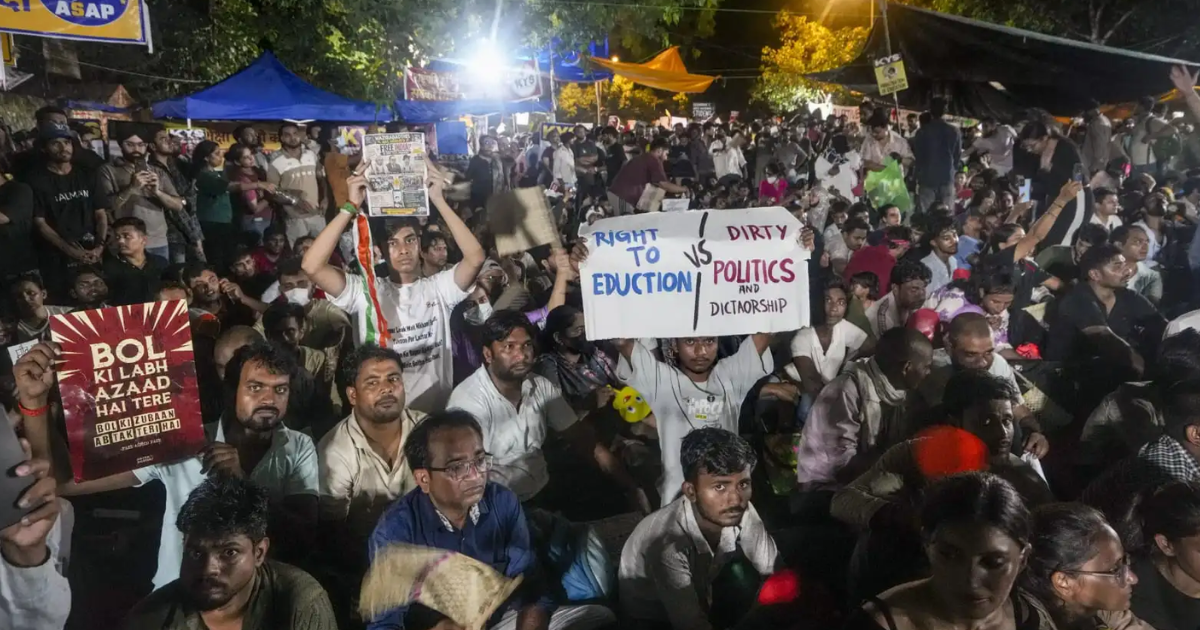
The K. Radhakrishnan Committee was constituted by the Ministry of Education in 2024 following the NEET-UG 2024 paper leak controversy to recommend comprehensive reforms for the National Testing Agency (NTA).
From Radhakrishnan to Nilekani: India's Renewed Push for NEET and Exam Reform
The Supreme Court recently heard petitions seeking changes to NEET examination conduct following the 2026 paper leak controversy, during which the Centre informed the court that it has constituted a high-powered committee under Infosys co-founder Nandan Nilekani to recommend the next phase of examination reforms. On the same day, the government introduced the Public Examinations (Prevention of Unfair Means) Amendment Bill in the Lok Sabha to strengthen the anti-paper leak law and increase penalties for those involved.
"It is my duty to point out that the central government has taken a very serious view and a high-level committee has been constituted."
Solicitor General Tushar Mehta, appearing for the government, told the Bench of Justices P.S. Narasimha and Alok Aradhe that the committee, besides Nilekani, comprises former ISRO Chairman S. Somanath, former Intelligence Bureau Director Tapan Deka, IIT Madras Director V. Kamakoti, former Education Secretary Anita Karwal, and logistics expert Amrit Lal Meena. The panel's formation followed the resignation of Education Minister Dharmendra Pradhan on 25 July 2026 amid weeks of protests over the NEET-UG 2026 paper leak, with Prime Minister Narendra Modi announcing the six-member task force the following day, mandated to suggest technology-driven and structural changes to restore trust and integrity in national examinations, including examining the possibility of conducting NEET online. The Supreme Court indicated it would await the panel's recommendations before ruling on a plea seeking computer-based NEET conduct, scheduling the matter for further hearing on 3 August. This episode traces back to the cancellation of NEET-UG held on 3 May 2026 following widespread paper leak allegations, with a retest subsequently conducted on 21 June 2026.
Reviving an Unimplemented Blueprint: The K Radhakrishnan Committee
The Nilekani panel's formation has renewed attention on an earlier reform blueprint that largely remains on paper. The K Radhakrishnan Committee was constituted in 2024 following the NEET-UG 2024 paper leak controversy, amid rising public concern over the integrity of entrance tests, and headed by former ISRO Chairman Dr K Radhakrishnan, it submitted its report to the Ministry of Education in October 2024 after 23 formal full-day physical sittings and more than 37,000 public responses received via the MyGov portal.
"The stated vision was to transform the National Testing Agency into a nimble, zero-error, adaptive and integrative process."
The committee's initial mandate was to improve examination processes, strengthen data security, and review the NTA's structure and functioning, but this was later expanded following Supreme Court directions in Vanshika Yadav vs Union of India to include examination security and administration, technological safeguards, policy and stakeholder engagement, international collaboration, staff training, and mental-health support for students.
Key Findings: A Systemic, Life-Cycle Problem
The Radhakrishnan Committee's central finding rejected the notion of paper leaks as isolated incidents, instead identifying vulnerabilities across the entire "Testing Life Cycle," spanning printing and transporting question papers, candidate verification, centre management, and grievance redressal. It found the NTA operating as a "single window agency" despite having conducted over 240 examinations involving 5.4 crore candidates since its inception, concluding that its capacity and domain expertise needed significant augmentation to match the scale of its responsibilities.
Technological and Institutional Recommendations
Among its most significant technological proposals was Computer-assisted Secure Pen-and-Paper Testing, designed to eliminate breaches during printing, storage, and transportation of question papers by transmitting encrypted papers electronically to secure servers at exam centres, where they would be printed shortly before the exam while candidates continued writing conventional pen-and-paper tests, thereby eliminating long-distance transport of printed papers and the leak opportunities it creates.
"DIGI-EXAM, a digital authentication framework modelled on Digi Yatra, was proposed to ensure only the candidate who wrote the exam joins the intended programme."
The committee also recommended a substantial institutional overhaul of the NTA, recasting its Governing Body as an "empowered and accountable Apex Body" headed by a Director General not below the rank of Additional Secretary, alongside creating ten dedicated verticals including Nation-wide Testing Centre Infrastructure, Information Security, Vigilance and Forensics, and Research and Development, while calling for reduced dependence on outsourced agencies for critical examination functions. On testing infrastructure, it recommended developing at least 1,000 "Secure Testing Centres" in phases at reputed government institutions, alongside mobile testing centre buses for remote regions, and proposed Multi-Session Testing for large-scale exams with transparent score normalisation, describing NEET-UG Multi-Stage Testing as "a viable possibility," along with a long-term transition toward Computer Adaptive Testing.
Student Welfare and Implementation Gaps
The committee also gave meaningful attention to student welfare, recommending a dedicated mental-health cell within the NTA, tele-helplines, counselling services, and teacher sensitisation programmes, alongside a regulatory oversight mechanism for coaching institutes given concerns over student stress and financial burden on families. Recognising that expert reports often remain unimplemented, the committee itself proposed a high-powered steering committee under the Ministry of Education to oversee implementation "in mission mode and within a time frame."
"The K Radhakrishnan Committee offered a comprehensive, life-cycle approach to exam security, yet much of it remains unimplemented nearly two years later, as evidenced by the 2026 NEET paper leak."
Significance and the Way Forward
The sequence of events, from the Radhakrishnan Committee's comprehensive 2024 blueprint to the 2026 paper leak and the subsequent formation of the Nilekani task force, underscores a recurring governance challenge in India's public examination ecosystem: robust reform blueprints often falter not for lack of vision, but for lack of sustained, accountable execution. The Nilekani committee's composition, blending Aadhaar-scale digital infrastructure expertise with intelligence, technical, and logistics backgrounds, suggests an emphasis on technological and security-driven solutions building directly on the earlier committee's proposals such as CPPT and DIGI-EXAM, rather than starting reform deliberations from scratch.
Going forward, the critical test will be whether the new task force's recommendations, once submitted, receive the sustained institutional backing and monitoring the Radhakrishnan Committee itself identified as essential, given that its own implementation-oversight mechanism was seemingly not activated with sufficient force to prevent the 2026 recurrence. The concurrent introduction of the Public Examinations Amendment Bill, alongside the Supreme Court's decision to await the Nilekani panel's findings before ruling on online NEET conduct, indicates that legislative, judicial, and executive tracks are now converging on this issue, offering a potentially stronger accountability framework than existed after the 2024 reforms were first proposed.
Conclusion
The formation of the Nandan Nilekani-led task force marks India's second major attempt in as many years to overhaul its public examination security architecture, this time following the near-total non-implementation of the comprehensive K Radhakrishnan Committee recommendations. Whether this new effort succeeds where its predecessor faltered will depend less on the sophistication of its proposed technology and more on whether India can finally build the sustained institutional will needed to convert exam reform blueprints into a genuinely leak-proof examination system.