NEP 2020 Reforms: Progress, Challenges and the Road Ahead Under New Education Minister
The National Education Policy (NEP) 2020, approved by the Union Cabinet in July 2020, is India's first comprehensive education policy of the 21st century. It aims to transform the education system by making it holistic, multidisciplinary, flexible, skill-oriented, and globally competitive while preserving India's cultural and linguistic diversity.
Pralhad Joshi Takes Charge of Education: An Agenda of Ambition Meets Uneven Execution
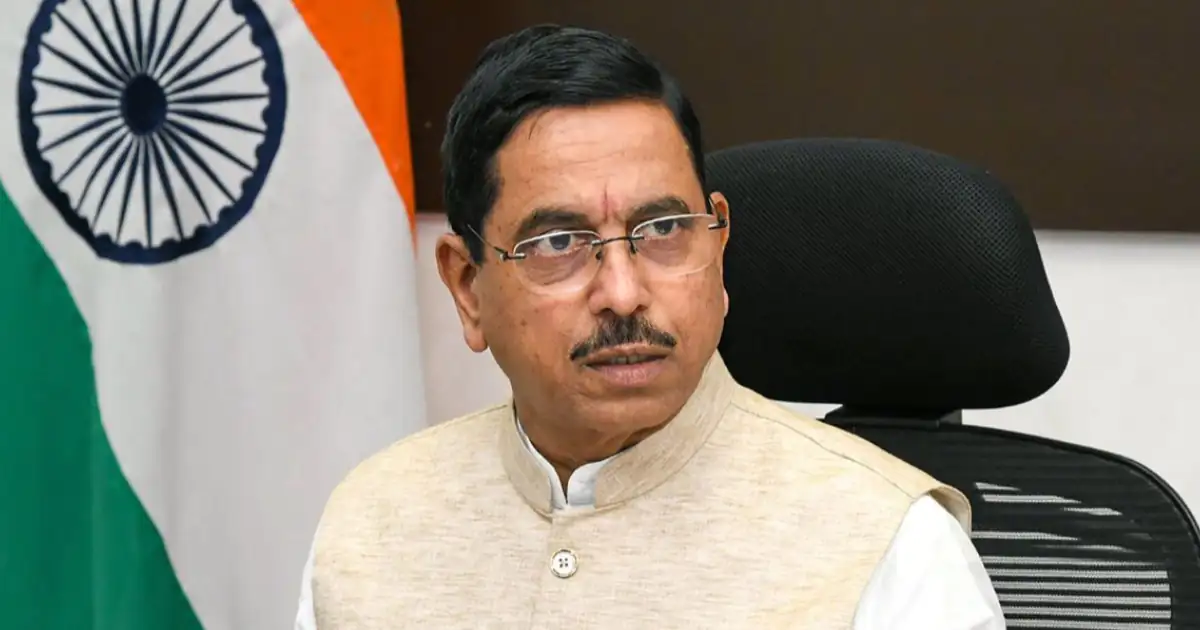
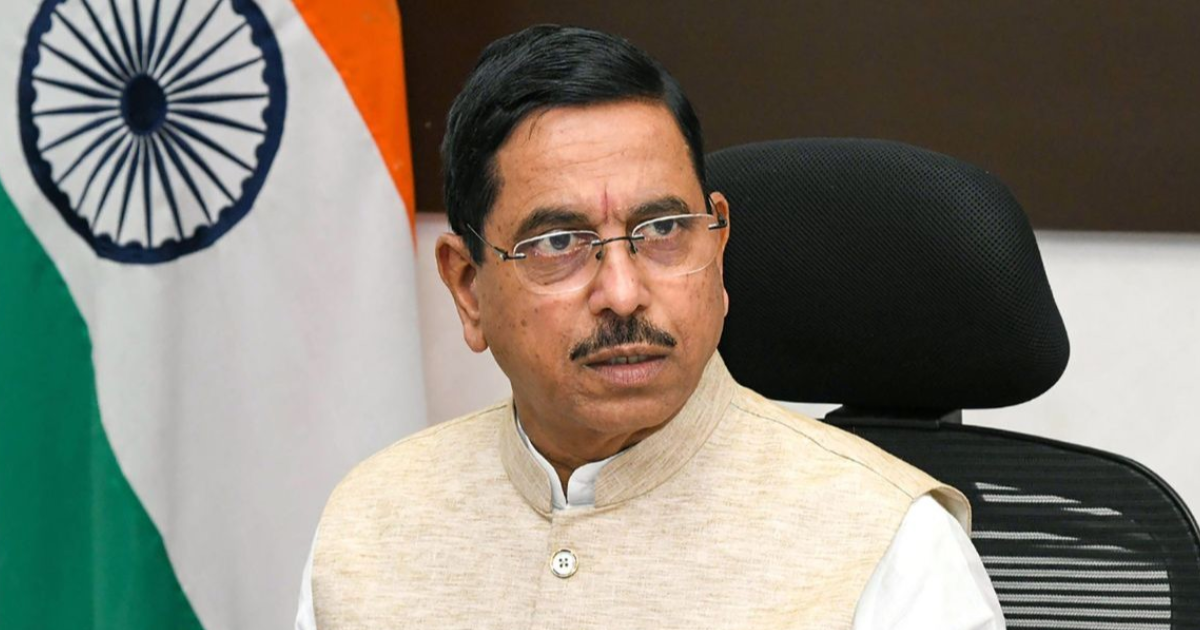
Union Minister Pralhad Joshi has taken additional charge of the Ministry of Education, succeeding Dharmendra Pradhan, who resigned amid weeks of student protests over alleged examination irregularities linked to the 2026 NEET paper leak. Pradhan submitted his resignation, stating he was stepping down in the interest of students and to ensure the ongoing protests were not exploited by "anti-national forces," describing the matter as not one of "individual prestige" and noting he was deeply disturbed by developments over the preceding ten days. A Rashtrapati Bhavan communiqué confirmed that President Droupadi Murmu, acting on the Prime Minister's advice, accepted Pradhan's resignation with immediate effect and assigned Joshi, already a Cabinet minister, additional charge of the Ministry until further orders.
"The Prime Minister has placed his trust in me and entrusted me with such a significant responsibility. With complete humility and a strong sense of responsibility, I will fulfil this duty."
In taking over, Joshi inherits a wide range of structural education reforms initiated under the National Education Policy, or NEP, 2020, many of which remain works-in-progress after Pradhan's five-year tenure focused on ramping up their implementation, building on the Union Cabinet's approval of NEP a year before he took charge. Pradhan's education reforms shared common threads across performance evaluation and accountability, skilling-education convergence, and promotion of a particular vision of "Indianness," though his ambitious goals were undercut by implementation gaps and a push for uniformity that critics termed centralisation disregarding diversity.
Foundational Literacy: Nipun Bharat's Mixed Record
Among the reform threads Joshi inherits is Nipun Bharat, launched to address pandemic-era learning losses and designed to ensure every child attains foundational literacy and numeracy by the end of Grade 3, targeted for 2026-27 as a core NEP recommendation.
"ASER 2024 showed a 7-percentage-point gain in numeracy since 2018, while PARAKH 2024 found Grade 3 students benefiting from the mission's first three years outperforming Grades 6 and 9 in language and math."
Despite these gains, significant gaps persist: fewer than a quarter of students nationally could read a Grade 2-level text, and Grade 5 reading levels remained roughly at pre-pandemic levels, signalling implementation shortfalls that may necessitate what education policy circles have begun describing as a "Nipun Bharat 2.0."
Teacher Quality: Frameworks Awaiting Rollout
Two flagship teacher-focused initiatives illustrate a broader pattern of ambitious design meeting delayed execution. The National Professional Standards for Teachers, India's first initiative to assess and classify teachers as proficient, expert, or advanced against uniform national standards with career progression tied to this ladder, has not yet been rolled out. The National Mentoring Mission, intended to identify mentor teachers to guide others up this ladder through online sessions, faces low awareness among India's one crore teachers, with impact assessments yet to be formalised.
"Since NPST itself hasn't launched, teachers have little incentive to engage with mentoring sessions."
This sequencing problem, where a foundational framework remains unlaunched while its supporting mechanism struggles for traction, exemplifies the implementation gaps that have characterised several of Pradhan's signature reforms.
Higher Education: Flexibility on Paper, Friction in Practice
Higher education reforms present a similarly mixed picture. The 2025 draft UGC regulations on appointing teachers, Vice-Chancellors, and staff faced strong opposition, particularly for giving governors a decisive say in Vice-Chancellor appointments and for removing the cap on contractual professorships. Meanwhile, new UGC undergraduate and postgraduate degree rules, built around flexibility and multidisciplinarity, have been formally in force since the 2025 academic year, yet institutions are still struggling with concepts such as a commerce student studying science or transferring credits via the National Credit Framework.
On the education-skilling convergence front, the Swayam Plus platform offers over 500 industry-developed courses across 15 sectors, including emerging technologies, drawing 6.5 lakh registrations, while new "AI for All" modules covering areas from AI for Physics to AI/ML using Python have attracted 1 lakh registrations. However, state university-affiliated colleges remain resistant to flexible credit systems, and minimal funding has been allocated to state universities to implement such flexibility, while the proposed Viksit Bharat Shiksha Adhishthan Bill, meant to replace the UGC, notably lacks a grant-giving function, a core role the UGC currently performs.
The Three-Language Policy Controversy
Perhaps the most politically contentious element of Pradhan's tenure has been the three-language formula. Pradhan pushed NEP adoption, particularly this formula, by tying central funding for primary education schemes to state compliance, with Tamil Nadu remaining a holdout, though West Bengal's new government has since accepted it.
"In CBSE schools, Pradhan mandated learning two Bharatiya languages from Classes 6 to 12, prioritising Indian languages over English."
Some relief was granted to current students, but the government has held firm on this as the norm going forward, even though NEP itself, while championing Indian languages, simultaneously emphasises learning English and other foreign languages, a tension that has fuelled ongoing federal pushback from states wary of central overreach into education, a subject on the Concurrent List.
Significance and the Way Forward
Pralhad Joshi's assumption of additional charge carries significance beyond a routine ministerial reshuffle, arriving as it does amid a genuine credibility crisis for India's examination and education governance apparatus. The pattern across Pradhan's tenure, ambitious frameworks like NPST and NEP's credit flexibility provisions announced but not fully operationalised, gains in foundational literacy paired with persistent reading-level gaps, and a language policy generating sustained federal friction, suggests that the core challenge facing Indian education reform is not the absence of vision but the difficulty of translating that vision into consistent, funded, and locally adapted execution.
The way forward for Joshi will likely require prioritising completion over new announcements: operationalising the NPST framework before expanding mentoring initiatives built on top of it, ensuring adequate funding reaches state universities attempting to implement credit flexibility, and navigating the three-language controversy in a manner that reduces federal friction without abandoning NEP's underlying language objectives. Given the parallel examination reform process now underway following the NEET paper leak, Joshi will also need to coordinate closely with efforts to rebuild trust in India's testing infrastructure, an issue now closely intertwined with the broader education reform agenda he has inherited.
Conclusion
Pralhad Joshi takes charge of an education agenda rich in ambition but uneven in execution, from foundational literacy gains undercut by persistent learning gaps, to higher education reforms hampered by funding shortfalls, to a language policy facing continued federal pushback. Carrying these reforms to genuine completion, rather than leaving them as headline announcements, will define the next chapter of India's education transformation.