Hubble Telescope Reveals Declining Star Formation in Andromeda Galaxy Over 500 Million Years
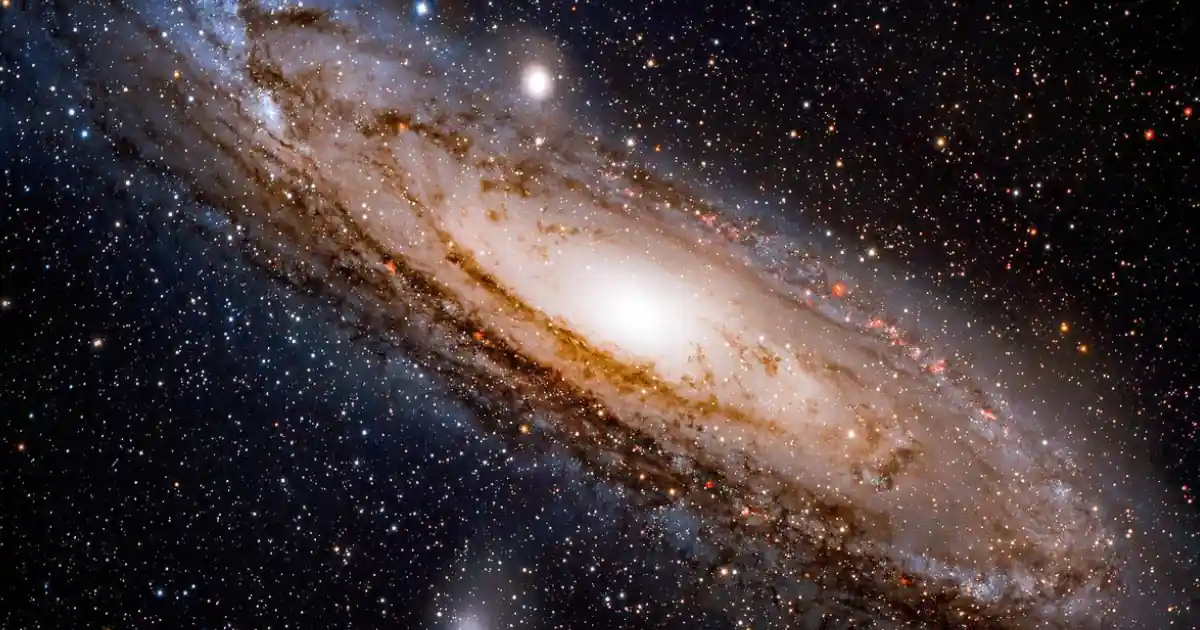
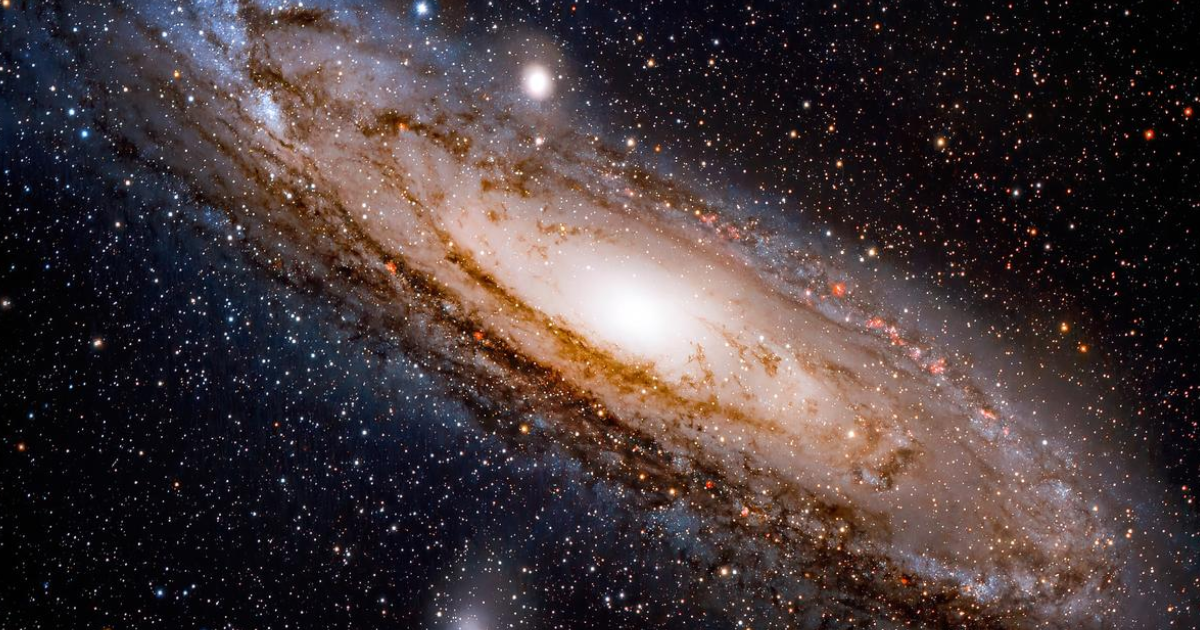
A recent study using observations from NASA's Hubble Space Telescope has revealed that star formation in the Andromeda Galaxy has been steadily declining for nearly 500 million years, indicating that the galaxy is gradually transitioning from an active star-forming phase to a quieter, middle-aged stage of evolution.
Andromeda Galaxy's Star Formation Decline:
A landmark study drawing on data from NASA's Hubble Space Telescope has revealed that star formation in the Andromeda Galaxy (M31) has been steadily winding down over the past 500 million years, with an especially sharp drop recorded in just the last 40 million years. The findings, published in The Astrophysical Journal, mark one of the most detailed reconstructions yet of how a major spiral galaxy transitions from youthful vigour toward quieter middle age — and offer a mirror through which astronomers can better understand the likely future of our own Milky Way.
The Science Behind the Discovery
The research combined two major Hubble surveys — the Panchromatic Hubble Andromeda Treasury and the Panchromatic Hubble Andromeda Southern Treasury — which together mapped roughly two-thirds of Andromeda's stellar disk in extraordinary detail, resolving approximately 200 million individual stars. Researchers divided this vast dataset into thousands of small parcels, each roughly 300 light-years across, and reconstructed the star-formation history within every parcel by studying the ages, colours, and brightness of stars in each patch.
Hubble is described by the study's co-author as the only telescope capable of resolving individual stars with the spatial precision needed to reconstruct such a detailed fossil record of a galaxy's formation.
Because massive, blue stars burn brightly but die young while smaller, redder stars persist far longer, the relative populations of these stars across time act as a kind of geological stratigraphy for the galaxy — allowing scientists to trace star-birth rates deep into the past.
Quantifying the Decline
Astronomers measure star formation as the mass of gas and dust converted into new stars per year, expressed in solar masses. The study found that roughly 500 million years ago, Andromeda was forming stars at a rate of about one solar mass annually. By 40 million years ago, that rate had fallen to roughly half. Today, the rate stands at only about one-fifth of a solar mass per year — an overall decline of nearly 80 percent.
Much of this decline is concentrated in a specific star-forming ring located about 32,000 light-years from the galaxy's centre, which has historically hosted the bulk of Andromeda's recent stellar nurseries. As activity in this ring has waned, it has driven much of the galaxy-wide decline observed by researchers.
The Role of Satellite Galaxy M32
The study also examined star formation near Andromeda's satellite galaxy, M32, finding that activity there dropped noticeably beginning around 60 million years ago — distinct in timing from the broader galactic trend. This localized dip may help scientists pinpoint when M32 last passed close to or brushed against Andromeda's disk, offering clues to the gravitational interactions shaping the larger galaxy's structure.
One of the study's authors noted that while a direct causal link to M32 cannot be stated with certainty, the satellite galaxy remains the most plausible candidate behind this localized anomaly.
Andromeda's "Green Valley" Status
Rather than a case of Andromeda running out of raw material for star formation, researchers interpret the decline as a natural winding down from a previously more active phase. This places Andromeda in what astronomers term the "green valley" — a transitional zone between vigorously star-forming spiral galaxies and fully quenched galaxies that have effectively stopped producing new stars. The galaxy is not dead, but it is unmistakably ageing.
About the Andromeda Galaxy
Andromeda (M31) is a large barred spiral galaxy, comparable in size to the Milky Way, located approximately 2.5 million light-years from Earth in the constellation of the same name. It is the closest major galaxy to our own and remains visible to the naked eye under dark skies. Notably, Andromeda is moving toward the Milky Way at roughly 110 km/s, and the two galaxies are expected to interact over cosmological timescales.
About the Hubble Space Telescope
Named after astronomer Edwin Hubble, the Hubble Space Telescope was launched and deployed by NASA via the Space Shuttle Discovery in 1990. As one of NASA's Great Observatories, it observes across the ultraviolet, visible, and near-infrared spectrum, and continues, more than three decades on, to be central to breakthrough discoveries such as this one. Notably, the two Hubble surveys underlying this study together required around 600 telescope pointings across more than a decade of observation — underscoring the sustained, long-term nature of such research. NASA's upcoming Nancy Grace Roman Space Telescope, expected to launch soon, will be capable of covering comparable sky area far more rapidly, owing to its significantly wider field of view.
Significance and Way Forward
This study is significant not merely as a snapshot of a distant galaxy's present state, but as a template for understanding galactic evolution more broadly. Since the Milky Way and Andromeda are thought to have formed around the same cosmic epoch, tracing Andromeda's arc from active star formation to relative quiescence offers indirect insight into the trajectory our own galaxy may be following. Such resolved, star-by-star reconstructions also demonstrate the enduring scientific value of long-baseline space observatories, whose archives continue to yield new discoveries years after data collection. Going forward, researchers intend to mine Hubble's archive further and combine it with ground-based observations, while future missions like the Roman Space Telescope promise to accelerate similar surveys across many more galaxies, enabling comparative studies of galactic ageing on a much larger scale.
Conclusion
The gradual quieting of star formation in the Andromeda Galaxy is a striking reminder that even the grandest structures in the universe are subject to processes of growth, maturity, and eventual decline. Far from being a static, eternal feature of the night sky, Andromeda is captured mid-transition — shedding its youthful exuberance for a more subdued, "green valley" existence. As humanity's nearest large galactic neighbour, its story offers not just an astronomical curiosity but a plausible preview of the path the Milky Way itself may one day tread, reaffirming the deep, if slow, kinship between the two galaxies destined to eventually merge.