Kikai Caldera: Rising Magma Reservoir Revives Concerns of Future Volcanic Activity in Japan
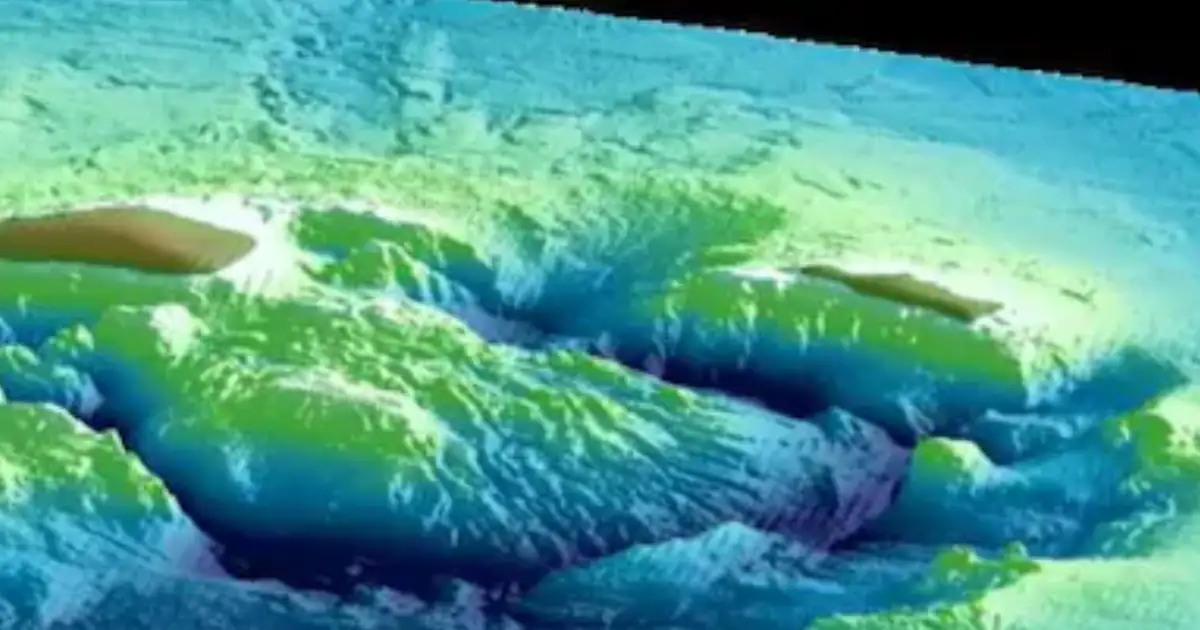
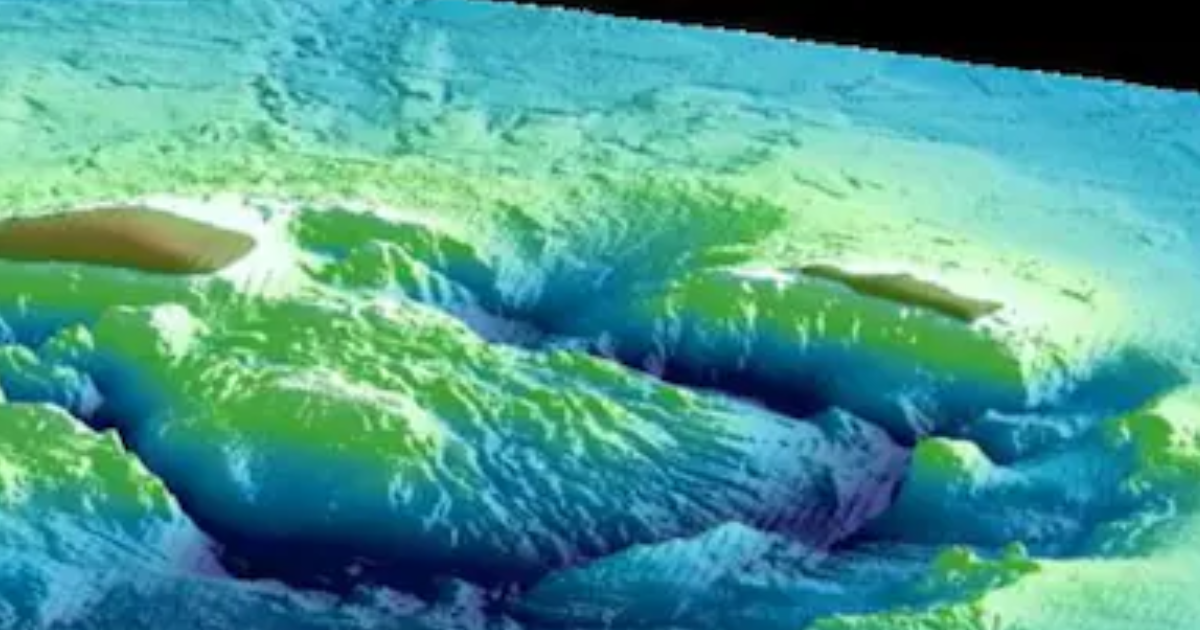
The Kikai Caldera is one of the world's largest and most active submarine volcanic calderas, located off the coast of southern Japan. It gained renewed scientific attention after researchers found that its underground magma reservoir is refilling, providing valuable insights into how supervolcanoes recover after massive eruptions.
Kikai Caldera: A Rare Window into How Giant Volcanoes Recover
A vast reservoir of magma beneath Japan's Kikai caldera appears to be filling once again, offering scientists a rare and valuable opportunity to observe how some of Earth's largest volcanic systems recharge in the aftermath of catastrophic eruptions. The findings, published in Communications Earth & Environment, mark the first detailed characterisation of how magma reinjection occurs beneath a giant caldera following a major eruption, with implications extending well beyond Japan to other supervolcanic systems around the world.
Understanding the Kikai Caldera
Kikai is a massive submarine caldera located in the East China Sea, just south of Kyushu, Japan. Only three small islands, remnants of the caldera rim, project above sea level, with the bulk of the structure lying submerged beneath the ocean. The caldera itself spans approximately 19 km in diameter, and it remains volcanically active today, having produced a scattered array of minor eruptions in recent decades.
Roughly 7,300 years ago, Kikai unleashed the largest known volcanic eruption of the Holocene — the current geological epoch, which began approximately 11,700 years ago. The eruption, known as the Kikai-Akahoya event, expelled around 150 cubic kilometres of ash and sent pyroclastic flows travelling as far as 150 kilometres across the sea, blanketing much of Japan and the Korean Peninsula in volcanic ash. The eruption registered a Volcanic Explosivity Index (VEI) of 7, a magnitude achieved by only three other eruptions in the past 10,000 years.
The New Discovery: Magma Reinjection
The new study, led by Kobe University geophysicist Nobukazu Seama in collaboration with the Japan Agency for Marine-Earth Science and Technology (JAMSTEC), employed a marine seismic refraction survey across the largely submarine caldera. Researchers deployed 39 ocean-bottom seismometers alongside an airgun array along a 175-kilometre profile to image the subsurface velocity structure beneath the volcano.
The research team identified a pronounced low-velocity anomaly beneath the caldera, situated at relatively shallow depths of between 2.5 and 6 kilometres, which they interpreted as clear evidence of a substantial molten magma reservoir.
Crucially, the magma detected is chemically distinct from the material expelled during the original eruption 7,300 years ago, indicating that the reservoir is not simply retaining residual melt from the past but is being actively replenished by freshly injected magma rising from greater depths. Researchers also identified evidence of a new lava dome that has been rising at the caldera's centre for the past 3,900 years, its composition matching the newly injected magma rather than the older Akahoya material — further reinforcing the case for active recharge.
"Due to its extent and location, it is clear that this is in fact the same magma reservoir as in the previous eruption," noted Seama, the study's corresponding author.
Broader Significance for Supervolcano Research
The research team emphasised that understanding how such enormous volumes of magma accumulate beneath the surface is essential to comprehending how giant caldera eruptions occur in the first place. The Kikai findings are considered broadly consistent with the presence of large, shallow magma reservoirs beneath other well-known giant calderas, including Yellowstone in the United States and Toba in Indonesia, suggesting that gradual reservoir refilling following a catastrophic eruption may be a common pattern among supervolcanic systems worldwide.
Significance and Way Forward
This discovery is significant because it addresses a long-standing gap in volcanological understanding while catastrophic caldera eruptions themselves are relatively well documented in the geological record, the subsequent processes governing magma system recovery have remained poorly understood, leaving scientists ill-equipped to predict future re-eruptions. The fact that Kikai lies mostly underwater has, somewhat counterintuitively, worked to researchers' advantage, since marine seismic surveys can effectively image the subsurface structure without the complications posed by dense urban development or complex terrestrial geology. Going forward, refining the seismic imaging methods used in this study could help scientists build more robust general models of magma recharge applicable to other giant calderas, potentially improving early-warning capabilities for volcanic systems that pose significant regional and even global hazards should they erupt again.
Conclusion
The evidence of active magma reinjection beneath the Kikai caldera offers a rare and scientifically significant glimpse into the hidden, centuries-long processes that govern the life cycle of Earth's most powerful volcanic systems. While the discovery does not indicate an imminent eruption, it meaningfully advances scientific understanding of how giant calderas recharge after emptying themselves in catastrophic events, drawing important parallels with other globally significant systems like Yellowstone and Toba. As researchers continue refining their methods, such studies may eventually bring the world closer to reliably anticipating the behaviour of some of the planet's most consequential and least understood volcanic giants.