Pithora Painting Receives GI Tag, Preserving Gujarat’s Tribal Art and Cultural Heritage
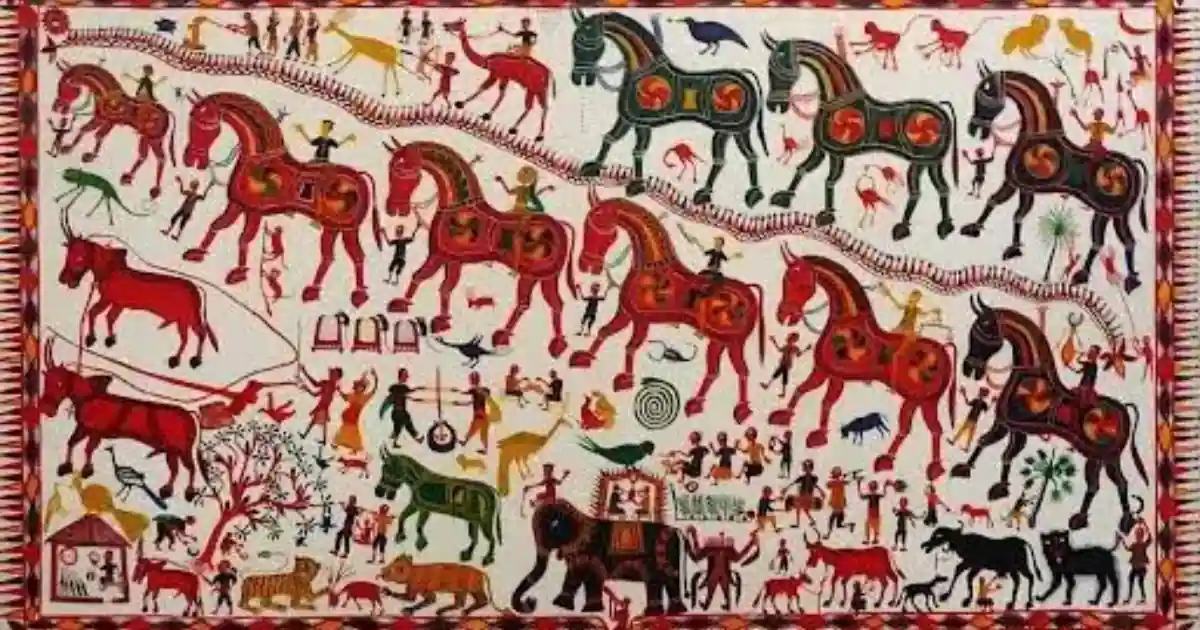
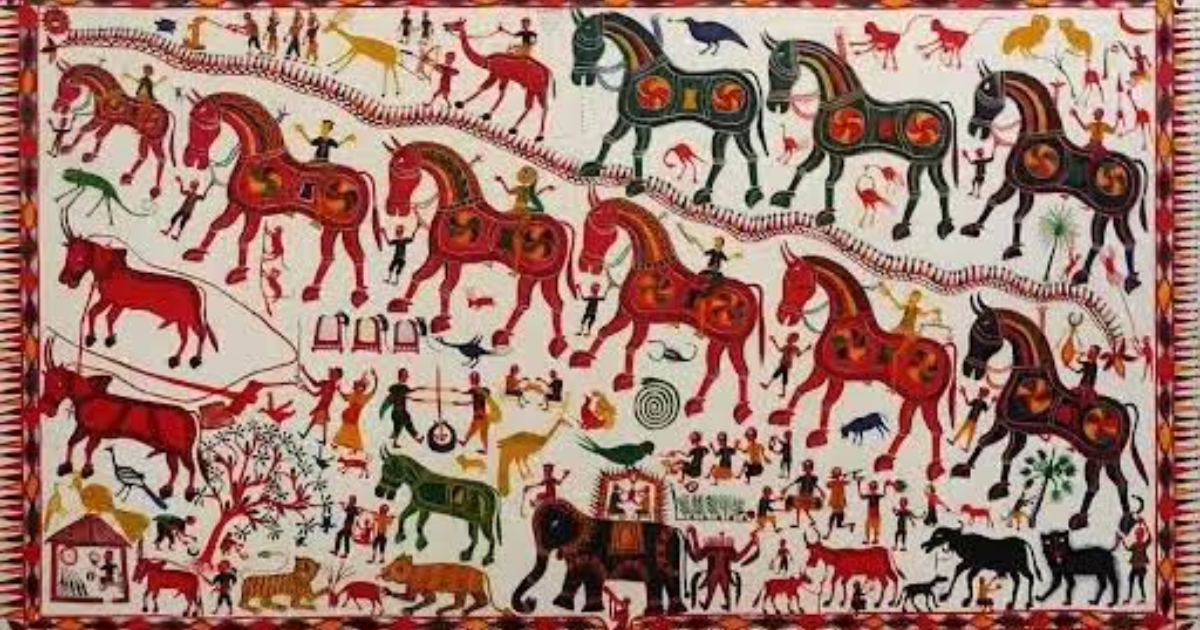
Pithora Painting is a traditional tribal ritual wall painting that originated in the tribal regions of Gujarat, particularly in Panchmahal and Chhota Udaipur districts. It is an important expression of the cultural, spiritual, and artistic heritage of the Rathwa, Bhil, and Bhilala tribes.
Pithora Painting: Gujarat's Tribal Wall Art Wins GI Recognition
Pithora painting, the centuries-old wall art tradition of Gujarat's Rathwa tribal community, has recently received a Geographical Indication (GI) tag, marking a significant milestone in the preservation of one of India's most vibrant tribal art forms. The recognition is expected to safeguard the tradition's authenticity while opening new economic avenues for the tribal artisans who have sustained it for generations.
Origins and Cultural Roots
Pithora painting originated in the tribal regions of Gujarat, primarily in the Panchmahal and Chhota Udaipur districts, and is traditionally practised by the Rathwa, Bhil, and Bhilala communities, along with the Nayaka community. These communities hold deep-rooted beliefs in nature, ancestral spirits, and divine powers, beliefs that are vividly expressed through this art form. The tradition holds a long history, with its origins traced back to around the 13th century, though some accounts place its roots even further, describing it as an evolution from ancient cave depictions.
The art form derives its name from Pithora Dev, the tribal deity associated with marriage, prosperity, and the collective well-being of the community. Traditionally, Pithora paintings were created directly on the walls of homes and were commissioned during significant life events such as weddings, births, and festivals, serving as a ritual means of invoking blessings and protection from the deities depicted.
One local artisan, Paresh Rathwa, explained that Pithora paintings remain deeply woven into the cultural identity of the Rathwa, Bhil, Bhilala, and Nayaka communities of Chhota Udaipur district, noting that traditional paintings continue to adorn the main walls of homes even today.
Artists, Rituals, and Technique
Pithora paintings are traditionally executed by specialist ritual painters known as Lakharas, working under the guidance of a priest called a Badwa. Before painting begins, the wall surface is prepared using a traditional mixture of cow dung and clay, providing a base suited to holding natural pigments. Artists derive their colours entirely from natural sources, mineral, plant, and organic materials, including extracts from leaves, flowers, and mahua, producing vivid tones of red, yellow, green, and blue. Painters employ simple yet effective tools, including bamboo sticks, cotton, and wooden stencils, to render their intricate compositions.
Another artisan, Kaushik Rathwa, remarked that Pithora art keeps the community's culture and traditions alive, describing it as an inseparable part of the community's identity.
Themes and Cultural Significance
The paintings typically depict a rich tapestry of tribal and Hindu deities, horses, animals, and everyday scenes such as farming, hunting, and dancing. Beyond their aesthetic and ritual value, Pithora paintings play a crucial role in preserving tribal oral histories, spiritual beliefs, and customs, functioning as a visual medium through which younger generations are introduced to their cultural heritage. While the art form was traditionally confined to wall surfaces within tribal homes, contemporary Pithora artists increasingly work on paper and canvas, enabling the art to be sold commercially and reach audiences well beyond its place of origin.
The GI Tag and Its Impact
The Geographical Indication tag awarded to Pithora painting in 2026 formally protects the authenticity of the art form and safeguards the indigenous knowledge embedded within it. Officials overseeing the recognition have noted that it is expected to expand market access for artisans while encouraging younger community members to continue the centuries-old tradition rather than abandon it for other livelihoods.
Chhota Udaipur Collector Gargi Jain observed that the GI recognition is strengthening the identity of Pithora painting, providing greater visibility for the artists associated with it and boosting the broader handicrafts sector.
Institutional support has also played a role in this transition, with the Gujarat State Handloom and Handicrafts Development Corporation (GSHHDC) purchasing artwork directly from Pithora artisans under its 'Garvi Gurjari' brand, contributing to a reported rise in artisan incomes over recent years. The art form has also been showcased at platforms such as the Vibrant Gujarat Regional Conference, connecting traditional artisans with wider domestic and international markets under the broader 'Vocal for Local' initiative.
Significance and Way Forward
The GI recognition of Pithora painting carries significance well beyond its immediate economic benefits, as it represents a formal acknowledgment of tribal intellectual and cultural heritage at a time when such traditions face mounting pressure from modernisation and changing rural lifestyles. As traditional mud huts increasingly give way to concrete housing, the practice of painting directly on domestic walls risks gradual decline, making the transition toward canvas and paper-based formats, alongside institutional support mechanisms, particularly important for the art's survival. Going forward, sustained government support, expanded market linkages, and continued documentation of the ritual and symbolic dimensions of Pithora art will be essential to ensure the tradition thrives not merely as a marketable craft, but as a living repository of tribal memory and belief.
Conclusion
The Geographical Indication tag conferred upon Pithora painting represents far more than a mark of commercial authenticity; it is an affirmation of the deep spiritual and cultural significance this art form holds for Gujarat's Rathwa, Bhil, and Bhilala communities. As Pithora art continues its journey from sacred mud walls to canvases reaching global markets, the challenge that lies ahead is to ensure that this expansion strengthens, rather than dilutes, the ritual essence and community identity that have sustained the tradition for centuries.