Rupee Undervaluation Boosts India’s Trade Competitiveness Against Global Currencies
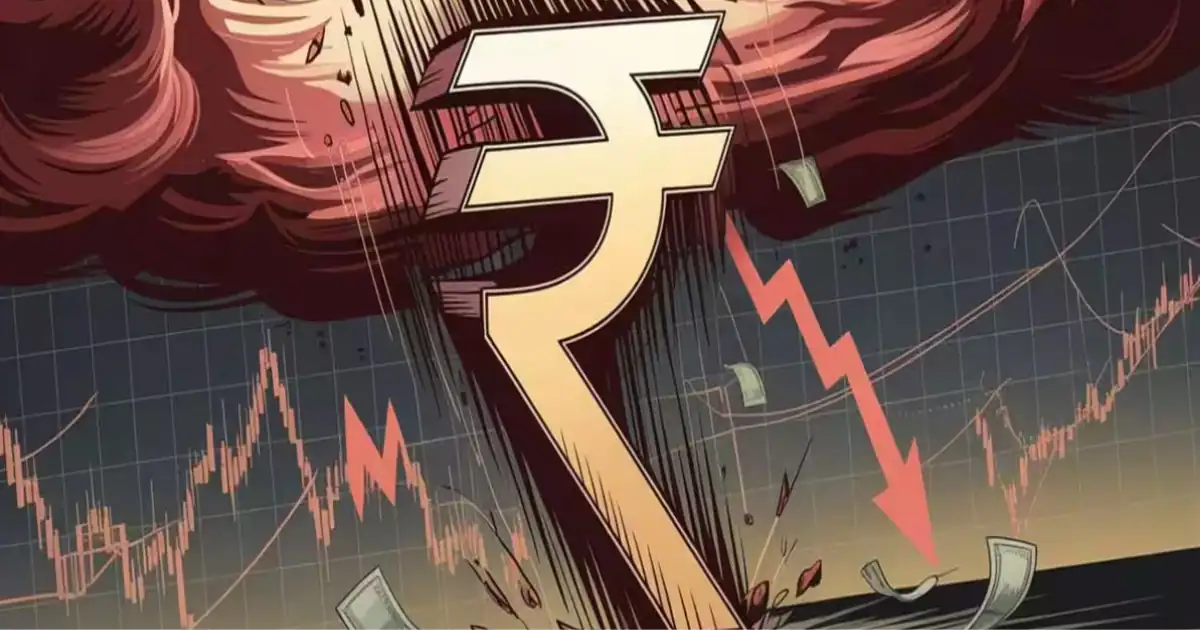
The Indian rupee has witnessed a significant depreciation over the past one-and-a-half years, shifting from an overvalued currency position to an undervalued one. This change may improve India’s export competitiveness by making Indian goods relatively cheaper in international markets.
Rupee's Turnaround: From Overvalued to More Competitive Than the Yuan
The Indian rupee's sharp depreciation over the past one-and-a-half years has fundamentally transformed its standing in global currency markets, shifting it from an overvalued currency into one that is now more undervalued than even the Chinese yuan, a shift that could meaningfully boost India's trade competitiveness if sustained.
Recent Rupee Movement
Hardening global oil prices, driven by renewed hostilities between the United States and Iran, pushed the rupee past 96-to-the-dollar on July 14, where it remained until July 24. A subsequent pause in daily strikes has since helped the rupee strengthen to around 95.9, aided by Brent crude easing below 85 dollars per barrel after having surged past 95 dollars on July 23. The rupee's weakest point came earlier, hitting an all-time low of 96.96-to-the-dollar on May 20, coinciding with Brent crude crossing 126.4 dollars per barrel on April 30.
RBI Governor Sanjay Malhotra, addressing the currency's decline, remarked that with the recent depreciation, it would be reasonable to think the rupee is no longer overvalued, adding that a case could even be made for it having become undervalued, both in nominal terms and on a real effective exchange rate basis.
Malhotra further noted that the rupee's fall reflects external shocks rather than any deterioration in India's underlying economic fundamentals, and suggested the currency could appreciate once the West Asia situation stabilises, drawing on patterns observed in past episodes of external shock-driven volatility.
Understanding Effective Exchange Rates
To assess whether a currency is over- or under-valued, economists rely on two key indices: the Nominal Effective Exchange Rate (NEER) and the Real Effective Exchange Rate (REER). These indices track the rupee's movement against a basket of 40 currencies belonging to countries that account for roughly 88 percent of India's trade flows, using 2015-16 as the base year, with a value of 100 representing equilibrium.
Currency weights within this basket are derived from each trading partner's share in India's total foreign trade, a methodology broadly comparable to how the Consumer Price Index weighs commodities according to their share in overall consumption. While NEER captures the rupee's external value against this basket without accounting for inflation, REER adjusts NEER for inflation differentials between India and its trading partners, making it the more accurate measure of a currency's true value. If domestic prices rise faster than those of trading partners, even with a stable nominal exchange rate, REER rises correspondingly, eroding the competitiveness of Indian products in global markets.
From Overvaluation to Undervaluation: The Data
The scale of the shift becomes clear when comparing REER values over time. In November 2024, the rupee's REER stood at 108.03, indicating it was over 8 percent overvalued in real terms. By June 2026, the REER had fallen to 91.26, representing an 8.7 percent real weakening that confirms the rupee's transition from overvaluation to undervaluation. Notably, the REER remained above 100 until as recently as July 2025, underscoring just how recent and pronounced this reversal has been.
Whether the rupee moves back toward its "fair value" level of REER 100 will depend on several factors, including a sustainable easing of tensions in West Asia, the reopening of commercial shipping lanes, and the absence of fresh geopolitical energy shocks or adverse US trade actions.
A More Competitive Currency Than the Yuan
An independent measure, the Real Broad Effective Exchange Rate (RBEER), compiled by the Federal Reserve Bank of St. Louis, corroborates this broader trend. RBEER compares a country's currency value against 64 trade partners, using 2020 as its base year. The rupee's RBEER fell sharply from an all-time high of 106.1 in November 2024 to 90.15 by June 2026.
This shift carries particular significance when compared with China's currency. In November 2024, the yuan's RBEER stood at 92.16, making it more undervalued and competitive than the rupee at the time. By June 2026, however, the yuan's RBEER had risen slightly to 92.24, while the rupee's RBEER stood lower at 90.15, meaning the rupee has now emerged as the more competitive currency between the two.
Why This Matters
A more undervalued currency can, in theory, boost the price competitiveness of Indian exports in global markets while also making domestic manufacturing more competitive relative to imports. However, whether these theoretical advantages actually materialise remains uncertain, as outcomes will also depend on global demand conditions, supply chain dynamics, and prevailing trade policy environments, factors that lie well beyond currency valuation alone.
Significance and Way Forward
This shift in the rupee's relative competitiveness arrives at a moment when India is seeking to expand its manufacturing base and strengthen its position in global trade, making currency competitiveness a potentially valuable, if imperfect, tailwind. However, translating exchange rate advantages into tangible economic gains has historically proven more complex than the underlying currency data might suggest, particularly given India's continued dependence on imported crude oil, which makes the currency vulnerable to exactly the kind of geopolitical shocks that triggered this depreciation in the first place. Going forward, sustained policy attention to diversifying energy sources, strengthening export infrastructure, and maintaining macroeconomic stability will be essential if India hopes to convert this currency-driven opportunity into durable trade and manufacturing gains, rather than a temporary function of external volatility.
Conclusion
The rupee's journey from a significantly overvalued currency to one now more competitive than even the Chinese yuan marks a striking reversal with potentially meaningful implications for India's trade competitiveness. Yet, as history has repeatedly shown, currency undervaluation alone rarely guarantees export success or manufacturing growth; realising these benefits will depend as much on global geopolitical stability and India's own economic execution as on the exchange rate itself.