Supreme Court Strikes Down 2021 Ex-Post Facto Environmental Clearance Regime
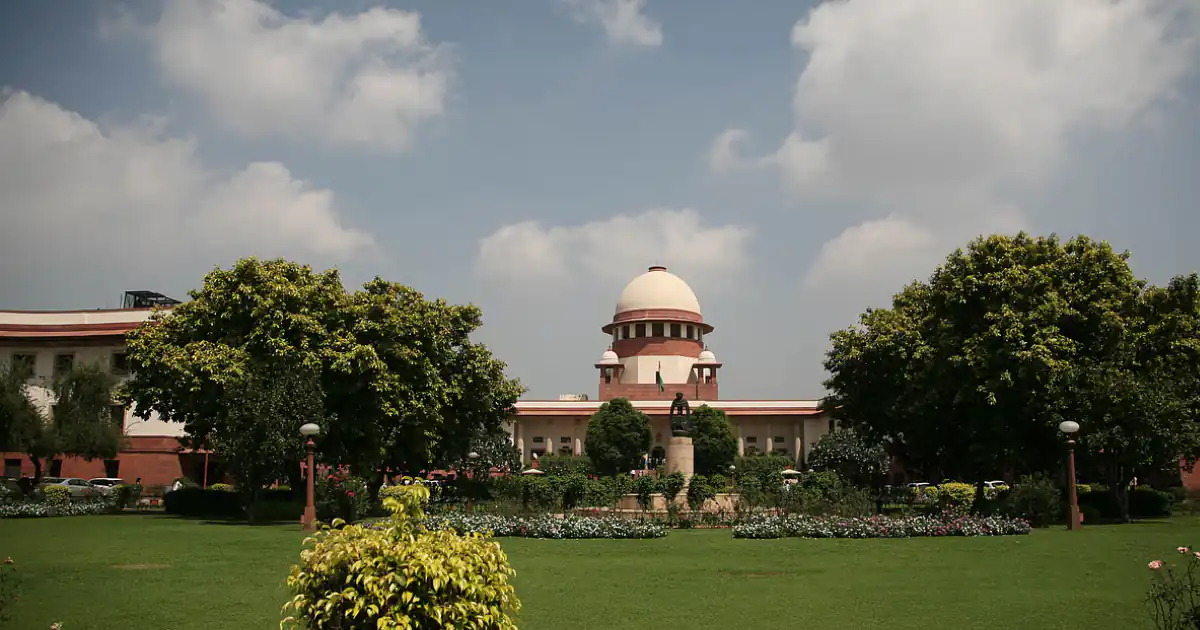
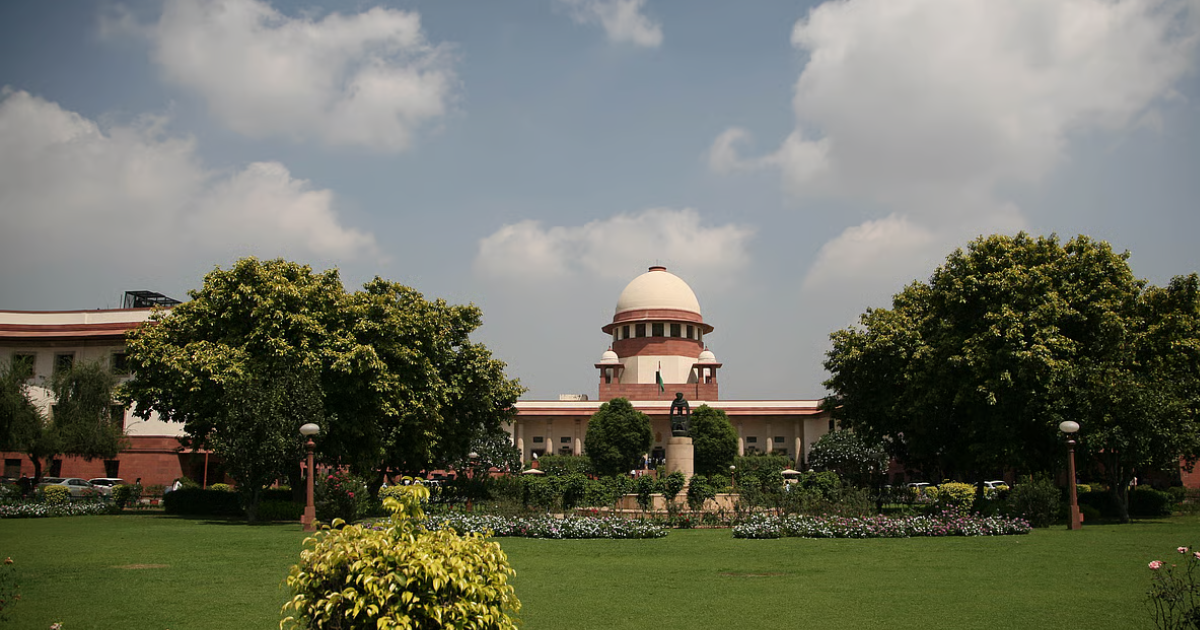
The Supreme Court has struck down the Union Government's 2021 Office Memorandum (OM) that allowed retrospective (ex-post facto) Environmental Clearances (ECs) for projects that had already begun construction or operations without obtaining prior approval.
Supreme Court Quashes 2021 OM on Ex-Post Facto Environmental Clearances
In a judgment delivered on Wednesday, July 29, a Supreme Court bench comprising Chief Justice Surya Kant, Justice Joymalya Bagchi and Justice Vipul Pancholi struck down the Union government's 2021 Office Memorandum (OM), which had created a mechanism for granting ex-post facto Environmental Clearances (ECs) to projects that began construction or operations without prior approval. The bench held that while post-facto environmental clearances are not inherently prohibited, any such regime must originate from valid delegated legislation and cannot be created through executive instructions. The Court also clarified that going forward, the 2021 OM was declared ultra vires the Environment (Protection) Act, 1986 and quashed prospectively.
"The 2021 OM is an administrative order and envisages a perpetual regime for the grant of ECs to projects undertaken without prior EC."
This single line captures the essence of the Court's objection: an executive circular had, in effect, tried to do the work of a statute.
Why the 2021 OM Was Struck Down
The Environmental Impact Assessment (EIA) Notification, 2006 requires specified categories of projects to secure prior EC before commencement. Yet a considerable number of projects across sectors began operations without this approval. To address the resulting backlog of violations, the Centre first issued a one-time, six-month statutory amnesty in March 2017, and later replaced it with the July 2021 OM, which laid down a Standard Operating Procedure enabling an ongoing, open-ended mechanism for regularising such violations. The petitioners, led by the environmental organisation Vanashakti, argued that Section 3 of the Environment (Protection) Act could not be invoked to create a mechanism for regularising projects that had violated the mandatory requirement of obtaining prior environmental clearance. The Court agreed that an administrative instruction of this kind cannot override or modify delegated legislation, and that it created an indefinite route for regularising what should have been prevented in the first place.
The Narrow Door Left Open
Importantly, the Court did not foreclose all post-facto relief. It held that ex-post facto environmental clearances may be granted in limited, exceptional circumstances, provided such relief flows from a properly framed statutory notification under Section 3 of the EPA, 1986 — not an executive memorandum. Any future amnesty would need to be justified by supervening public interest, confined to clearly identified categories of projects, and tested against reasonableness and proportionality. In effect, the Court distinguished between a time-bound, narrowly tailored statutory amnesty and a permanent administrative regularisation mechanism, permitting the former while forbidding the latter.
"All ECs granted under the 2017 Notification or the 2021 OM shall remain valid unless individually assailed in accordance with law."
This prospective application was a deliberate choice to avoid disrupting projects — including coal, iron and bauxite mines, greenfield airports, cement and steel plants, chemical units, and hospitals — that had already secured clearances under the now-quashed instruments.
Distinguishing Administrative Instructions from Statutory Notifications
A recurring thread in the judgment is the sharp line drawn between an Office Memorandum and a statutory notification. An OM is merely an internal administrative instruction issued by a Ministry; it carries no independent force of law and cannot amend or override delegated legislation. A statutory notification, by contrast, is issued under authority expressly delegated by Parliament and can validly create a binding regulatory framework. The Court's insistence that environmental regulation must derive its authority from law, and not from executive convenience, is really the constitutional heart of this ruling — it is as much about the separation of law-making power as it is about environmental protection.
The Winding Judicial Journey
The case has passed through several turns before arriving at this settled position. In Common Cause v. Union of India (2017), the Court had held that mining activity requiring EC cannot commence without prior approval, reinforcing the preventive character of environmental law. In Alembic Pharmaceuticals v. Rohit Prajapati (2020), post-facto ECs were declared inconsistent with the Precautionary Principle. Pahwa Plastics v. Dastak (2022) then introduced a more pragmatic strand of reasoning, suggesting that remediation could sometimes serve environmental protection better than outright closure. Matters came to a head in the Vanashakti litigation itself: on 16 May 2025, a Bench of Justices A.S. Oka and Ujjal Bhuyan struck down both OMs, holding that ex-post facto environmental clearance is alien to Indian environmental jurisprudence. That ruling was unsettled soon after, when in November 2025, a three-judge Bench led by the then Chief Justice B.R. Gavai recalled the judgment, with Justice Bhuyan dissenting, on the ground that it appeared inconsistent with binding precedent. The present bench, having reserved judgment on April 1, 2026, has now settled the question by distinguishing a bounded statutory amnesty from an unbounded administrative one.
Constitutional Dimensions
The Court found that the perpetual and arbitrary nature of the OM's regularisation mechanism offended Article 14, since it allowed similarly placed violators to be treated inconsistently over an indefinite period. It also invoked Article 21, holding that the right to life includes the right to a healthy environment, which is compromised when clearances are reduced to a retrospective formality. On the relevance of the Jan Vishwas Act, 2023, the Court noted that while the Act decriminalised several regulatory contraventions under the EPA to reflect a shift toward compliance over punishment, this legislative shift does not by itself justify unrestricted post-facto approvals decriminalisation and regularisation, in other words, are not the same thing.
Significance
The ruling reinforces the Precautionary Principle while still making room for developmental realities through a narrow, statute-backed exception. It closes off the possibility of routine, perpetual legalisation of environmental violations through administrative fiat, and in doing so strengthens the constitutional distinction between executive instructions and delegated legislation. For future policymaking, it establishes public interest assessed through reasonableness and proportionality as the benchmark against which any prospective amnesty must be measured, offering a workable balance between environmental governance and administrative flexibility.
Conclusion
The judgment marks a considered course-correction in India's environmental jurisprudence — one that neither swings toward blanket condonation of violations nor toward an inflexible insistence on closure regardless of consequence. By confining the power to regularise within the discipline of statutory authority, reasonableness, and public interest, the Court has ensured that environmental compliance remains a rule enforced through law rather than a formality negotiated through circulars. This restores primacy to the precautionary and preventive foundations of environmental regulation, while leaving Parliament and the Executive a constitutionally sound, if narrow, path to address genuine hard cases.