Machilipatnam ASW Warship Launched to Strengthen India’s Coastal Defence and Anti-Submarine Capability
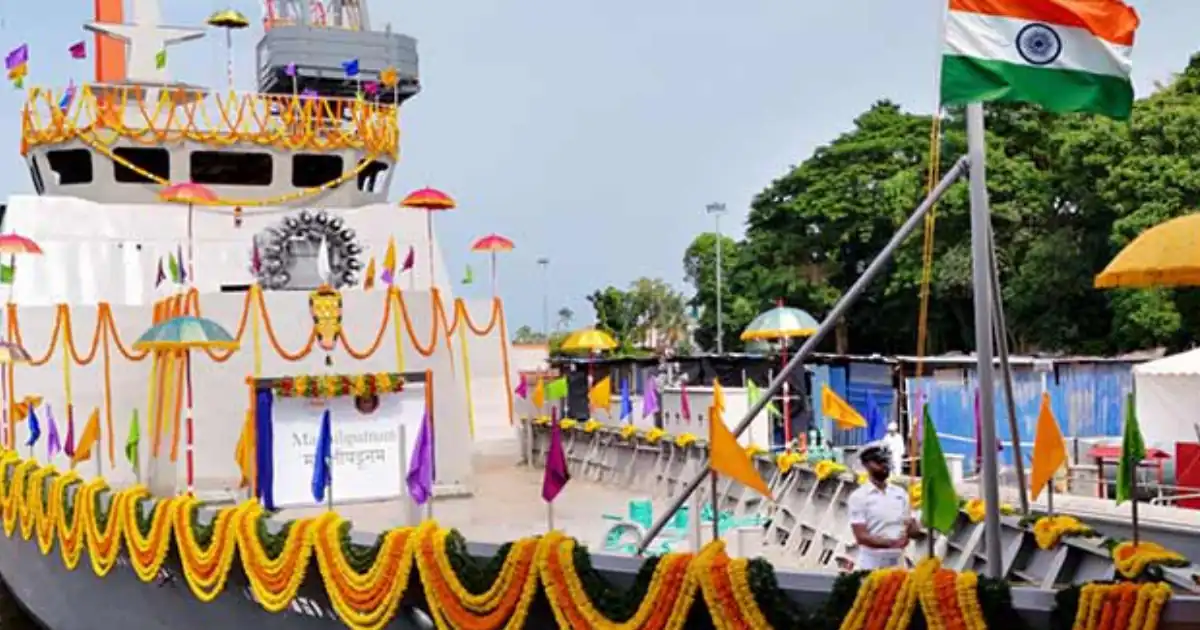
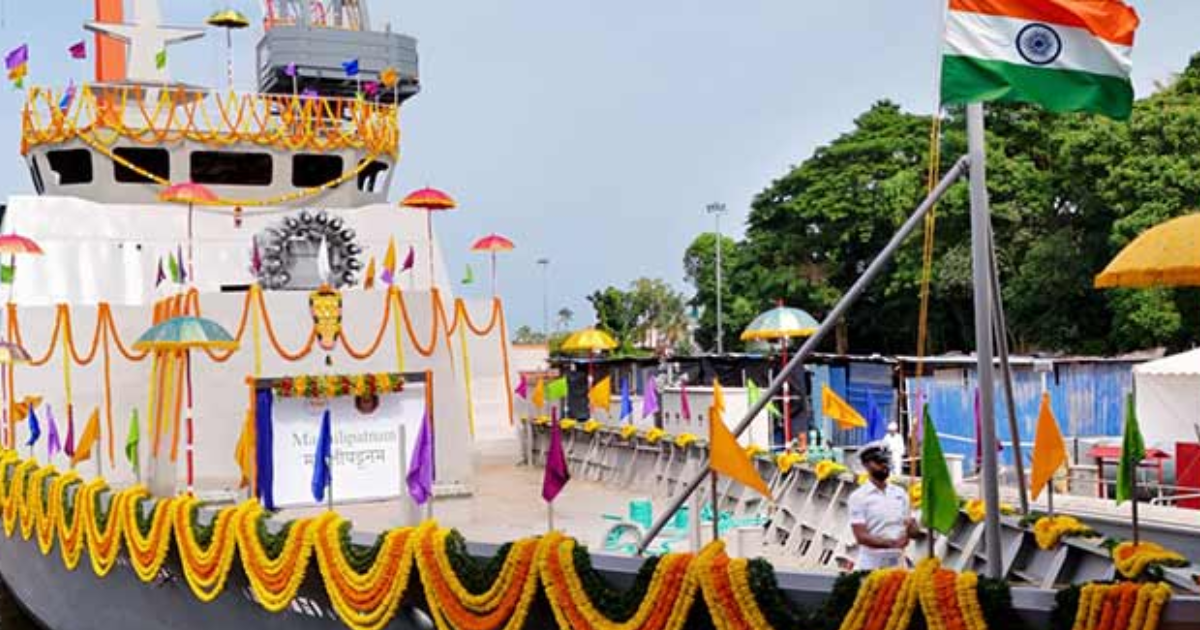
The Machilipatnam (BY 529) was recently launched as the seventh vessel of the Mahe-class Anti-Submarine Warfare Shallow Water Craft (ASW-SWC) for the Indian Navy. Built under the Atmanirbhar Bharat initiative, the warship is designed to strengthen India's coastal defence, anti-submarine capabilities, and maritime security.
Machilipatnam (BY 529): India's Seventh Mahe-Class ASW Shallow Water Craft Takes to the Water
The Indian Navy marked another milestone in its indigenous shipbuilding programme with the launch of Machilipatnam (BY 529), the seventh of eight Mahe-class Anti-Submarine Warfare Shallow Water Craft being built by Cochin Shipyard Limited (CSL). The vessel was launched at Cochin Shipyard by Goolrukh Anand, in the presence of Vice Admiral Atul Anand, Additional Secretary in the Department of Military Affairs, along with senior officials from the Indian Navy, representatives of CSL, and other dignitaries.
"The ship proudly embodies the spirit and legacy of Machilipatnam while reinforcing the Indian Navy's commitment to safeguarding the nation's maritime interests."
The launch comes close on the heels of another milestone for the class — the Navy had, earlier this month, commissioned Malvan, the second Mahe-class ASW-SWC vessel, at a ceremony presided over by Air Chief Marshal AP Singh, Chief of the Air Staff.
A Name Rooted in Maritime Heritage
Machilipatnam derives its name from the historic port city in Krishna district, Andhra Pradesh, a place long known for its rich maritime legacy and its role as a flourishing centre of trade along India's eastern seaboard. Naming a modern anti-submarine warship after a city whose identity was itself built on centuries of coastal trade lends a certain symmetry to the vessel — a contemporary guardian of the very waters that historic port once depended upon for its prosperity.
Design and Capability
The ship carries a displacement of roughly 900 tonnes, a maximum speed of 25 knots, and an endurance range of 1,800 nautical miles, placing it firmly within the compact but capable profile the Mahe class was designed around. It is equipped to undertake underwater surveillance, anti-submarine warfare operations, and Low Intensity Maritime Operations, alongside dedicated mine warfare capability — a combination that allows a single hull to cover several distinct roles in coastal and near-shore naval operations rather than requiring separate specialised vessels for each task.
Indigenous Technology at the Core
Machilipatnam is fitted with indigenously developed advanced systems, including hull-mounted sonar and low-frequency variable depth sonar, developed in line with the government's Atmanirbhar Bharat initiative. With indigenous content exceeding 80 percent, the vessel stands as a meaningful marker of how far India's domestic shipbuilding and defence-electronics ecosystem has matured, moving well beyond assembly of imported components toward genuine indigenous design and systems integration. The project as a whole showcases the growing capability of India's shipbuilding industry and is expected to substantially enhance the Navy's operational readiness for safeguarding the country's maritime interests across the Indian Ocean Region.
Significance
The commissioning of vessels like Machilipatnam is expected to further bolster India's coastal defence architecture and enhance Maritime Domain Awareness, giving the Navy a denser and more capable presence in shallow coastal waters where larger frontline vessels are often less suited to operate. Beyond its immediate tactical role, the ship's high indigenous content also reflects a broader strategic ambition: reducing dependence on imported defence technology while building sovereign capacity in sonar systems, combat suites, and platform integration — capabilities with applications well beyond this single class of vessel.
Conclusion
The launch of Machilipatnam is best understood not merely as the addition of one more warship to the fleet, but as a continuing data point in India's broader push toward self-reliant defence manufacturing. Each successive vessel in the Mahe-class programme — now seven launched out of a planned eight for this particular contract, within a larger 16-ship ASW-SWC programme — represents incremental proof that indigenous shipyards can deliver technologically sophisticated naval platforms at scale. As these vessels enter service along India's coastline, they are likely to quietly but meaningfully strengthen the Navy's ability to detect and respond to sub-surface threats in the very shallow, near-shore waters that larger warships often cannot effectively patrol.