Himalayan Chandra Telescope Completes 25 Years of Advancing India’s Astronomical Research
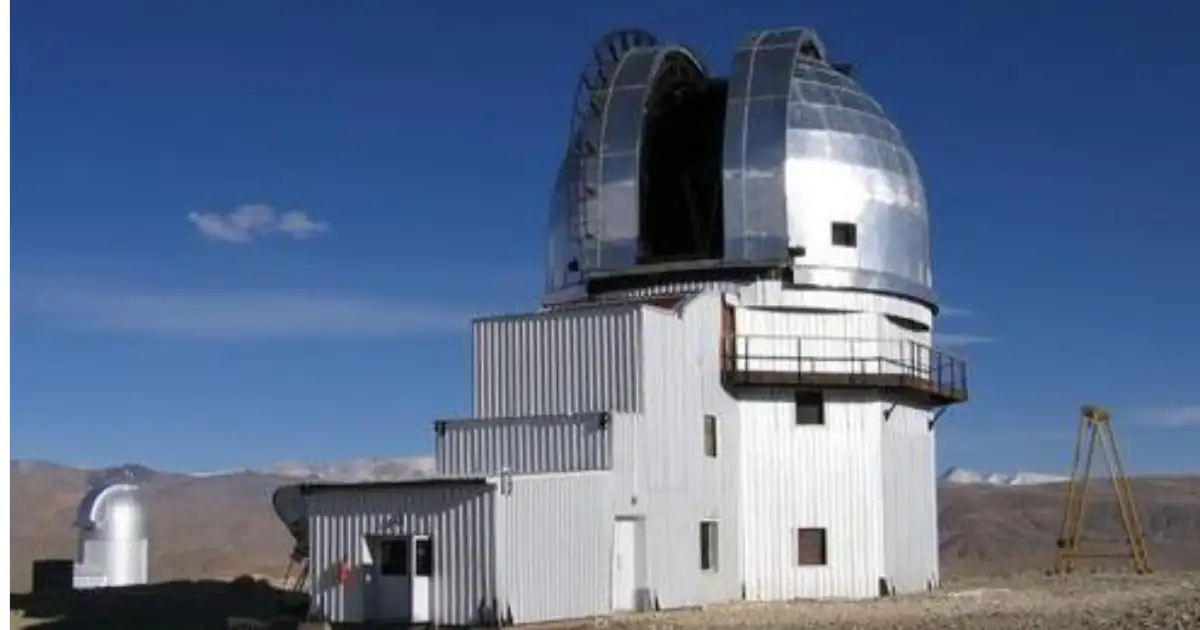
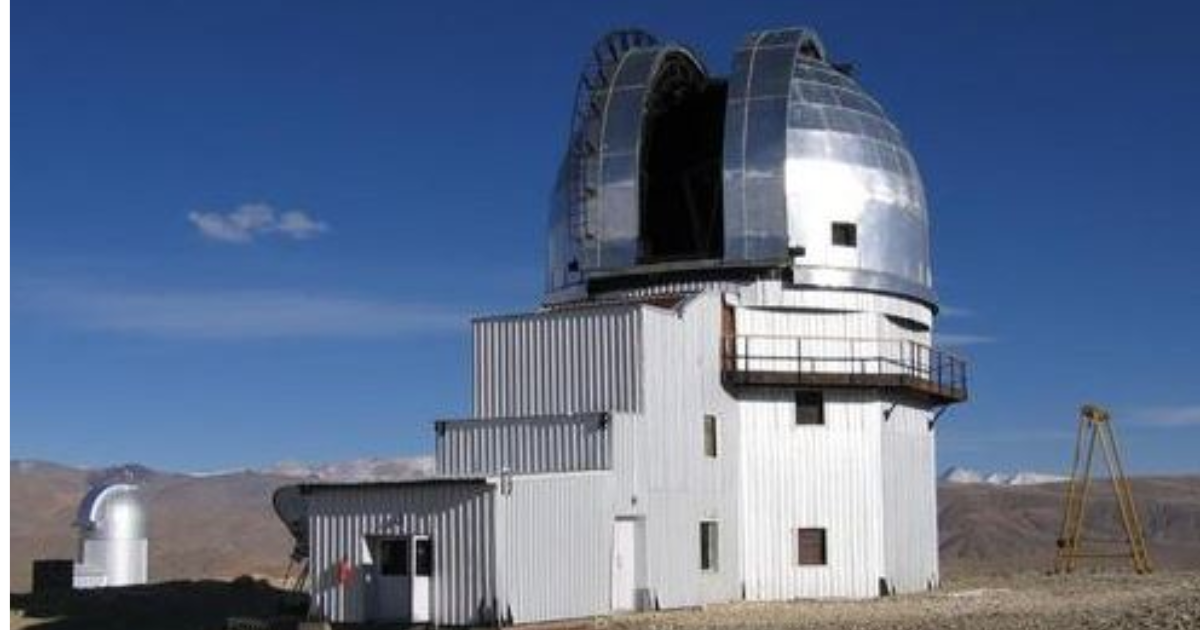
The Himalayan Chandra Telescope (HCT) recently completed 25 years of successful scientific operations, marking an important milestone in India's astronomical research. Located at Hanle in Ladakh, the telescope is one of the world's highest optical telescopes and has made significant contributions to the study of planets, stars, galaxies, comets, and exoplanets.
25 Years of the Himalayan Chandra Telescope: India's Window to the Cosmos from Hanle
Twenty-five years of successful operations of the 2-metre Himalayan Chandra Telescope (HCT), perched atop Hanle in Ladakh, were recently celebrated through a conference that traced its history, engineering challenges, scientific contributions, and the road ahead. The telescope, named after the India-born Nobel laureate Subrahmanyan Chandrasekhar, has come to symbolise a particular kind of Indian scientific achievement — building and sustaining a world-class astronomical facility in one of the most inhospitable and physically demanding locations on Earth.
"HCT has demonstrated both site quality and opportunities for sustained and competitive science from this difficult location."
This assessment from Annapurni Subramaniam, Director of the Indian Institute of Astrophysics (IIA), captures the essence of why HCT's 25-year run matters — not merely as a technical accomplishment, but as proof that India's high-altitude desert terrain in Ladakh could genuinely compete with the world's premier observing sites.
The Long Search for the Right Site
Establishing an optical telescope in the trans-Himalayan region had been a long-standing aspiration of the Indian astronomical community for decades before it materialised. Following recommendations from a panel constituted by the Planning Commission, IIA was identified in 1989 as the nodal agency tasked with locating a suitable site for optical and infrared astronomical facilities. Starting in 1993, teams of astronomers surveyed six different locations across the Himalayas before settling on Digpa-Ratsa Ri, a mountaintop near Hanle in the cold high-altitude desert of Ladakh. The site was chosen for a combination of factors that are rare to find together anywhere on the planet: a large number of clear nights, since the Himalayas block the monsoon systems that would otherwise bring cloud cover; extremely low atmospheric water vapour; and minimal light pollution from human settlement.
From First Light to National Dedication
The telescope achieved its 'First Light' on 26 September 2000 and was formally dedicated to the nation on 29 August 2001. Its very first scientific result followed soon after, in 2001, with a paper studying the optical afterglow of a gamma-ray burst an early sign of the kind of frontier astrophysics the instrument would go on to enable. Situated at an elevation of roughly 4,500 metres, HCT ranks among the tenth highest optical telescopes in the world, and the cloudless skies combined with low atmospheric water vapour at Hanle make it one of the finest global sites for optical, infrared, sub-millimetre, and millimetre wavelength observations the site reportedly offers more than 250 usable observing nights each year.
Remote Operation Across the Country
One of the telescope's most distinctive engineering features is that it is operated entirely remotely, in real time, from IIA's Centre for Research & Education in Science & Technology (CREST) campus at Hosakote, roughly 35 km northeast of Bengaluru a link that has been in continuous use since June 2001 through a dedicated INSAT-3B satellite connection from ISRO. This arrangement allows astronomers to control observations from a comfortable, low-altitude campus rather than requiring sustained human presence at nearly 4,500 metres, where sub-zero winter temperatures would otherwise make continuous on-site operation extraordinarily difficult.
Instruments and Scientific Contributions
HCT currently hosts three principal instruments: HFOSC, a spectrograph and camera operating in the optical range; uTIRSPEC, a near-infrared spectrometer and imager; and HESP, a high-resolution Echelle spectrograph. Together, these instruments have enabled astronomers from across India to study an extraordinarily wide range of celestial objects from planets and asteroids to stars and distant galaxies. Among its notable research contributions have been spectroscopic studies of comets, investigations into the atmospheres of exoplanets, and participation in the discovery of the well-known TRAPPIST-1b exoplanet, placing HCT firmly within global conversations in planetary science despite its comparatively modest 2-metre aperture.
The Road Ahead
HCT's twenty-fifth anniversary arrives alongside a significant expansion of India's ambitions at the Hanle site. A recent budget announcement has confirmed plans for a 3.7-metre Upgraded HCT, along with a proposed 13.7-metre National Large Optical-Infrared Telescope (NLOT), which is expected to become operational around 2038. These upgrades are envisioned as a natural progression from HCT's proven track record the arid, high-altitude Ladakh desert has, in effect, already established its credentials as one of the world's most attractive sites for multiwavelength astronomy, and the new instruments are designed to build directly on that foundation rather than seek out an entirely new location.
Conclusion
The Himalayan Chandra Telescope's quarter-century of operation stands as a rare example of sustained scientific infrastructure thriving in one of the most physically punishing environments imaginable, made possible by a combination of careful site selection in the 1990s, innovative remote-operation engineering, and generations of Indian astronomers willing to push observational astronomy into terrain few countries have attempted to exploit. As HCT's legacy now feeds directly into the next generation of instruments planned for Hanle the upgraded 3.7-metre telescope and the eventual 13.7-metre NLOT the observatory's story illustrates how a modest 2-metre telescope, built with patience and remotely operated across nearly 2,000 kilometres, can lay the groundwork for India's ambitions in world-class optical astronomy for decades to come.