
Enterprise AI
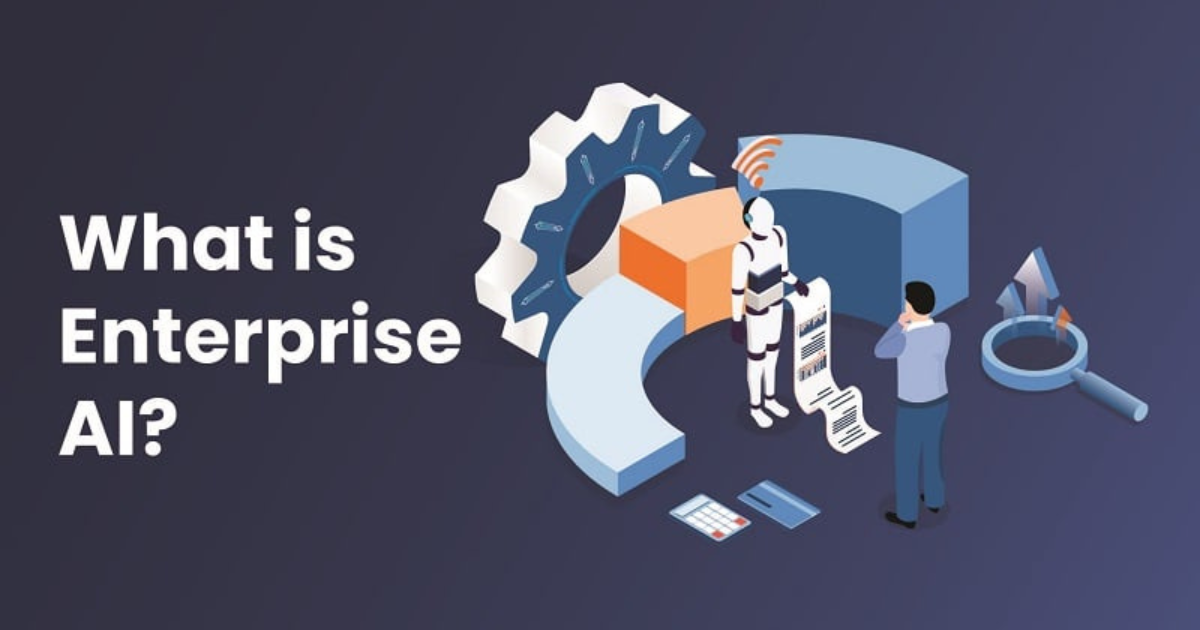
Enterprise AI refers to the deployment of advanced Artificial Intelligence systems within large organizations to improve operational efficiency, decision-making, and service delivery.
Enterprise AI and Its Impact on Indian IT Industry
The expansion of companies like OpenAI and Anthropic into enterprise-focused solutions is driving a major shift in the global technology landscape. This shift is increasingly referred to as Enterprise AI transformation, which may significantly disrupt traditional outsourcing-driven IT models, including in India.
What is Enterprise AI?
Definition
Enterprise AI refers to the integration of advanced artificial intelligence systems into large organizations to improve:
Efficiency
Decision-making
Automation
Customer experience
It combines:
Machine Learning
Natural Language Processing (NLP)
Computer Vision
Predictive Analytics
Core Idea
“Enterprise AI shifts AI from experimental tools to core business infrastructure.”
Applications of Enterprise AI
1. Supply Chain Management
Demand forecasting
Inventory optimization
Logistics planning
2. Finance Sector
Fraud detection
Risk assessment
Algorithmic trading
Credit scoring
3. Human Resources (HR)
Automated recruitment
Employee performance analytics
Workforce planning
4. Healthcare
Disease prediction
Medical imaging analysis
Personalized treatment plans
5. Cybersecurity
Threat detection
Real-time anomaly detection
Automated incident response
6. Customer Service
AI chatbots
Virtual assistants
Personalized recommendations
Key Features of Enterprise AI
1. Automation
Reduces manual work
Improves operational efficiency
2. Predictive Intelligence
Uses data to forecast outcomes
Supports better decision-making
3. Personalization
Tailors services to individual users
Enhances customer experience
4. Scalability
Handles large enterprise data systems
Works across global operations
Benefits of Enterprise AI
Economic Benefits
Cost reduction
Higher productivity
Faster innovation cycles
Business Benefits
Better decision-making
Improved customer engagement
Competitive advantage
Technological Benefits
Real-time analytics
Advanced automation systems
Data-driven insights
“Enterprise AI is transforming data into a core economic asset.”
Challenges of Enterprise AI
1. Data Privacy Concerns
Sensitive corporate data exposure
Risk of data misuse
2. Cybersecurity Risks
AI system vulnerabilities
Potential for AI-driven attacks
3. Infrastructure Requirements
Need for high-quality data systems
Cloud computing dependence
High computational costs
4. Workforce Displacement
Automation of routine IT jobs
Reduced demand for low-skill outsourcing roles
5. Governance and Regulation
Lack of clear AI regulatory frameworks
Ethical concerns in decision-making systems
Impact on Indian IT Industry
Traditional Model
India’s IT sector has largely depended on:
Business Process Outsourcing (BPO)
IT services outsourcing
Application development support
Disruption from Enterprise AI
1. Reduced Outsourcing Demand
Automation replaces repetitive coding and support tasks
2. Shift to High-Skill Jobs
Demand for AI engineers
Data scientists
Cloud architects
3. Platform-Based Competition
AI-first companies may bypass outsourcing firms
Direct enterprise AI deployment reduces intermediaries
4. Value Chain Transformation
Move from “service provider” to “solution architect”
Emphasis on innovation over manpower
“The IT industry is shifting from labour arbitrage to intelligence arbitrage.”
Opportunities for India
1. AI Talent Pool
Large English-speaking technical workforce
Strong STEM education base
2. Digital Public Infrastructure
Aadhaar
UPI
India Stack
3. Start-up Ecosystem
Growth in AI-based startups
Innovation in SaaS and AI tools
4. Global AI Services Hub
India can evolve from:
IT outsourcing hub → AI innovation hub
Challenges for India
Skill Gap
Need for AI and machine learning expertise
Infrastructure Gap
Limited high-end AI computing infrastructure
Policy Challenges
Need for clear AI governance frameworks
Employment Transition
Reskilling of IT workforce required
Way Forward
1. Upskilling Workforce
Focus on AI, data science, cybersecurity
2. Strengthening AI Ecosystem
Promote AI research and development
Encourage public-private partnerships
3. Regulatory Framework
Develop ethical AI guidelines
Ensure data protection compliance
4. Innovation-Driven IT Industry
Shift from outsourcing to product-based solutions
Invest in AI startups
“India’s future in IT depends on its ability to move from service delivery to AI-driven innovation.”
Conclusion
Enterprise AI, led by companies such as OpenAI and Anthropic, is reshaping global technology systems. While it poses disruption risks to traditional outsourcing models, it also creates opportunities for India to transition toward a high-value, innovation-driven digital economy. The future competitiveness of India’s IT sector will depend on its ability to adapt to AI-led transformation through skill development, infrastructure growth, and policy innovation.