
Union Cabinet Approves Scheme for Promotion of Surface Coal/Lignite Gasification Projects
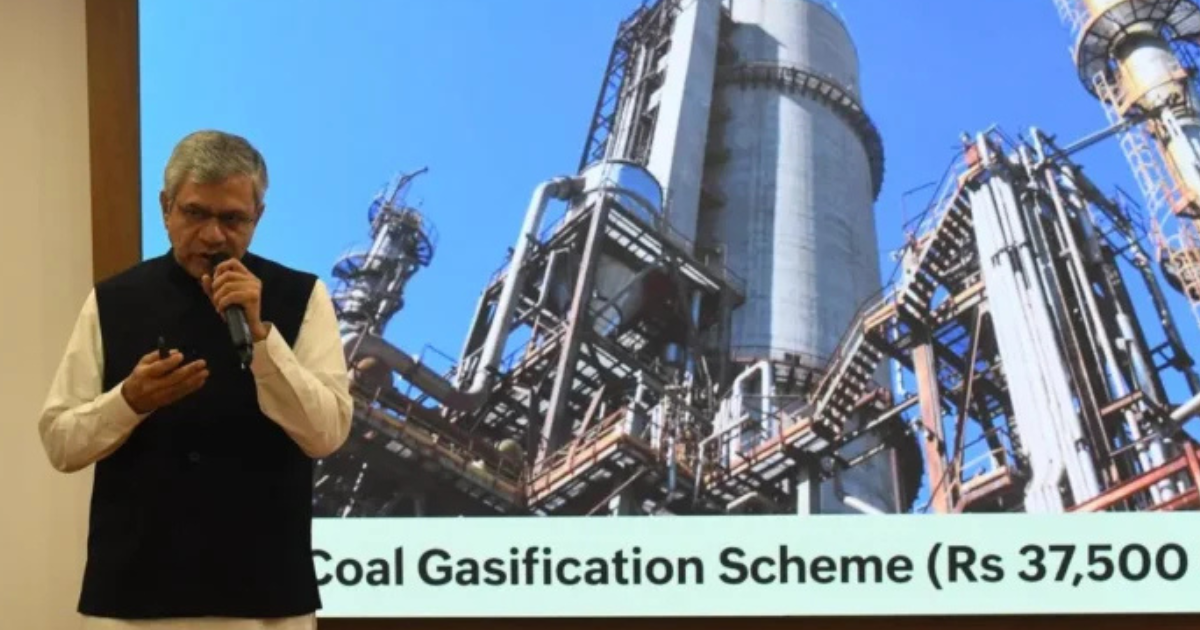
The Government of India has launched a major scheme to promote coal and lignite gasification as part of its broader strategy to enhance energy security, reduce import dependence, and support industrial development. The scheme aims to help achieve the target of gasifying 100 million tonnes (MT) of coal by 2030 under the National Coal Gasification Mission launched in 2021.
Scheme for Promotion of Surface Coal/Lignite Gasification Projects
The Government of India has approved a major scheme to promote coal and lignite gasification projects in order to achieve the target of 100 million tonnes (MT) of coal gasification by 2030 under the National Coal Gasification Mission, 2021.
The scheme aims to strengthen energy security, reduce import dependence, and promote cleaner utilization of coal resources.
What is Coal Gasification?
Definition
Coal gasification is a thermochemical process in which coal is converted into a combustible gaseous mixture called syngas (synthesis gas).
Composition of Syngas
Syngas mainly contains:
Carbon Monoxide (CO)
Hydrogen (H₂)
Uses of Syngas
Syngas is used to manufacture:
Urea
Methanol
Synthetic Natural Gas (SNG)
Ammonia
Chemicals and fuels
“Coal gasification converts solid fuel into cleaner and more versatile gaseous energy products.”
Status of Coal and Lignite in India
ResourceEstimated ReservesCoal401 billion tonnesLignite47 billion tonnes
India possesses one of the world’s largest coal reserves, making gasification strategically important.
About the Scheme
Objective
To incentivize domestic industries for large-scale coal and lignite gasification.
Target
Gasification of approximately 75 million tonnes (MT) of coal and lignite.
This contributes toward the broader target of:
100 MT coal gasification by 2030
Financial Features of the Scheme
Financial Outlay
Total Allocation
₹37,500 crore
Financial Incentives
Incentive Structure
Maximum incentive:
20% of cost of Plant and Machinery
Disbursement
Provided in:
Four installments
Linked to project milestones
Funding Caps
CategoryMaximum FundingSingle Project₹5,000 croreSingle product-centered projects (excluding SNG & urea)₹9,000 croreSingle entity/group across all projects₹12,000 crore
Policy Support Measures
Coal Linkage Support
Government has extended:
Coal linkage tenure up to 30 years
under:
Non-Regulated Sector (NRS) linkage auction framework
Purpose
Provide long-term investment certainty
Encourage private sector participation
“Long-term policy certainty is essential for capital-intensive energy projects.”
Significance of the Scheme
1. Energy Security
India imports large quantities of:
Ammonia (~100%)
Methanol (80–90%)
LNG (>50%)
Urea (~20%)
Benefits
Reduces import dependence
Protects against global price volatility
2. Environmental Benefits
Coal gasification offers:
Better emission control
Lower pollutant release compared to direct coal burning
Reduced Pollutants
Sulfur dioxide (SO₂)
Nitrogen oxides (NOₓ)
Particulate emissions
“Cleaner utilization of coal is important for balancing energy needs with environmental concerns.”
3. Economic Impact
Expected Outcomes
Major industrial investments
Estimated annual revenue generation:
₹6,300 crore
Supports National Initiatives
Atmanirbhar Bharat
Make in India
4. Employment Generation
Job Creation
Around 50,000 direct and indirect jobs expected
Strategic Importance
1. Efficient Use of Domestic Resources
Converts abundant coal reserves into high-value products
2. Industrial Growth
Promotes petrochemicals and fertilizer industries
3. Import Substitution
Reduces external dependence on energy and chemicals
4. Technological Advancement
Encourages adoption of advanced clean coal technologies
Challenges
1. High Capital Cost
Gasification plants require significant investment
2. Carbon Emissions
Coal remains a fossil fuel despite cleaner processing
3. Technology Dependence
Need for advanced gasification technology
4. Water Requirement
Gasification processes consume large quantities of water
5. Environmental Concerns
Disposal of by-products and carbon management
Way Forward
1. Promote Clean Coal Technologies
Carbon capture and storage (CCS)
Advanced emission control systems
2. Encourage Private Investment
Stable policies and incentives
3. Strengthen Research & Development
Indigenous gasification technology
4. Integrate Renewable Energy
Hybrid industrial energy systems
5. Environmental Safeguards
Strict pollution monitoring and compliance
“India’s energy transition requires balancing sustainability, affordability, and energy security.”
Conclusion
The Scheme for Promotion of Surface Coal/Lignite Gasification Projects is a significant initiative aimed at utilizing India’s vast coal reserves more efficiently while reducing dependence on imported fuels and chemicals. Through financial incentives, long-term policy support, and promotion of cleaner coal technologies, the scheme strengthens energy security, industrial growth, and economic self-reliance. However, environmental safeguards and technological innovation will remain critical for ensuring sustainable implementation.