
Build-Operate-Transfer Model
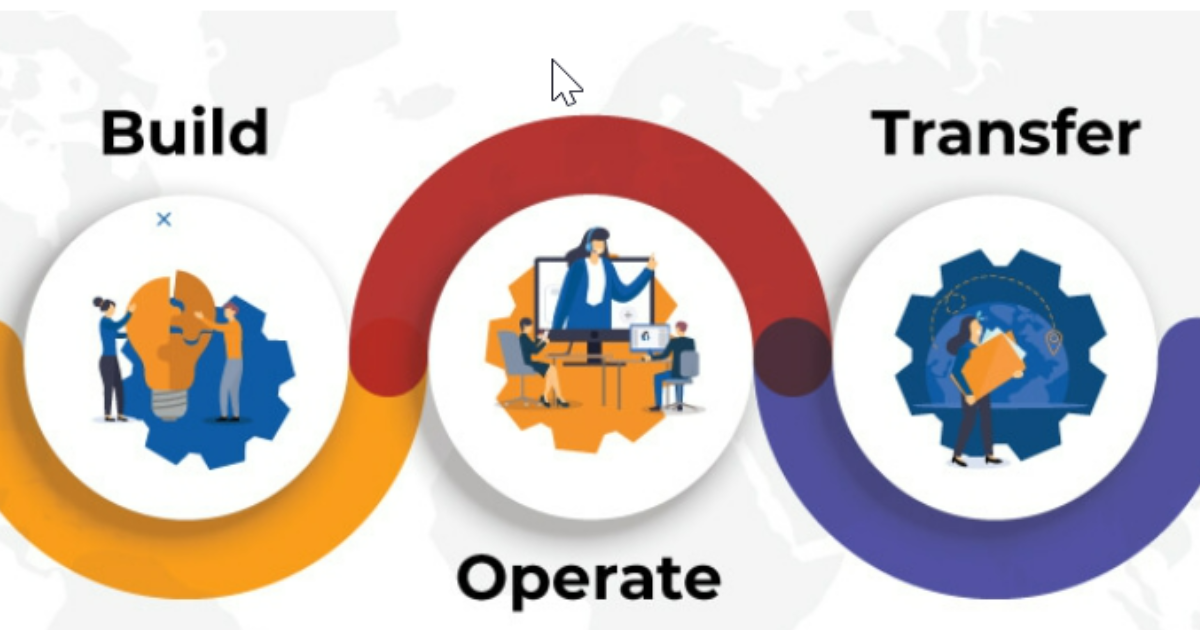
The Build-Operate-Transfer (BOT) model is a widely used Public-Private Partnership (PPP) framework for developing large-scale infrastructure projects, particularly in sectors such as roads, highways, ports, and energy.
Build–Operate–Transfer (BOT) Model
The Ministry of Road Transport and Highways has recently opened Build–Operate–Transfer (BOT) road projects to large institutional investors to accelerate infrastructure development in India.
The BOT model is a widely used Public–Private Partnership (PPP) framework for financing and operating large infrastructure projects.
About BOT Model
Definition
The Build–Operate–Transfer model is a PPP arrangement in which a private entity:
Builds the project
Operates and maintains it for a fixed period
Transfers it back to the government after the concession period
Core Idea
The model combines:
Private sector efficiency
Public sector ownership
“BOT model ensures infrastructure development without immediate fiscal burden on the government.”
Working Mechanism
1. Build Phase
Private company finances and constructs the project
Includes design and engineering responsibilities
2. Operate Phase
Private entity operates and maintains the infrastructure
Recovers investment through user charges (tolls, fees, etc.)
3. Transfer Phase
After concession period ends
Asset is transferred back to government or public authority
Key Features of BOT Model
1. Long-Term Concession
Projects typically run for 15–30 years or more
2. Private Sector Participation
High involvement in:
Construction
Financing
Operation
Maintenance
3. User Fee-Based Revenue
Revenue generated through:
Toll collection
Service charges
4. Risk Sharing
Private entity bears major risks such as:
Financial risk
Traffic/volume risk
Operational risk
Sometimes pricing risk
Types of BOT Models
1. BOT (Toll)
Private player collects toll directly from users
2. BOT (Annuity)
Government pays fixed annuity to private operator
Reduces traffic risk for private sector
3. Hybrid Models
Combination of toll and annuity mechanisms
Significance of BOT Model
1. Infrastructure Development
Accelerates road construction
Expands national highway network
2. Reduced Fiscal Burden
Limits upfront government expenditure
Attracts private capital
3. Efficiency Gains
Private sector brings:
Better project management
Faster execution
Innovation
4. Improved Service Quality
Better maintenance of roads and highways
“PPP models like BOT enhance both efficiency and scale of infrastructure creation.”
5. Investment Attraction
Opens infrastructure sector to:
Pension funds
Sovereign wealth funds
Institutional investors
Role of Institutional Investors
The opening of BOT projects to large institutional investors helps:
Mobilize long-term capital
Reduce financing constraints
Improve project stability
Challenges in BOT Model
1. Traffic Demand Risk
Lower-than-expected traffic affects revenue
2. Financial Stress
High debt burden on private players
3. Land Acquisition Delays
Causes project delays
4. Regulatory Uncertainty
Policy changes may affect returns
5. Contractual Disputes
Issues between government and private operators
Way Forward
1. Strengthen Risk Mitigation
Improve traffic forecasting
Provide viability gap funding (VGF)
2. Enhance Contract Clarity
Transparent concession agreements
3. Promote Hybrid Models
Balance risk between government and private sector
4. Attract Long-Term Investors
Encourage pension and sovereign funds participation
5. Improve Project Preparation
Better feasibility studies
Faster approvals
Conclusion
The Build–Operate–Transfer (BOT) model is a critical Public–Private Partnership framework that enables large-scale infrastructure development while reducing fiscal pressure on the government. By allowing private players to build, operate, and maintain assets before transferring them back, the model promotes efficiency, innovation, and investment inflows. With improved risk management and policy stability, BOT projects can significantly strengthen India’s road infrastructure and long-term economic growth.