
Agarwood
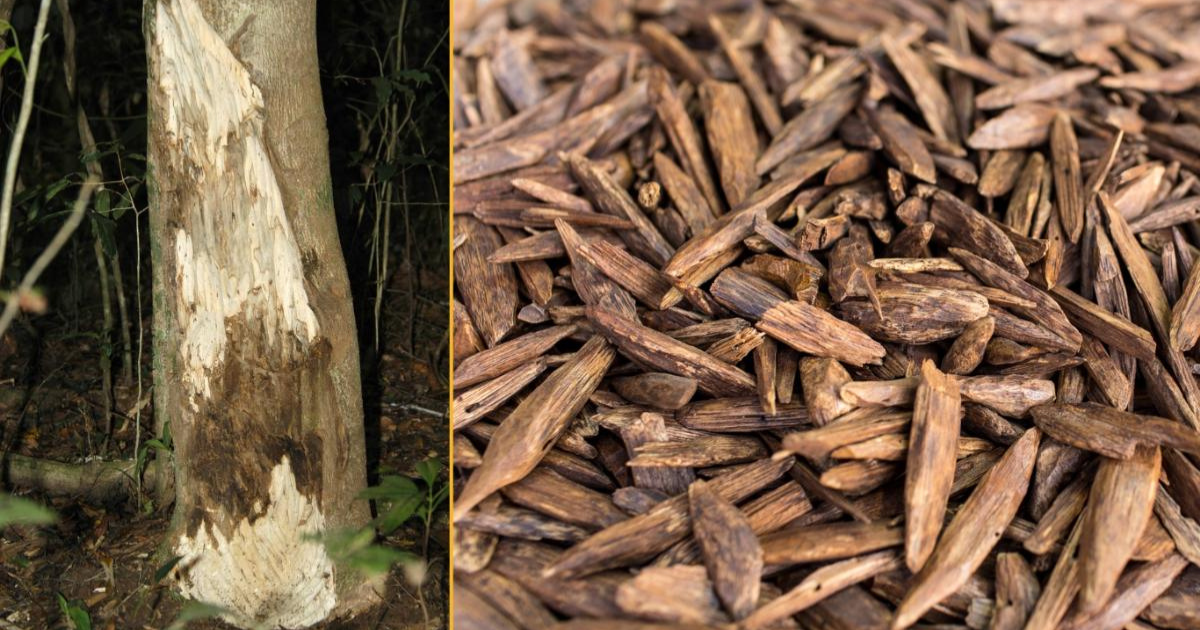
Assam recently achieved a significant milestone by exporting its first consignment of legally produced agarwood chips to Saudi Arabia and the United Arab Emirates. This development marks an important step in formalizing the agarwood trade and promoting sustainable use of a highly valuable forest resource.
Agarwood (Oudh / Gaharu) and Assam’s First Legal Export
Assam has recently exported its first legal agarwood chips to Saudi Arabia and the United Arab Emirates, marking an important step in the regulated global trade of this high-value forest product.
About Agarwood
Overview
Agarwood (also known as Oudh or Gaharu) is a highly valuable fragrant resinous wood used in:
Perfumes
Incense
Traditional medicine
“Agarwood is one of the most expensive natural raw materials in the world due to its fragrance and rarity.”
Formation Process
Agarwood is formed when trees of the genus Aquilaria become infected by a specific type of fungus.
Biological Mechanism
Infection triggers a defense response
Tree produces dark aromatic resin
Resin-saturated wood becomes agarwood
Species Found in India
India has three species of Aquilaria, including:
Aquilaria malaccensis
Aquilaria khasiana
Traditional and Cultural Uses
Agarwood has been used in:
1. Indian Systems of Medicine
Ayurveda
Unani medicine
2. Chinese Traditional Medicine
Used for treatment of digestive and respiratory conditions
Also used in aromatherapy and spiritual practices
Economic Importance
1. High-Value Export Commodity
Used in luxury perfumes and incense markets
Strong demand in West Asia and East Asia
2. Livelihood Generation
Provides income opportunities in Northeast India
Supports agroforestry-based enterprises
3. Value Addition Potential
Chips, oils, and extracts increase export value
“Agarwood is a key example of a high-value non-timber forest product.”
Legal and Conservation Status
1. CITES Listing
CITES
Listed under Appendix II
Regulated international trade allowed under permits
2. IUCN Status
International Union for Conservation of Nature classifies:
Aquilaria malaccensis as Critically Endangered
Significance of Legal Export from Assam
1. Boost to Regulated Trade
Ensures legal and traceable supply chain
2. Benefit to Farmers
Encourages scientific cultivation of agarwood
3. Conservation-Oriented Trade
Reduces illegal harvesting
Promotes sustainable forestry practices
4. Strengthening Export Potential
Expands India’s presence in luxury fragrance markets
Challenges in Agarwood Sector
1. Illegal Trade
High black-market value encourages smuggling
2. Overexploitation
Threatens wild populations of Aquilaria species
3. Cultivation Challenges
Requires fungal inoculation for resin formation
Long gestation period
4. Regulatory Complexity
Strict CITES compliance requirements
Way Forward
1. Promote Plantation-Based Cultivation
Agroforestry models in Northeast India
2. Strengthen Certification Systems
Ensure traceable and legal exports
3. Research and Development
Improve resin induction techniques
Develop high-yield varieties
4. Support Farmer Producer Organizations
Collective marketing and export facilitation
5. Conservation Measures
Protect wild Aquilaria populations
Enforce anti-poaching laws
Conclusion
Agarwood represents a unique intersection of biodiversity conservation and high-value trade. The recent legal export from Assam to Saudi Arabia and the United Arab Emirates highlights India’s potential in regulated forest-based exports. With strong adherence to CITES norms and sustainable cultivation practices, agarwood can become a significant contributor to India’s green economy and rural livelihoods.