
Unseasonal Thunderstorms Claim Multiple Lives in Uttar Pradesh
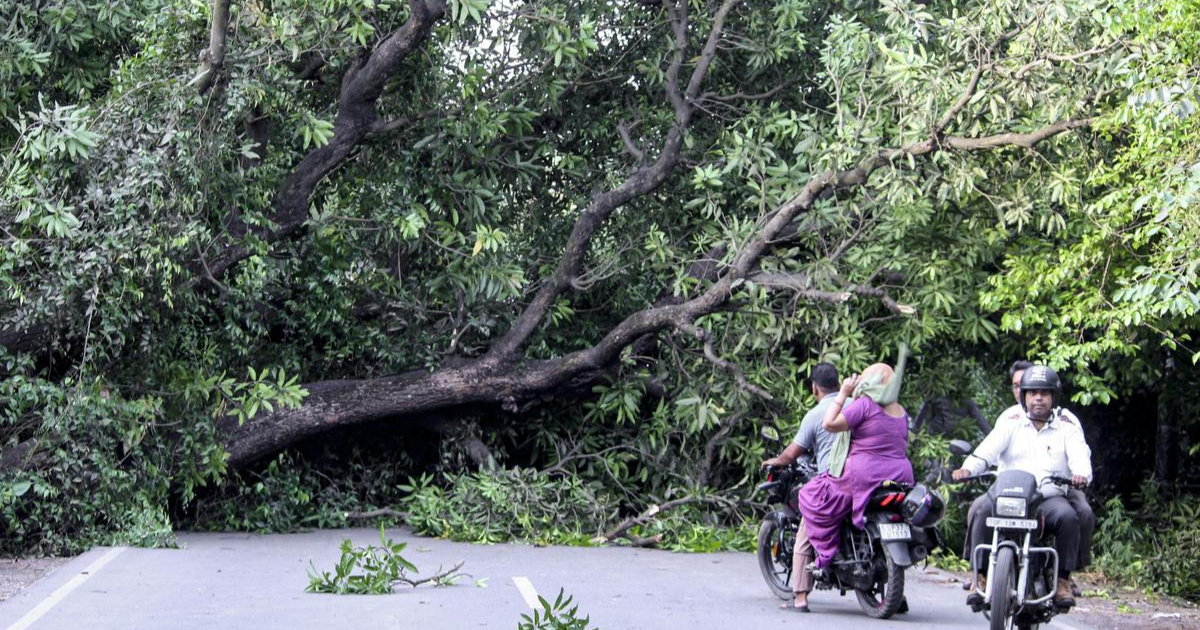
Thunderstorms are severe local weather phenomena of short duration that occur over relatively small areas but can cause significant damage to life, property, agriculture, and infrastructure. They are among the most common hazardous weather events in India, especially during the summer season.
Thunderstorms
Thunderstorms are severe local storms of short duration that occur over relatively small areas but can cause significant damage to life, property, agriculture, and infrastructure.
They are among the most common extreme weather events in tropical and subtropical regions, including India.
About Thunderstorms
Definition
Thunderstorms are:
Well-developed cumulonimbus clouds
Accompanied by thunder and lightning
Produced due to intense convection on hot and moist days
Scientific Basis
Thunderstorms form when:
Warm moist air rises rapidly
Air cools and condenses
Latent heat release intensifies vertical movement
Weather System Category
Thunderstorms belong to:
Meso-gamma weather systems
Spatial and Temporal Scale
FeatureRangeSpatial ExtentAround 2–20 kmDurationFew hours
“Thunderstorms are localized but highly destructive atmospheric phenomena.”
Characteristics of Thunderstorms
Key Features
Thunder
Lightning
Heavy rainfall
Strong winds
Hailstorms
Sudden temperature drop
Types of Thunderstorms in India
1. Moderate Thunderstorms
Features
Loud thunder
Lightning flashes
Moderate to heavy rainfall
Wind Speed
29–74 kmph
2. Severe Thunderstorms
Features
Continuous thunder
Hailstorms
Intense rainfall
Violent winds
Wind Speed
Exceeding 74 kmph
Impacts
Can cause:
Tree uprooting
Structural damage
Power disruptions
Occurrence of Thunderstorms
Peak Season
Thunderstorms occur most frequently during:
Summer months (March–June)
Reason
Intense surface heating
High atmospheric instability
Moisture availability
Regions in India
More common in:
Eastern India
Northeastern states
Indo-Gangetic plains
Peninsular India during pre-monsoon period
Life Cycle of Thunderstorms
Thunderstorms generally pass through three stages.
1. Developing Stage
Process
Warm air rises rapidly forming:
Cumulus clouds
Strong updrafts
Features
Tower-like cloud growth
Minimal rainfall
Occasional lightning
Dominant Process
Updrafts dominate
2. Mature Stage
Most Intense Phase
Both:
Updrafts
Downdrafts
operate simultaneously.
Process
Precipitation begins falling:
Creates downdrafts
Intensifies storm activity
Features
Heavy rainfall
Frequent lightning
Hailstorms
Strong winds
Possible tornadoes
Significance
This is the most dangerous phase.
“The mature stage represents the peak energy and destructive potential of a thunderstorm.”
3. Dissipating Stage
Process
Downdrafts overpower updrafts
Storm loses energy source
Features
Rain weakens gradually
Thunderstorm dissipates
Dominant Process
Downdrafts dominate
Causes of Thunderstorms
1. Intense Surface Heating
Creates strong convection currents
2. Moisture Availability
Warm humid air supports cloud formation
3. Atmospheric Instability
Encourages rapid vertical air movement
4. Wind Convergence
Air masses collide and rise upward
5. Topographic Influence
Mountains can trigger uplift of moist air
Impacts of Thunderstorms
1. Loss of Human Life
Major causes:
Lightning strikes
Structural collapse
Flash floods
2. Agricultural Damage
Crop destruction
Soil erosion
Hailstorm losses
3. Infrastructure Damage
Power outages
Communication disruption
Damage to roads and buildings
4. Aviation Hazards
Turbulence
Reduced visibility
Flight delays
5. Environmental Impacts
Forest fires from lightning
Urban flooding
Lightning: Major Associated Hazard
Lightning is:
Sudden electrostatic discharge
Occurs between clouds or cloud and ground
India’s Vulnerability
India records thousands of lightning-related deaths annually.
Thunderstorm Management in India
NDMA Guidelines 2018
National Disaster Management Authority issued:
Guidelines for Prevention and Management of Thunderstorms (2018)
Key Measures Suggested
1. Hazard Mapping
Identification of vulnerable regions
2. Early Warning Systems
Real-time forecasting and alerts
3. Structural Mitigation
Lightning arresters
Storm-resistant infrastructure
4. Public Awareness
Safety protocols during storms
5. Capacity Building
Training local authorities and communities
Safety Measures During Thunderstorms
Do’s
Stay indoors
Avoid electrical appliances
Seek shelter in concrete buildings
Follow weather alerts
Don’ts
Avoid open fields
Do not stand under trees
Avoid water bodies
Avoid metal objects
“Preparedness and early warning are the most effective defenses against thunderstorm disasters.”
Role of Technology in Thunderstorm Forecasting
1. Doppler Weather Radars
Real-time storm tracking
2. Satellite Monitoring
Cloud movement analysis
3. AI-based Forecasting
Hyperlocal weather prediction
4. Mobile Weather Alerts
Rapid dissemination of warnings
Challenges in Thunderstorm Management
1. Short Duration and Localized Nature
Difficult to predict accurately
2. Limited Last-Mile Communication
Rural awareness gaps
3. Climate Change
Increasing frequency and intensity
4. Infrastructure Vulnerability
Poor urban drainage and unsafe housing
Way Forward
1. Strengthen Forecasting Systems
Hyperlocal prediction capability
2. Expand Lightning Protection Infrastructure
Public buildings and schools
3. Improve Disaster Preparedness
Community-based awareness programs
4. Climate-Resilient Urban Planning
Better drainage and resilient infrastructure
5. Integrate Technology and AI
Faster and more accurate alerts
“Resilience against extreme weather depends on preparedness, awareness, and scientific forecasting.”
Conclusion
Thunderstorms are highly dynamic and destructive weather phenomena driven by intense atmospheric convection. Although localized and short-lived, they can cause severe damage through lightning, heavy rainfall, hailstorms, and strong winds. With increasing climate variability, strengthening forecasting systems, public awareness, infrastructure resilience, and disaster management mechanisms under the guidance of the National Disaster Management Authority is essential for reducing risks and protecting lives.