
Role of MSMEs Strengthening Rural and Semi-Urban Economies
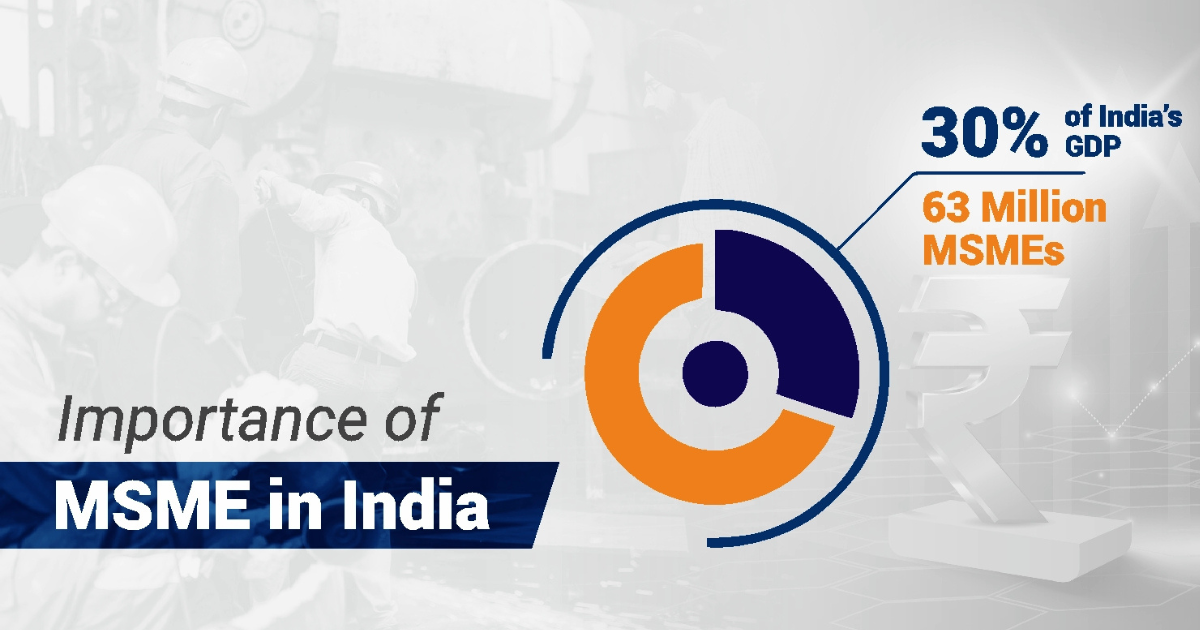
Micro, Small and Medium Enterprises (MSMEs) play a crucial role in strengthening rural and semi-urban economies in India. They act as engines of inclusive growth by generating employment, promoting entrepreneurship, supporting local industries, and reducing regional economic disparities. Due to their low capital requirement and labour-intensive nature, MSMEs are especially important for balanced s
Micro, Small and Medium Enterprises (MSMEs)
Ministry of Micro, Small and Medium Enterprises states that MSMEs form the backbone of India’s economy, especially in rural and semi-urban regions.
India’s MSME sector:
Covers more than 7.47 crore enterprises
Contributes around 31% to GDP
Operates across:
Manufacturing
Services
Trade activities
A large share of these enterprises functions in rural and semi-urban areas, supporting employment, entrepreneurship, and local economic development.
Role of MSMEs in Rural and Semi-Urban Economies
1. Labour-Intensive Employment Generation
MSMEs generate large-scale employment with:
Low capital investment
High labour absorption
Employment Contribution
The sector employs approximately:
32.8 crore people
making it:
Second-largest employment provider after agriculture
Importance
Particularly beneficial for:
Rural youth
Semi-skilled workers
Informal labour force
“MSMEs convert local skills into sustainable livelihoods.”
2. Check on Distress Migration
MSMEs create:
Local employment opportunities
Rural non-farm livelihoods
Areas of Activity
Agro-processing
Handicrafts
Rural services
Food processing
Impact
Reduces:
Rural-to-urban distress migration
Pressure on urban infrastructure
3. Women-led Entrepreneurship
Significant Trend
Rural India has a higher share of women-owned MSMEs:
Around 22.24%
compared to urban areas.
Importance
Promotes:
Financial independence
Social empowerment
Inclusive growth
Sectors with High Participation
Handloom
Food processing
Cottage industries
Self-help group enterprises
“Women-led MSMEs strengthen both economic growth and social transformation.”
4. Local Resource-Based Development
MSMEs utilize:
Local raw materials
Indigenous knowledge
Traditional skills
Significance
Encourages:
Decentralized production
Sustainable development
Preservation of cultural heritage
Examples
Handloom clusters
Bamboo industries
Khadi production
5. Integration into Formal Economy
Institutions like:
Khadi and Village Industries Commission
help integrate rural enterprises with:
Formal credit systems
Digital platforms
Organized supply chains
Export Contribution
MSMEs contribute around:
48.5% of India’s exports
Impact
Enhances:
Export competitiveness
Rural industrialization
Financial inclusion
Importance of MSMEs in Indian Economy
1. GDP Contribution
Around 31% contribution to GDP
2. Export Promotion
Significant contributor to merchandise exports
3. Balanced Regional Development
Reduces regional disparities
4. Entrepreneurship Promotion
Encourages innovation and self-employment
5. Support to Large Industries
MSMEs form supply chain backbone for larger industries
“MSMEs are the growth engines of inclusive and decentralized economic development.”
Government Initiatives for MSMEs
1. Digital MSME Ecosystem
The government has developed multiple digital platforms.
A. Udyam Portal
Udyam Registration Portal
Purpose
Online MSME registration
Simplified formalization
B. Government e-Marketplace (GeM)
Government e-Marketplace
Purpose
Enables MSMEs to sell products to government departments
C. TReDS
Trade Receivables Discounting System
Purpose
Invoice financing platform
Improves MSME liquidity
D. SAMADHAAN Portal
Purpose
Resolution of delayed payments to MSMEs
2. PM Vishwakarma Scheme
PM Vishwakarma Scheme
Objective
Supports traditional artisans through:
Skill development
Financial support
Market linkages
3. CGTMSE
Full Form
Credit Guarantee Fund Trust for Micro and Small Enterprises
Purpose
Provides:
Collateral-free loans to MSMEs
Significance
Improves:
Credit access
Financial inclusion
4. PMEGP
Full Form
Prime Minister’s Employment Generation Programme
Nature
Credit-linked subsidy scheme
Objective
Generate:
Self-employment opportunities
Rural enterprises
5. ASPIRE Scheme
Full Form
A Scheme for Promotion of Innovation, Rural Industries and Entrepreneurship
Aim
Promotes:
Rural entrepreneurship
Innovation-driven enterprises
6. SFURTI Scheme
Full Form
Scheme of Fund for Regeneration of Traditional Industries
Objective
Cluster-based development of traditional industries
Focus Areas
Khadi
Coir
Village industries
7. Revision in MSME Classification Criteria
Announced in:
Union Budget 2025–26
Objective
Expand MSME eligibility
Encourage scaling up of enterprises
Challenges Faced by MSMEs
1. Limited Access to Credit
Dependence on informal finance
2. Technological Gaps
Low adoption of advanced technologies
3. Market Competition
Pressure from large corporations and imports
4. Infrastructure Constraints
Poor logistics and power supply in rural areas
5. Delayed Payments
Working capital stress
6. Informal Nature of Enterprises
Lack of formal documentation and compliance capacity
“The resilience of MSMEs often depends on timely finance and market access.”
Way Forward
1. Strengthen Rural Industrial Clusters
Improve economies of scale
2. Enhance Digital Literacy
Promote e-commerce and digital payments
3. Expand Formal Credit Access
Simplified loan procedures
4. Promote Skill Development
Industry-oriented vocational training
5. Encourage Innovation and Technology Adoption
Automation
AI tools
Digital manufacturing
6. Improve Export Competitiveness
Branding
Quality certification
Global market integration
7. Strengthen Women Entrepreneurship
Dedicated financing and mentoring support
“Empowered MSMEs create resilient local economies and inclusive national growth.”
Conclusion
MSMEs are central to the economic transformation of rural and semi-urban India. By generating employment, promoting women entrepreneurship, utilizing local resources, and integrating rural enterprises into formal economic systems, MSMEs contribute significantly to inclusive and sustainable development. Continued policy support, digital integration, financial access, and infrastructure strengthening will be essential to unlock the full potential of the sector in achieving long-term economic resilience and balanced regional growth.