
TATP (Triacetone Triperoxide)
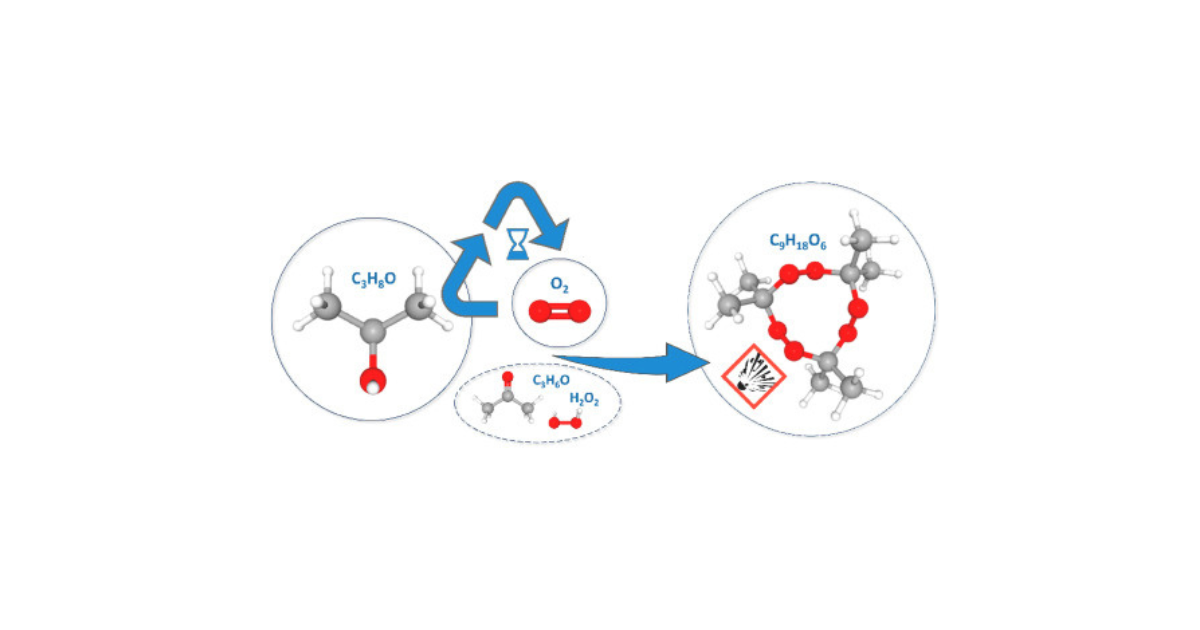
Triacetone Triperoxide (TATP) is a highly unstable and extremely sensitive organic peroxide explosive that has gained attention in security and counter-terror investigations due to its use in improvised explosive devices.
TATP (Triacetone Triperoxide)
Recent alerts by the National Investigation Agency highlighted the use of the rare explosive TATP in the 2025 Red Fort blast incident.
About TATP
Chemical Name
Triacetone Triperoxide
Chemical formula: C₉H₁₈O₆
Other Names
“Mother of Satan”
Acetone peroxide
Nature of TATP
TATP is an:
Organic peroxide explosive
Semi-stable crystalline solid
“TATP is extremely unstable and can detonate with minimal external trigger.”
Key Characteristics
1. Extreme Sensitivity
TATP is highly sensitive to:
Impact
Friction
Static electricity
Heat
2. High Risk Explosive
Even 1 gram can cause serious injury or damage
Unpredictable detonation behaviour
3. Low Detection Difficulty in Some Cases
Can be made from easily available chemicals
Often used in improvised explosive devices (IEDs)
Why TATP is Dangerous
1. Instability
Does not require a strong detonator
Can explode accidentally during handling
2. High Explosive Power
Produces rapid expansion of gases
Causes severe blast damage
3. Ease of Preparation (Illegal Context)
Can be synthesized from common chemicals (illegally used in terror networks)
Terrorism Linkages
TATP has been used in several major terrorist attacks, including:
Paris attacks (2015)
Brussels attacks (2016)
Manchester Arena bombing (2017)
Security Concerns
1. Counter-Terror Challenges
Difficult to detect in precursor form
Requires advanced intelligence tracking
2. Urban Vulnerability
Can be used in crowded public spaces
High casualty potential
3. Emergency Response Risks
Unstable nature complicates bomb disposal
Role of National Security Agencies
The National Investigation Agency and other agencies focus on:
Tracking terror networks
Monitoring chemical procurement
Preventing IED manufacturing
International Security Response
Global agencies emphasize:
Control of precursor chemicals
Strengthened airport and urban surveillance
Intelligence sharing
Prevention Measures
1. Chemical Regulation
Monitoring sale of precursor chemicals
2. Intelligence Coordination
Domestic and international cooperation
3. Public Security Systems
CCTV networks
AI-based surveillance
4. Bomb Disposal Units
Specialized explosive ordnance disposal (EOD) teams
Conclusion
TATP (Triacetone Triperoxide) is one of the most dangerous and unstable explosives known in modern security contexts. Its sensitivity and ease of misuse make it a preferred choice in certain terrorist incidents globally. The involvement of the National Investigation Agency in investigating its use reflects growing concerns over advanced improvised explosive threats and highlights the need for stronger chemical monitoring, intelligence coordination, and counter-terror preparedness.