
Growing vulnerability of Undersea Cables
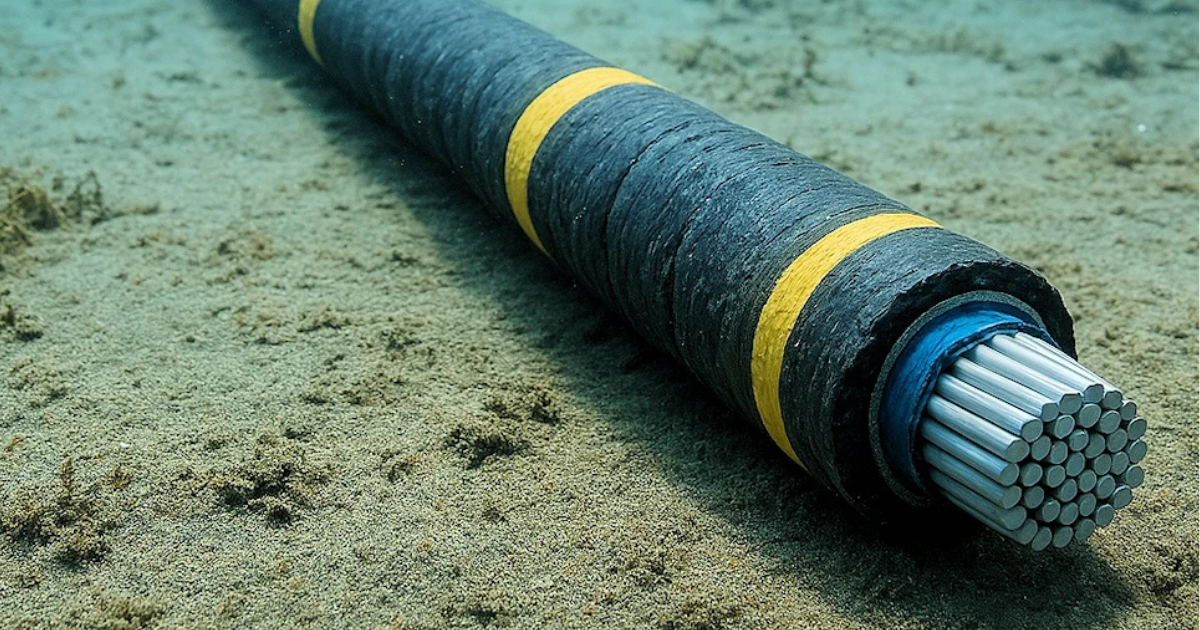
Recent discussions in Iranian state media regarding imposing charges on undersea cable operators in the Strait of Hormuz have highlighted the growing geopolitical and security vulnerabilities associated with global submarine cable networks. These cables form the backbone of the modern digital economy and are critical for international communication, finance, trade, and national security.
Undersea Cables and Global Digital Security
Recent discussions in Iran regarding imposing charges on undersea cable operators in the Strait of Hormuz have renewed global concerns over the security and vulnerability of submarine cable networks.
What are Undersea Cables?
Undersea or submarine cables are:
Fibre optic communication cables
Laid on the ocean floor
Used for transmitting global internet and communication data
These cables form the backbone of modern digital connectivity.
“Undersea cables are the invisible highways of the digital economy.”
Importance of Undersea Cables
Global Data Transmission
They carry:
Around 95% to 99% of international internet traffic
including:
Financial transactions
Video calls
Cloud computing
Military communications
UN Recognition
In 2010, the:
United Nations General Assembly
described submarine cables as:
“Critical communication infrastructure”
Advantages Over Satellites
Compared to satellites, subsea cables provide:
1. Higher Bandwidth
Can carry massive volumes of data
2. Lower Latency
Faster communication speed
3. Cost Efficiency
More economical for large-scale global data transfer
4. Greater Reliability
Stable and continuous connectivity
Digital Chokepoints
Certain narrow maritime regions where multiple cables converge are called:
“Digital Chokepoints”
Major Examples
Red Sea
Strait of Hormuz
Mediterranean routes
These are strategically sensitive areas.
“Control over digital chokepoints increasingly translates into geopolitical leverage.”
Threats to Undersea Cable Networks
1. State-Sponsored Intervention
The:
Islamic Revolutionary Guard Corps
reportedly proposed:
Licensing fees
Protection payments from global tech firms
such as:
Meta
Amazon
Microsoft
2. Gray-Zone Warfare
Undersea cables are increasingly targeted in:
Hybrid warfare
Strategic coercion
Non-conventional conflicts
3. Espionage and Surveillance
Threats include:
Wiretapping
Data interception
Intelligence gathering
4. Cyber Attacks
Possible attacks on:
Cable landing stations
Network management systems
Digital infrastructure
5. Physical Damage
Caused by:
Ship anchors
Fishing activities
Sabotage
Natural disasters
Strategic Importance of Undersea Cables
1. Global Internet Stability
Core infrastructure of digital economy
2. Financial Transactions
Enables global banking and stock markets
3. Military Communications
Supports secure defence coordination
4. Cloud and Data Services
Backbone of AI, cloud storage and digital platforms
Implications for India
1. Financial Sector Risks
India’s:
Banking systems
Digital payments
Stock exchanges
depend heavily on:
High-speed global connectivity
Impact of Disruptions
Financial paralysis
Delayed transactions
Market instability
2. IT and Outsourcing Sector
India is a global IT and BPM hub.
Dependence
India’s IT services industry relies on:
Continuous international data flow
Risks
Cable disruptions may affect:
Outsourcing operations
Cloud services
International clients
“Digital connectivity has become as important as physical trade routes.”
3. Strategic and National Security Risks
Undersea cables support:
Military communications
Intelligence sharing
Strategic coordination
Security Concerns
Vulnerability during conflicts
Espionage threats
4. Economic Risks
Disruptions can impact:
E-commerce
FinTech
Global trade
Digital governance
Global Geopolitical Dimension
1. Competition for Digital Infrastructure Control
Major powers increasingly view:
Data routes
Cable infrastructure
as strategic assets.
2. Maritime Security Concerns
Critical chokepoints overlap with:
Conflict-prone regions
3. Technological Sovereignty
Countries seek:
Secure digital infrastructure
Reduced external dependence
India’s Measures and Strategic Responses
1. Strengthening Maritime Security
Enhanced naval surveillance
Indo-Pacific partnerships
2. Diversification of Cable Routes
Reducing dependence on single chokepoints
3. Domestic Data Infrastructure
Expanding data centers
Strengthening digital sovereignty
4. International Cooperation
Working with:
Quad partners
Indo-Pacific nations
Global telecom companies
5. Cybersecurity Enhancement
Protection of landing stations
Secure network management systems
Challenges in Securing Undersea Cables
1. Vast Oceanic Coverage
Difficult to monitor continuously
2. Lack of International Regulation
Limited enforcement mechanisms
3. Rising Geopolitical Tensions
Maritime conflicts threaten cable routes
4. Technological Complexity
High repair and maintenance costs
Way Forward
1. Global Governance Framework
International rules for cable protection
2. Strategic Redundancy
Multiple cable pathways
3. Public–Private Collaboration
Governments and tech firms cooperation
4. Advanced Monitoring Systems
AI-based surveillance
Real-time detection systems
5. Secure Indo-Pacific Connectivity
Trusted digital infrastructure partnerships
“In the 21st century, control over information flows is as critical as control over sea lanes.”
Conclusion
Undersea cables are among the most critical yet vulnerable infrastructures of the modern digital world. As geopolitical tensions increasingly intersect with digital connectivity, threats to these networks have significant implications for global commerce, cybersecurity, and national security. For India, securing undersea cable infrastructure is essential for protecting its financial systems, IT industry, strategic communications, and broader digital economy in an increasingly interconnected world.