
Pollution From Space launch
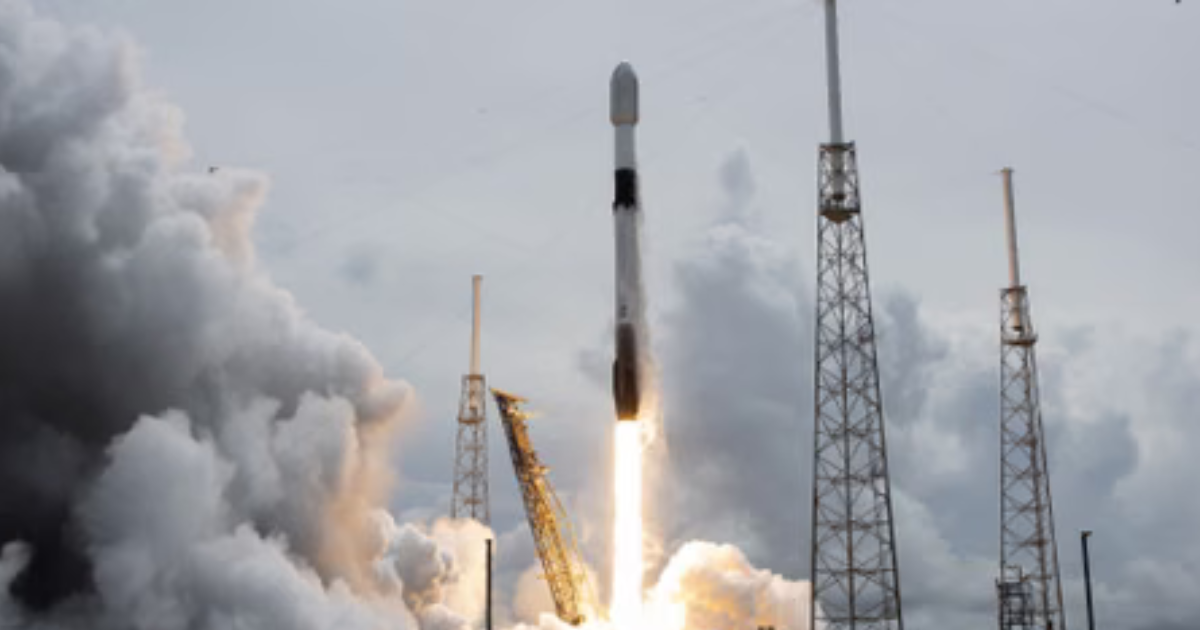
A recent scientific study has raised concerns about the environmental impact of the rapidly increasing number of satellite launches since 2019. The study found that rocket launches are contributing to significant black carbon or soot pollution in the upper atmosphere, creating potential long-term consequences for climate systems and atmospheric chemistry.
Pollution from Space Launches
A recent study has highlighted that the rapid increase in satellite launches since 2019 is contributing to significant black carbon (soot) pollution in the upper atmosphere, raising concerns about climate change and atmospheric health.
What is Black Carbon?
Black carbon is:
A component of fine particulate matter (PM2.5)
Produced through incomplete combustion
Sources of Black Carbon
It is formed from burning of:
Fossil fuels
Wood
Biomass
Waste materials
Characteristics
1. Strong Heat Absorption
Absorbs sunlight efficiently
Contributes to atmospheric warming
2. Fine Particulate Matter
Classified under PM2.5 pollutants
3. Short-Lived Climate Pollutant
Remains in atmosphere for shorter duration than CO₂
But has strong warming potential
“Black carbon is one of the most powerful short-lived climate pollutants.”
Space Launches and Soot Pollution
Growing Satellite Launches
Since 2019:
Satellite launches have increased sharply
Expansion linked to commercial space sector and mega-constellations
How Space Launches Produce Pollution
Rocket launches emit:
Black carbon (soot)
Alumina particles
Nitrogen oxides
Chlorine compounds
especially into:
Upper atmosphere and stratosphere
Impact on the Atmosphere
1. Reduction in Sunlight Reaching Earth
Soot particles:
Absorb and scatter sunlight
This may:
Reduce solar radiation reaching Earth’s surface
Geo-engineering Effect
This acts somewhat like:
Artificial atmospheric shading
though unintentionally.
2. Stronger Climate Impact
Upper-atmosphere soot:
Persists much longer than ground-level soot
Climate Impact
Study suggests:
Up to 500 times greater climate impact compared to earthbound soot sources
3. Ozone Layer Depletion
Rocket launches can release:
Chlorine compounds
which react with:
Ozone molecules
leading to:
Ozone degradation
“The upper atmosphere is highly sensitive to chemical disturbances.”
Why Upper Atmospheric Pollution is Serious
1. Longer Residence Time
Pollutants remain suspended for years
2. Direct Interaction with Climate Systems
Alters radiation balance
3. Limited Natural Cleansing Mechanisms
Less rainfall and atmospheric mixing
Environmental Concerns
1. Climate Change Acceleration
Increased atmospheric warming
2. Ozone Layer Damage
Increased ultraviolet radiation exposure
3. Disturbance in Atmospheric Chemistry
Potential long-term climatic uncertainties
4. Unregulated Space Pollution
Space industry regulation remains limited
Growing Space Economy and Sustainability Challenge
The rise of:
Commercial satellite networks
Space tourism
Private launch companies
has increased:
Frequency of launches
Need for Sustainable Space Activities
Experts emphasize:
Cleaner propulsion systems
Green rocket technologies
Global environmental standards
Global Space Activities
Major contributors include:
United States
China
Russia
Private space companies
Implications for India
India is rapidly expanding its space sector through:
Commercial launches
Satellite missions
Private participation
Importance for India
1. Sustainable Space Programme
Balancing growth with environmental responsibility
2. Green Propulsion Research
Cleaner fuels and reusable systems
3. International Cooperation
Participation in global space governance
Existing Environmental Focus in Space Sector
Agencies are increasingly discussing:
Sustainable launch technologies
Reusable rockets
Reduced-emission propulsion systems
Challenges in Regulation
1. Lack of Global Rules
No comprehensive treaty on atmospheric pollution from launches
2. Rapid Commercialization
Launch frequency increasing faster than regulation
3. Scientific Uncertainty
Long-term atmospheric effects still under study
Way Forward
1. Cleaner Rocket Fuels
Reduce soot and chlorine emissions
2. International Environmental Standards
Space sustainability frameworks
3. Monitoring Atmospheric Pollution
Improved climate and atmospheric studies
4. Sustainable Space Governance
Balance technological advancement with ecological protection
5. Reusable Launch Systems
Lower environmental footprint
“The future of space exploration must align with the principles of environmental sustainability.”
Conclusion
The rapid expansion of global space launches has introduced a new dimension of environmental concern through upper-atmosphere soot pollution and ozone degradation. Black carbon emissions from rockets have disproportionately large climatic impacts because of their persistence in the upper atmosphere. As countries and private companies accelerate space activities, sustainable and environmentally responsible space governance will become essential for protecting Earth’s atmosphere and long-term climate stability.