
Western Hoolock Gibbon
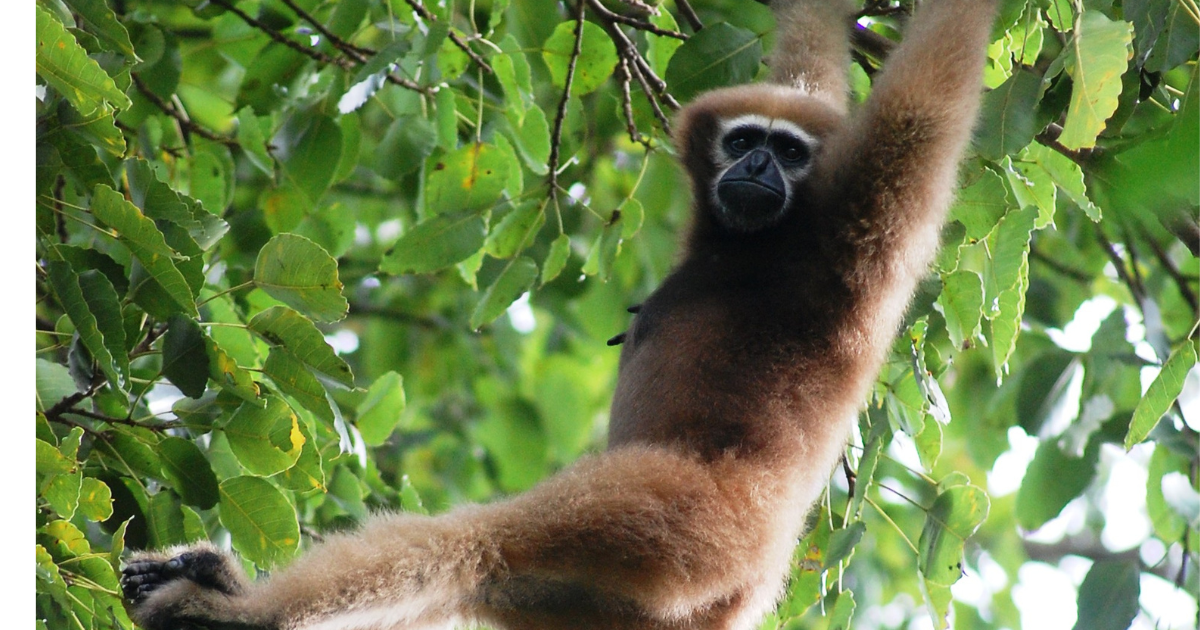
A canopy bridge has recently been constructed over a railway track in the Hollongapar Gibbon Sanctuary to ensure safe movement of the endangered Western Hoolock Gibbon. The initiative aims to reduce habitat fragmentation and prevent accidents caused by railway lines passing through forested areas.
Western Hoolock Gibbon
A canopy bridge has been constructed over a railway track in Hollongapar Gibbon Sanctuary to ensure safe movement of the endangered Western Hoolock Gibbon.
The initiative aims to reduce habitat fragmentation and prevent accidents caused by railway crossings.
About Western Hoolock Gibbon
Scientific Name
Hoolock hoolock
Unique Feature
Only Ape Native to India
The Western Hoolock Gibbon is:
India’s only ape species
A highly arboreal primate
“Gibbons are indicators of healthy forest ecosystems.”
Distribution
The species is found in:
India
Bangladesh
Myanmar
Distribution in India
Mainly distributed:
South of the Brahmaputra River
East of the Dibang River
across northeastern states.
Habitat
The species inhabits:
Tropical evergreen rainforests
Semi-evergreen forests
Tropical mixed deciduous forests
Subtropical broadleaf hill forests
Locomotion
Brachiation
The gibbon moves through trees using:
Swinging arm-to-arm movement
called:
Brachiation
This adaptation helps:
Fast movement through forest canopies
Characteristics
1. Arboreal Lifestyle
Spends most of its life on trees
2. Long Arms
Adapted for swinging movement
3. Social Behaviour
Lives in small family groups
4. Vocal Communication
Known for loud territorial calls
Conservation Status
IUCN Red List
Endangered
Wildlife Protection Act, 1972
Schedule I
Provides:
Highest degree of legal protection in India
Eastern Hoolock Gibbon
Another related species:
Eastern hoolock gibbon
Conservation status:
Vulnerable
Threats to Western Hoolock Gibbon
1. Habitat Fragmentation
Roads and railway lines divide forests
2. Deforestation
Logging and forest clearing reduce habitat
3. Hunting
Illegal hunting threatens populations
4. Mining and Quarrying
Disturbs forest ecosystems
5. Human Encroachment
Expansion of settlements and agriculture
“Habitat fragmentation is among the biggest threats to arboreal wildlife.”
Importance of Canopy Bridges
1. Safe Animal Movement
Allows gibbons to cross fragmented forests safely
2. Reduces Wildlife Mortality
Prevents accidents involving railways and roads
3. Maintains Ecological Connectivity
Supports movement for feeding and breeding
4. Conserves Arboreal Species
Especially important for tree-dwelling animals
Hollongapar Gibbon Sanctuary
Hollongapar Gibbon Sanctuary is:
A protected forest area in Assam
Known for conserving hoolock gibbons
Ecological Importance
The sanctuary supports:
Rich biodiversity
Primates and forest wildlife
Fragile rainforest ecosystems
Significance of Conservation
1. Biodiversity Protection
Conserves endemic and endangered species
2. Ecosystem Stability
Gibbons help in seed dispersal and forest regeneration
3. Indicator Species
Presence indicates healthy forest cover
Government and Conservation Measures
1. Protected Area Conservation
Wildlife sanctuaries and reserve forests
2. Wildlife Protection Laws
Legal safeguards under WPA, 1972
3. Habitat Connectivity Projects
Canopy bridges and corridor conservation
4. Community Participation
Awareness and local involvement in conservation
5. Scientific Monitoring
Population surveys and ecological studies
Challenges Ahead
1. Infrastructure Expansion
Railways and highways in forest areas
2. Climate Change
Alters forest ecosystems
3. Human-Wildlife Conflict
Increasing pressure on habitats
Way Forward
1. Expand Wildlife Corridors
Improve forest connectivity
2. Strengthen Habitat Protection
Prevent illegal logging and encroachment
3. Eco-sensitive Infrastructure
Wildlife-friendly transport projects
4. Long-term Monitoring
Scientific conservation planning
“Conservation of forests is essential for the survival of arboreal species like gibbons.”
Conclusion
The construction of a canopy bridge in Hollongapar Gibbon Sanctuary represents an important step in protecting the endangered Western Hoolock Gibbon. As habitat fragmentation and infrastructure development continue to threaten forest ecosystems, wildlife-friendly conservation measures and ecological connectivity will play a crucial role in ensuring the long-term survival of this unique primate species.