
Netherlands Returns 11th-Century Chola Copper Plates to India During Prime Minister’s State Visit
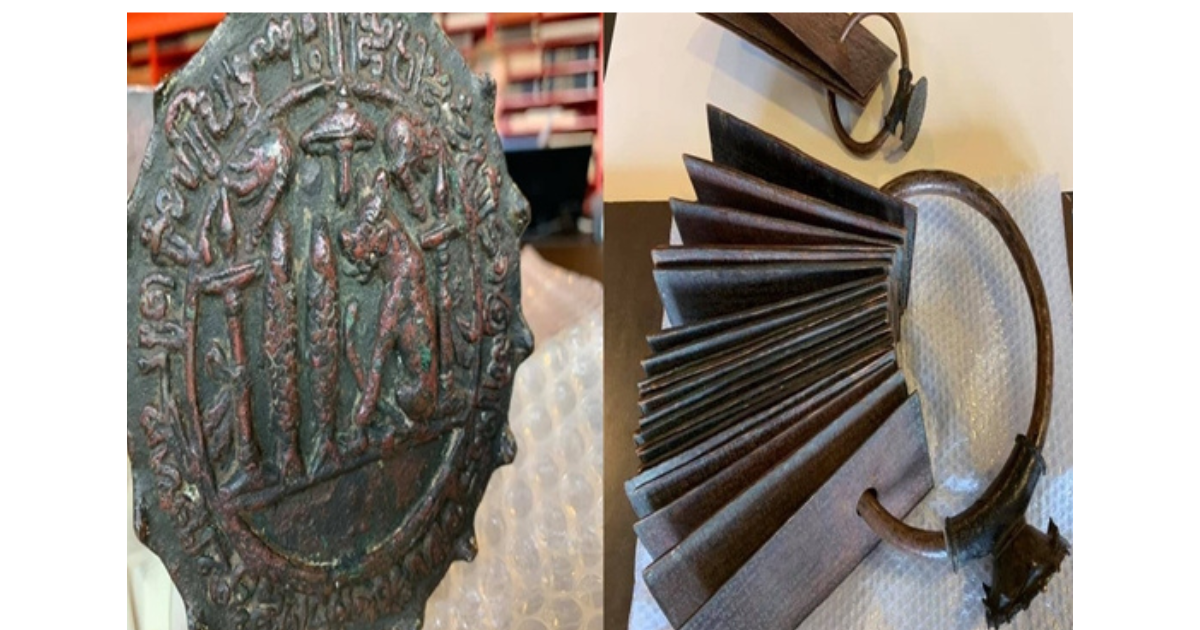
The famous Leiden Copper Plates, recently returned during high-level diplomatic engagement between India and Netherlands, are among the most important historical artefacts related to the Imperial Cholas. During the visit, both countries also elevated their ties to a Strategic Partnership, highlighting growing cooperation in cultural and diplomatic relations.
Leiden Copper Plates
The famous Leiden Copper Plates, preserved for centuries in the Leiden University, were recently returned to India during the Prime Minister’s visit to the Netherlands.
During the visit, both countries also elevated bilateral ties to a Strategic Partnership.
About Leiden Copper Plates
Overview
Collection of ancient copper plate inscriptions from the Chola period.
Popularly known as the “Leiden Copper Plates” because they were preserved in Leiden, Netherlands.
Composition of Plates
Two Sets of Plates
First Set
Contains seal of Rajendra Chola I
Second Set
Contains seal of Kulottunga Chola I
Structure
21 large copper plates
3 small copper plates
Fastened together with a bronze ring carrying royal seal
Language and Script
Languages Used
Tamil
Sanskrit
These inscriptions reflect:
Administrative sophistication
Multilingual governance traditions
How They Reached the Netherlands
Historical Background
Taken from Nagapattinam in 1712
Transported by Florentius Camper, a Dutch missionary
Associated Organization
Linked to the Dutch East India Company
“Inscriptions are the voices of history engraved in metal and stone.”
Historical Significance of Leiden Copper Plates
1. Administration
Provide details regarding:
Governance structure
Revenue administration
Royal authority
2. Taxation System
Explain:
Tax collection methods
Land revenue mechanisms
3. Land Grants
Record grants of villages and agricultural lands.
Example:
Grant of Anaimangalam village
4. Irrigation Systems
Reveal Chola expertise in:
Water management
Tank irrigation
Agricultural planning
5. Maritime Trade
Show active overseas trade links with:
Southeast Asia
Srivijaya Kingdom
6. Religious Harmony
The plates mention:
Donation to a Buddhist Vihara
built by:
Srivijaya rulers of Southeast Asia
This highlights:
Religious tolerance
Cultural exchange
India–Southeast Asia Connections
The inscriptions demonstrate:
Strong maritime diplomacy
Trade and cultural exchanges
Spread of Indian influence across Southeast Asia
About Copper Plate Inscriptions
Definition
Copper plate inscriptions were:
Official royal records engraved on copper sheets
Usually tied together using:
Copper or bronze rings carrying royal seals
Purpose of Copper Plate Inscriptions
Used for recording:
Land grants
Religious donations
Royal genealogy
Administrative orders
Tax exemptions
Earliest Known Copper Plate
Sogaura Copper Plate
Period
Mauryan Era
Features
Written in Prakrit language
Brahmi script
Significance
Mentioned famine relief measures
Distribution in India
Major concentration:
Southern India
Especially:
Tamil Nadu
Andhra region
Karnataka
Kerala
About Imperial Cholas (850–1279 AD)
The Cholas were among the greatest dynasties in Indian history.
Sangam Literature Reference
Known as:
Muvendhar
alongside:
Cheras
Pandyas
Major Rulers of Chola Dynasty
1. Vijayalaya Chola
Founder of Imperial Chola dynasty
2. Parantaka Chola I
Expanded Chola influence
Known as “Maduraikonda”
3. Rajaraja Chola I
Achievements
Conquered northern Sri Lanka
Expanded naval strength
Captured Maldives
4. Rajendra Chola I
Achievements
Defeated Srivijaya Kingdom
Expanded naval empire overseas
Founded Gangaikonda Cholapuram
“The Cholas transformed the Bay of Bengal into a Chola lake through naval power and trade.”
Administration under Cholas
Features
Highly organized bureaucracy
Efficient revenue system
Local self-government through village assemblies
Cultural Contributions
Tamil Literature
Period witnessed flourishing of:
Tamil devotional literature
Court poetry
Important Works
Kalingattupparani
Celebrated Chola military victories
Thevarams
Devotional hymns by Nayanars
Temple Architecture
The Cholas are famous for grand Dravidian architecture.
Major Temples
Brihadeeswarar Temple
Built by Rajaraja Chola I
UNESCO World Heritage Site
Airavatesvara Temple
Gangaikonda Cholapuram Temple
Metal Sculpture Tradition
Lost Wax Technique
Cholas mastered:
Bronze casting through lost-wax method
Panchaloha Alloy
Used mixture of five metals:
Copper
Silver
Gold
Tin
Lead
Importance of Chola Bronzes
Known for:
Graceful craftsmanship
Spiritual symbolism
Artistic excellence
Example:
Nataraja sculptures
Significance of Return of Leiden Plates
Cultural Repatriation
Restoration of India’s civilizational heritage
Historical Value
Important source for medieval Indian history
Diplomatic Importance
Strengthens India–Netherlands cultural cooperation
Conclusion
The Leiden Copper Plates are invaluable records of the political, economic, cultural, and maritime achievements of the Imperial Cholas. They highlight India’s rich inscriptional tradition, advanced administration, overseas trade relations, and religious harmony. Their return from the Netherlands to India symbolizes the growing global recognition of India’s historical and cultural heritage.