
Place In News: Indonesia
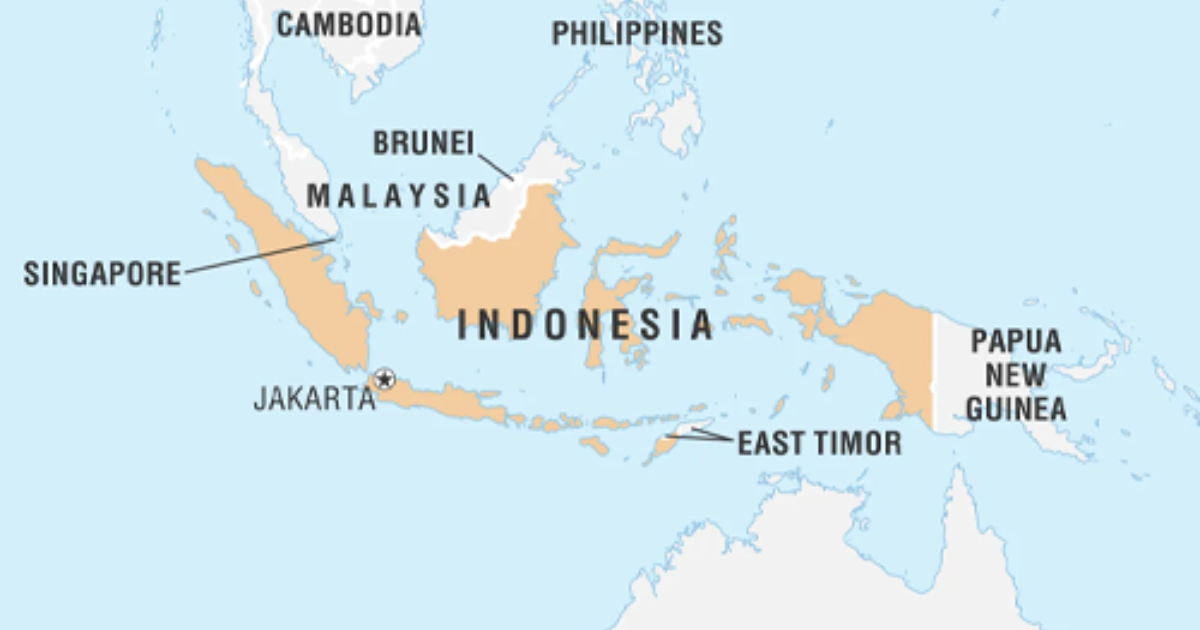
Indonesia, with its capital at Jakarta, recently witnessed the eruption of Dukono Volcano in North Maluku province. Indonesia is one of the most volcanically active regions in the world due to its unique tectonic location.
Indonesia
Indonesia recently witnessed the eruption of the Dukono volcano located in North Maluku province.
Indonesia is one of the world’s most geographically diverse and volcanically active countries.
Political Features
Capital
Jakarta
Location
Located:
Between the Indian Ocean and Pacific Ocean
Off mainland Southeast Asia
Its strategic position makes it important for:
Maritime trade
Indo-Pacific geopolitics
Global shipping routes
Major Islands of Indonesia
Indonesia is the world’s largest archipelagic country.
Important Islands
Sumatra
Java
Kalimantan
Sulawesi
Papua
Land Boundaries
Indonesia shares borders with:
Malaysia
Papua New Guinea
East Timor
Maritime Importance
Indonesia lies near:
Strait of Malacca
Sunda Strait
Lombok Strait
These are among the world’s most important maritime trade routes.
Global Role
Non-Aligned Movement (NAM)
Indonesia was a founding member of:
Non-Aligned Movement
along with:
India
Egypt
Yugoslavia
Ghana
“Indonesia’s geography makes it both a maritime bridge and a disaster hotspot.”
Geographical Features
Tectonic Setting
Indonesia lies at the convergence of:
Indo-Australian Plate
Eurasian Plate
Pacific Plate
This makes it:
Highly earthquake-prone
Volcanically active
Ring of Fire
Indonesia forms part of the:
Pacific Ring of Fire
The Ring of Fire is:
A zone of intense seismic and volcanic activity around the Pacific Ocean
Volcanism in Indonesia
Indonesia has:
More than 100 active volcanoes
among the highest in the world.
Important Volcanoes
1. Dukono Volcano
Located in North Maluku province
Known for frequent eruptions
2. Mount Merapi
One of the most active volcanoes in the world
Located on Java island
3. Krakatoa eruption
Significance
One of the deadliest volcanic eruptions in history
Triggered massive tsunamis in 1883
Climate
Indonesia experiences:
Tropical climate
due to:
Equatorial location
Climatic Features
Characteristics
High temperature
Heavy rainfall
High humidity
Biodiversity
Indonesia is among the world’s:
Mega-diverse countries
Rich in:
Tropical rainforests
Marine biodiversity
Endemic species
Economic Importance
Indonesia is important for:
Palm oil production
Coal exports
Nickel reserves
Maritime trade
Strategic Importance
1. Indo-Pacific Region
Critical actor in:
ASEAN
Maritime security
Regional trade
2. Energy and Minerals
Indonesia possesses:
Large nickel reserves
Coal resources
Natural gas deposits
Important for:
Electric vehicle batteries
Global supply chains
3. Maritime Connectivity
Sea lanes near Indonesia connect:
Indian Ocean
Pacific Ocean
making it strategically vital.
Natural Disaster Vulnerability
Indonesia frequently faces:
Earthquakes
Volcanic eruptions
Tsunamis
Floods
Causes of Disaster Vulnerability
1. Plate Tectonics
Frequent tectonic movements.
2. Active Volcanoes
Large number of volcanoes.
3. Coastal Exposure
Thousands of islands exposed to tsunamis.
India–Indonesia Relations
Relations between India and Indonesia are important due to:
Shared maritime interests
Indo-Pacific cooperation
Trade and cultural links
Key Areas of Cooperation
Defence
Naval cooperation
Maritime security
Trade
Palm oil
Coal
Pharmaceuticals
Connectivity
Cooperation in Andaman Sea region
Conclusion
Indonesia is a strategically significant archipelagic nation located between the Indian and Pacific Oceans. Its location along the Pacific Ring of Fire makes it highly vulnerable to earthquakes and volcanic eruptions, including recent activity at Dukono volcano. At the same time, Indonesia’s maritime position, natural resources, and regional influence make it a key player in the Indo-Pacific region and an important partner for India.