
Researchers Identify Factors Behind Sharp Decline in Antarctica’s Sea Ice Since 2015
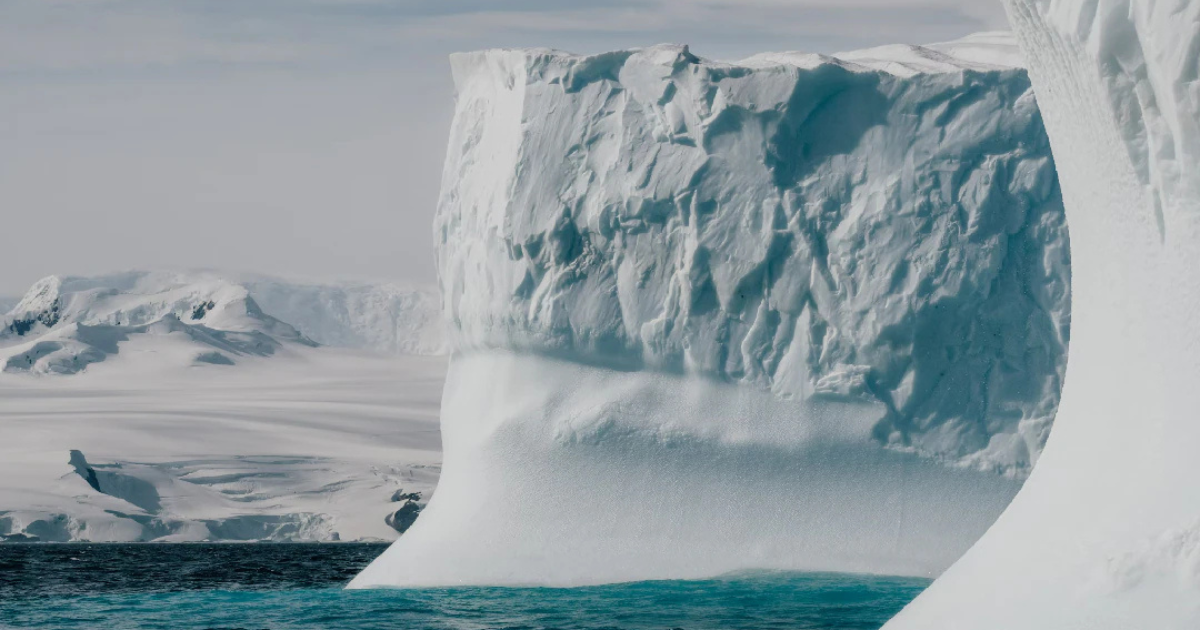
Recent research has revealed that Antarctica lost nearly 12,800 square kilometres of grounded ice between 1996 and 2025, with scientists identifying destabilisation of the Southern Ocean as a major reason behind the sharp decline in Antarctic sea ice observed since 2015. The findings highlight the growing vulnerability of Antarctica to climate change and its global environmental consequences.
Antarctica and Decline of Sea Ice
Researchers have identified the destabilisation of the Southern Ocean surrounding Antarctica as a major reason behind the sharp decline in Antarctic sea ice since 2015.
Between 1996 and 2025:
Antarctica lost nearly 12,800 sq km of grounded ice.
This decline is linked to:
Deep ocean heat
Stronger westerly winds
A self-reinforcing climate feedback loop
Causes Behind Antarctic Ice Decline
1. Deep Ocean Heat
Earlier:
The Southern Ocean had a layered structure.
Structure
Cold, fresh water remained at the surface
Warm, salty water stayed deep below
This layering acted like:
A thermal barrier preventing heat from reaching the surface.
What Changed?
By 2015:
The protective layering weakened.
As a result:
Warm deep ocean water started moving upward
More heat reached sea ice regions
leading to accelerated melting.
2. Powerful Westerly Winds
The Southern Hemisphere westerly winds became stronger due to:
Greenhouse gas emissions
Ozone hole over Antarctica
Impact of Winds
The winds acted like:
An oceanic pump
They pulled:
Warm, salty deep water upward toward the surface.
“Antarctica is no longer isolated from global warming; ocean processes are bringing hidden heat to the surface.”
3. Self-Reinforcing Feedback Loop
A dangerous feedback cycle emerged.
Step-by-Step Process
Step 1
Warm deep water rises upward.
Step 2
Heat melts sea ice.
Step 3
Salt released into surface waters increases density.
Step 4
Denser water mixes more easily with warmer waters below.
Step 5
Even more heat rises upward.
Step 6
Formation of new sea ice becomes difficult.
This creates:
Continuous warming and melting cycle
Why Antarctica is Important
1. Climate Regulator
Antarctica reflects large amounts of solar radiation back into space.
This helps:
Maintain Earth’s temperature balance
Albedo Effect
Ice surfaces have:
High reflectivity (albedo)
Loss of ice means:
More heat absorption by oceans
Faster global warming
2. Freshwater Reserve
Antarctica stores:
Nearly 70% of Earth’s freshwater
in the form of:
Massive ice sheets
3. Ocean Circulation
Antarctic Circumpolar Current (ACC)
The ACC is:
World’s strongest ocean current
It connects:
Pacific Ocean
Atlantic Ocean
Indian Ocean
Importance
Helps in:
Global heat distribution
Nutrient circulation
Climate regulation
4. Carbon and Heat Sink
The Southern Ocean absorbs:
Large amounts of atmospheric carbon dioxide
Excess heat generated by global warming
Thus acting as:
A natural climate buffer
5. Biodiversity Support
Antarctica supports unique ecosystems.
Important Species
Krill
Penguins
Seals
Whales
Importance of Krill
Krill form:
Foundation of Antarctic marine food chain
Decline in sea ice affects:
Krill breeding
Entire marine ecosystem
Consequences of Antarctic Ice Loss
1. Global Sea Level Rise
Melting grounded ice contributes to:
Rising sea levels
threatening:
Coastal cities
Island nations
2. Climate Instability
Changes in Antarctic systems can alter:
Ocean currents
Weather patterns
Rainfall distribution
3. Marine Ecosystem Disruption
Loss of sea ice harms:
Feeding and breeding habitats
4. Reduced Carbon Absorption
Warmer oceans absorb:
Less carbon dioxide
which can accelerate climate change.
5. Extreme Weather Events
Changes in polar systems influence:
Heatwaves
Storm intensity
Droughts
globally.
Role of Greenhouse Gases
Increasing greenhouse gases:
Trap more heat in atmosphere
Warm oceans
Intensify Antarctic melting
Ozone Hole Connection
The Antarctic ozone hole affects:
Atmospheric circulation
Wind strength
which indirectly impacts:
Ocean mixing and sea ice stability
Global Efforts for Antarctic Protection
Antarctic Treaty System
Antarctic Treaty System promotes:
Peaceful scientific research
Environmental protection
Climate Agreements
Global climate actions under:
Paris Agreement
aim to:
Limit global warming
Reduce emissions
Scientific Monitoring
Continuous observation through:
Satellites
Ocean sensors
Climate models
is essential for understanding Antarctic changes.
“What happens in Antarctica does not stay in Antarctica; it shapes the future of the entire planet.”
Conclusion
The rapid decline in Antarctic sea ice since 2015 reflects the growing impact of climate change and ocean destabilisation. Deep ocean heat, stronger westerly winds, and reinforcing feedback loops are accelerating ice loss in Antarctica. Since Antarctica plays a vital role in regulating climate, storing freshwater, sustaining biodiversity, and driving global ocean circulation, its destabilisation poses serious environmental, economic, and geopolitical risks for the entire world.