
Jaggery
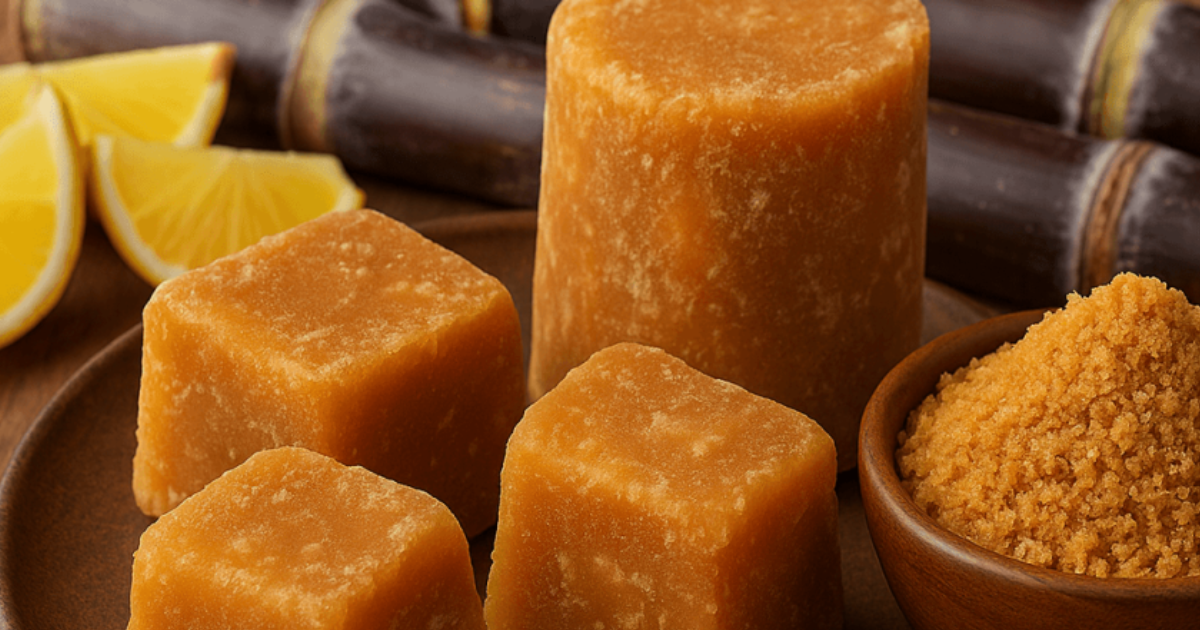
Jaggery, popularly known as “gur” in India, is an important traditional sweetener and nutritional product. India accounts for more than 70 percent of global jaggery production, making it the world’s largest producer and consumer of jaggery.
Jaggery
Jaggery is one of the oldest natural sweeteners used in India and is increasingly recognized globally as a nutrient-rich alternative to refined sugar.
India accounts for:
More than 70% of global jaggery production
making it:
The world’s largest producer of jaggery.
About Jaggery
Definition
Jaggery is:
A traditional unrefined sweetener
prepared by:
Concentrating sugarcane juice
Without chemical refining
Raw Materials
Jaggery is mainly prepared from:
Sugarcane juice
Palm sap (in some regions)
Why Jaggery is Considered Healthier
Unlike refined sugar:
Jaggery retains natural minerals and micronutrients
because:
It undergoes minimal processing
“Jaggery is not just a sweetener; it is a storehouse of traditional nutrition.”
Nutritional Components of Jaggery
Important Minerals Present
Calcium
Magnesium
Potassium
Phosphorus
Sodium
Iron
Zinc
Copper
Manganese
Health Benefits of Jaggery
1. Sustains Energy
Provides:
Slow-release carbohydrates
which helps:
Maintain energy levels for longer periods
2. Helps in Treating Anaemia
Rich iron content supports:
Hemoglobin production
Useful especially for:
Iron deficiency conditions
3. Strengthens Immunity
Minerals and antioxidants help:
Improve immune response
4. Supports Digestion
Traditionally consumed after meals because it:
Stimulates digestive enzymes
Helps bowel movement
5. Beneficial for Respiratory Health
Traditionally used in:
Cough remedies
Throat infections
Lung-related discomfort
especially during winter.
6. Detoxification
Helps:
Cleanse respiratory tract and lungs
7. Maintains Electrolyte Balance
Potassium content supports:
Fluid balance
Muscle function
Production of Jaggery in India
India dominates global jaggery production.
Leading Producing States
1. Uttar Pradesh
Around 48.5% of total production
2. Maharashtra
Around 24.1%
3. Karnataka
Around 10.5%
Importance of Jaggery Sector
1. Rural Employment
Provides livelihood to:
Farmers
Small-scale processors
Rural workers
2. Agro-Based Industry
Supports:
Sugarcane economy
Village industries
3. Traditional Food Heritage
Deeply connected with:
Indian food culture
Ayurveda
Traditional medicine systems
4. Export Potential
Growing international demand for:
Organic sweeteners
Natural food products
Types of Jaggery
Based on Source
Sugarcane jaggery
Palm jaggery
Date palm jaggery
Based on Form
Solid jaggery
Powder jaggery
Liquid jaggery
Challenges in Jaggery Production
1. Lack of Modern Processing
Many units use:
Traditional techniques
Low-efficiency equipment
2. Quality Standardization Issues
Variation in:
Color
Purity
Packaging
3. Competition from Refined Sugar
Refined sugar often remains:
Cheaper
More commercially available
4. Storage Problems
Jaggery is:
Moisture sensitive
Vulnerable to spoilage
Measures Needed
1. Value Addition
Branding
Packaging
Organic certification
2. Technological Upgradation
Hygienic processing
Modern production units
3. Export Promotion
Promote GI-tagged and organic jaggery
4. Farmer Support
Better market access
Cooperative processing units
Jaggery in Traditional Indian Practices
Used widely in:
Festivals
Ayurveda
Traditional sweets
Rural diets
Often associated with:
Warmth and nutrition
“Traditional foods like jaggery combine nutrition, sustainability, and cultural heritage.”
Conclusion
Jaggery is an important traditional sweetener with nutritional, economic, and cultural significance. As the world’s largest producer, India plays a central role in the global jaggery economy. With increasing awareness regarding healthy and natural foods, jaggery offers strong potential for rural development, value-added agriculture, and sustainable food systems.