
Solar wind Magnetosphere Ionosphere Link Explorer (SMILE) Mission
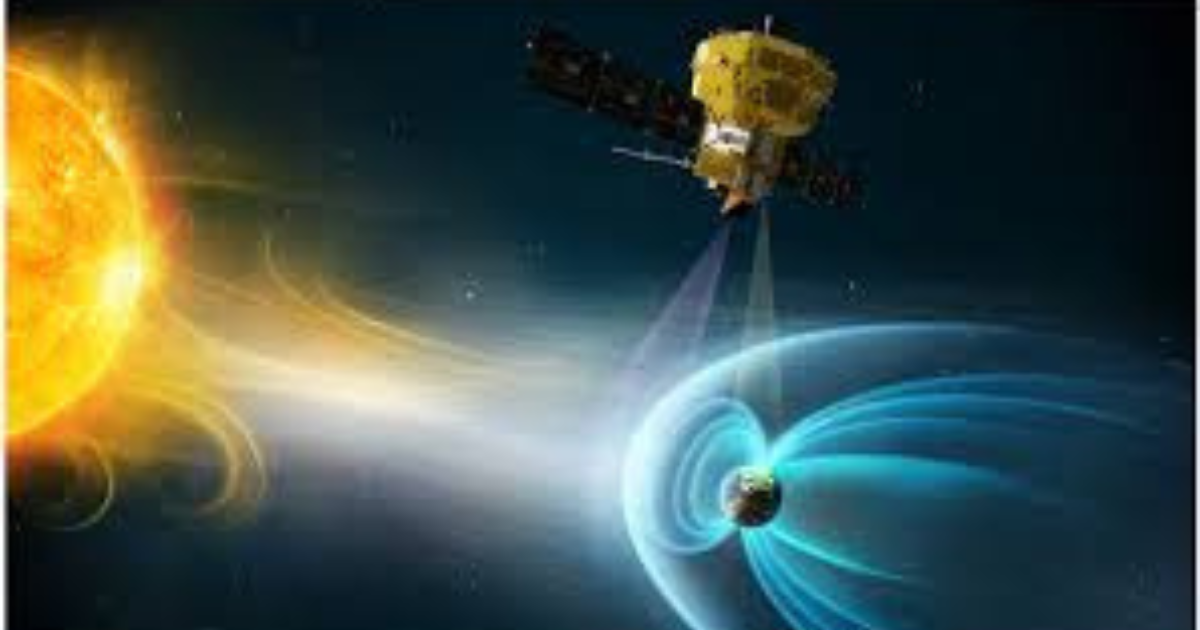
The Solar wind Magnetosphere Ionosphere Link Explorer (SMILE) mission was successfully launched aboard the Vega-C rocket from Europe’s Spaceport in French Guiana. The mission marks a major advancement in the study of space weather and Earth’s magnetic environment.
Solar wind Magnetosphere Ionosphere Link Explorer (SMILE) Mission
The SMILE Mission was successfully launched aboard the:
Vega-C rocket
from:
Europe’s Spaceport in French Guiana.
About SMILE Mission
Full Form
SMILE stands for:
Solar wind Magnetosphere Ionosphere Link Explorer
Joint Mission
It is a collaborative mission between:
European Space Agency
Chinese Academy of Sciences
Objective of SMILE Mission
The mission aims to:
Capture the first panoramic imaging of interaction between:
Solar wind
Earth’s magnetosphere
It will help scientists understand:
Space weather
Geomagnetic storms
Auroras
Magnetic disturbances around Earth
What is Solar Wind?
Solar wind is:
A continuous stream of charged particles released from the Sun
These particles interact with:
Earth’s magnetic field (magnetosphere)
causing:
Auroras
Magnetic storms
Satellite disruptions
What is Magnetosphere?
The magnetosphere is:
The protective magnetic shield surrounding Earth
Function:
Deflects harmful charged particles from the Sun
Protects Earth’s atmosphere and communication systems
Key Instruments on SMILE
1. Light Ion Analyser
Measures:
Properties of solar wind ions
2. Magnetometer
Measures:
Magnetic field variations around Earth
3. Soft X-ray Imager (SXI)
Captures:
Images of magnetosphere boundaries
4. Ultraviolet Aurora Imager
Observes:
Auroras in Earth’s upper atmosphere
Key Technological Innovations
1. World’s First Space-Borne Soft X-ray Imager
The mission includes:
First-ever space-based Soft X-ray Imager (SXI)
Significance
It allows scientists to:
Visualize previously invisible boundaries of Earth’s magnetosphere
2. Integrated Observation System
SMILE can:
Simultaneously capture global images
Directly measure solar wind conditions
This improves understanding of:
Sun-Earth interactions
Importance of SMILE Mission
1. Understanding Space Weather
Helps predict:
Geomagnetic storms
Solar radiation events
which can affect:
Satellites
GPS systems
Power grids
Communication networks
2. Protection of Space Infrastructure
Important for:
Satellite safety
Astronaut missions
Aviation systems
3. Scientific Advancement
Provides new insights into:
Plasma physics
Magnetospheric dynamics
Solar-terrestrial interactions
About Geomagnetic Storms
Geomagnetic storms occur when:
Solar wind strongly disturbs Earth’s magnetic field
Effects include:
Auroras
Radio communication disruption
Navigation failures
Damage to electrical systems
Conclusion
SMILE Mission marks a major advancement in space science by enabling detailed observation of interactions between the Sun and Earth’s magnetic environment. The mission will significantly improve global understanding of space weather and help protect critical technological infrastructure.