
Unmanned Aerial Vehicle (UAV) Ecosystem: Building Sovereign Capability
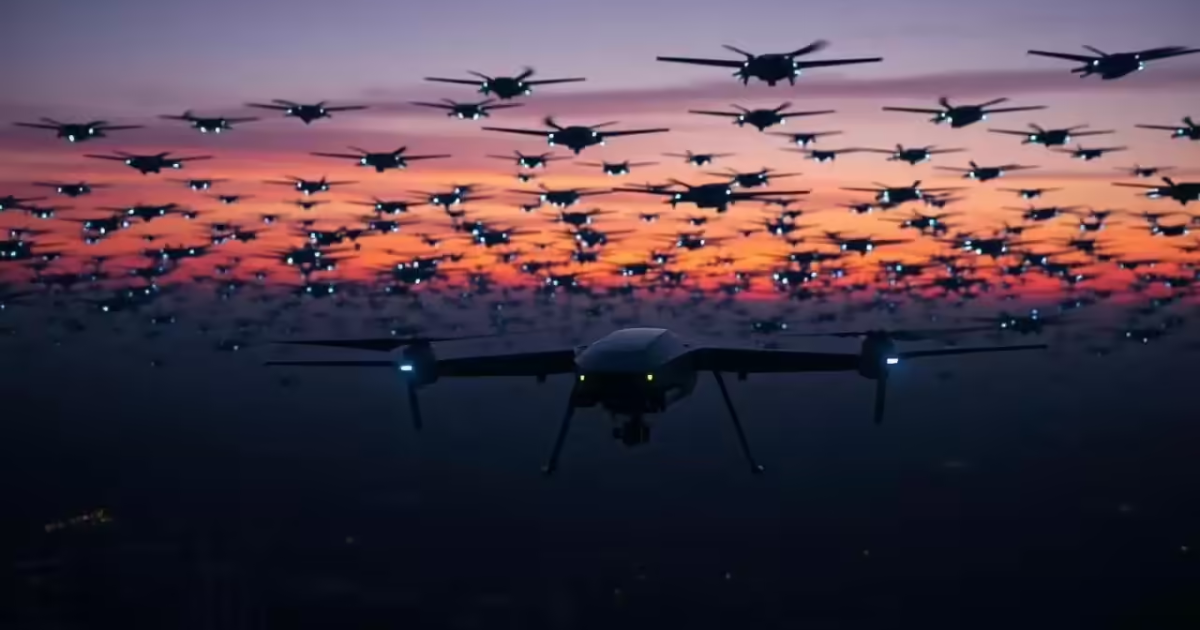
India is witnessing a major transformation in the field of unmanned aerial vehicles (UAVs), moving from dependence on imported drones to developing indigenous sovereign drone technologies. This shift reflects India’s broader objective of achieving technological self-reliance and strengthening national security under the vision of Atmanirbhar Bharat.
India’s Transition Towards Sovereign UAV Capability
India is undergoing a major transformation from:
Being a buyer of foreign Unmanned Aerial Vehicles (UAVs)
Developing indigenous sovereign drone technologies.
Recently, the Government approved a:
₹32,350 crore programme
to procure:
87 Medium Altitude Long Endurance (MALE) drones
for:
Army
Navy
Air Force
About MALE Drones
MALE stands for:
Medium Altitude Long Endurance
These drones can:
Operate for long durations
Fly at medium altitudes
Conduct:
Surveillance
Reconnaissance
Precision strikes
Communication support
Need for Sovereign UAV Capability
1. Drones Becoming Core Infrastructure
UAVs are no longer merely tactical tools; they are becoming:
Core military and strategic infrastructure.
Example:
Iran recently used UAVs for:
Intelligence, Surveillance and Reconnaissance (ISR)
Air-strike operations
during conflict with:
Israel.
2. Strategic Autonomy
India seeks:
Self-reliance in:
UAV electronics
Sensors
Mission systems
Secure software
Supply chains
This supports:
Atmanirbhar Bharat.
3. Military Capability Enhancement
Recent security challenges involving:
Pakistan
China
highlight the importance of:
Real-time sensing
Precision strike capability
Tactical flexibility
Persistent surveillance
4. Tactical and Logistics Support
UAVs are vital for:
High-altitude posts
Island territories
Border regions
Last-mile logistics
Theatre-level mobility
Requirements for Building Sovereign UAV Capability
1. Certification Systems
Need:
Standardised military UAV certification
to ensure:
Safety
Reliability
Airworthiness
2. Testing Infrastructure
India requires:
Common testing facilities
Simulation infrastructure
for:
Startups
Defence agencies
Industry players
3. Procurement Reforms
Focus should shift toward:
Reliability
Indigenous capability
Performance-based procurement
4. Trusted Indigenous Technology
Need for:
Secure domestic software
Indigenous chips
Trusted electronics
Cyber-secure systems
5. Resilient Supply Chains
India must build:
Domestic manufacturing ecosystems
involving:
MSMEs
Startups
Defence PSUs
for critical UAV components.
Types of UAVs/Drones in India
1. ISR Drones
(Intelligence, Surveillance and Reconnaissance)
Used for:
Monitoring
Intelligence gathering
Border surveillance
Examples:
TAPAS-BH-201
Rustom
Heron
2. Loitering Munitions
These drones:
Hover over target areas
Strike after target identification
Examples:
Nagastra
Warmate
3. Armed/Combat Drones (UCAVs)
UCAV = Unmanned Combat Aerial Vehicle
Capabilities:
Missile strikes
Bomb delivery
Precision attack
Examples:
Ghatak
Heron TP
4. Swarm Drones
Multiple drones:
Operate collectively
Overwhelm enemy defences
Share information autonomously
Developed by:
Defence Research and Development Organisation (DRDO)
and private firms.
Significance for India
Defence Modernisation
Strengthens:
Multi-domain warfare capability
Reduced Import Dependence
Decreases reliance on:
Foreign defence suppliers
Economic Growth
Boosts:
Defence manufacturing
Startups
Innovation ecosystem
Export Potential
India can emerge as:
A global drone manufacturing hub.
Challenges
Dependence on imported electronics
Limited engine technology
Cybersecurity risks
Airspace regulation issues
Need for skilled workforce
Conclusion
India’s push toward sovereign UAV capability reflects a strategic shift toward self-reliance, advanced military modernisation, and technological autonomy. Developing indigenous drones, secure supply chains, and testing infrastructure will strengthen India’s defence preparedness and global competitiveness in emerging warfare technologies.