
Hop Experiment
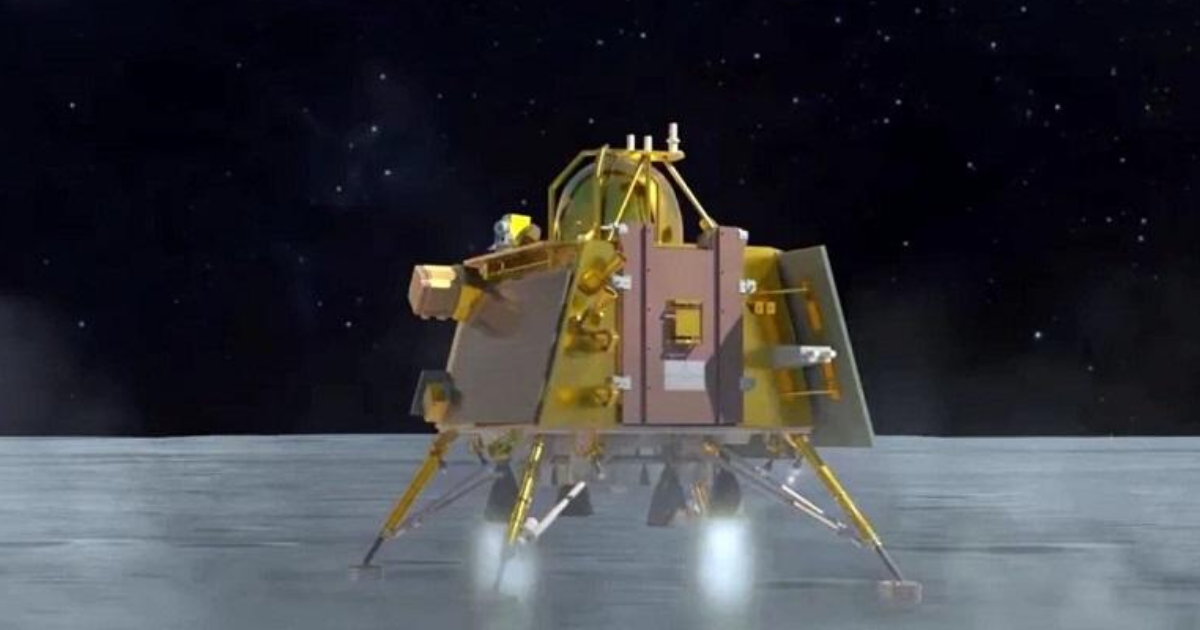
Scientists have revealed important new insights about the Moon’s surface at the Shiv Shakti landing site using data collected during the Hop Experiment conducted by Indian Space Research Organisation under the Chandrayaan-3 mission.
Hop Experiment of Chandrayaan-3
Scientists have revealed important findings about the Moon’s upper surface near the:
Shiv Shakti landing site
using data collected during the:
“Hop Experiment”
conducted as part of:
Chandrayaan-3.
About the Hop Experiment
“The experiment was carried out toward the end of the Vikram lander’s planned mission life.”
During the experiment:
The engines of the:
Vikram Lander
were reignited after landing on the Moon.
The thrust:
Lifted the lander briefly off the lunar surface
before it safely landed again nearby.
Significance of the Hop Experiment
1. Demonstrated Engine Restart Capability
The experiment proved that:
India can restart engines on the lunar surface.
This is a critical technology for:
Future lunar missions
Sample-return missions
Human space exploration
2. Precision Lunar Mobility
The lander successfully:
Performed controlled lift-off
Relocated safely
showing:
Precise guidance and control capability.
Key Scientific Findings
1. Layered Lunar Surface Structure
Scientists found that:
The Moon’s surface contains:
Distinct layered “cake-like” strata
These layers formed over long periods due to:
Continuous micrometeorite impacts.
“The lunar regolith preserves evidence of long-term surface evolution.”
2. Soil Variability
The experiment revealed:
Lunar soil becomes:
Denser
More cohesive
just a few centimetres below the surface.
Importance
This information is valuable for:
Future landings
Rover mobility
Habitat construction
Lunar mining activities
3. Twilight Thermal Changes
The:
Chandra’s Surface Thermophysical Experiment
recorded:
Rapid temperature drops during lunar twilight.
Why Does This Happen?
The Moon:
Has virtually no atmosphere.
Without atmospheric insulation:
Heat escapes rapidly after sunset.
This causes:
Extreme temperature variation between lunar day and night.
Importance of These Findings
Future Lunar Missions
Helps in:
Designing landers
Building habitats
Planning astronaut safety systems
Sample Return Missions
Engine restart capability is essential for:
Returning lunar samples to Earth.
Understanding Lunar Geology
Provides insights into:
Surface evolution
Impact history
Soil mechanics
Strengthening India’s Space Capability
Demonstrates:
Advanced landing and propulsion technologies by:
Indian Space Research Organisation (ISRO)
About Shiv Shakti Point
Shiv Shakti Point is:
The landing site of:
Chandrayaan-3
near the:
Lunar south polar region.
It was officially named by:
Narendra Modi.
Conclusion
“The Hop Experiment marks a major technological and scientific achievement for India’s lunar programme.”
It not only demonstrated critical lunar engine restart capability but also provided valuable new insights into the Moon’s surface structure, soil behaviour, and thermal characteristics, strengthening India’s future ambitions in lunar exploration and sample-return missions.