
Venus Orbiter Mission (VOM)
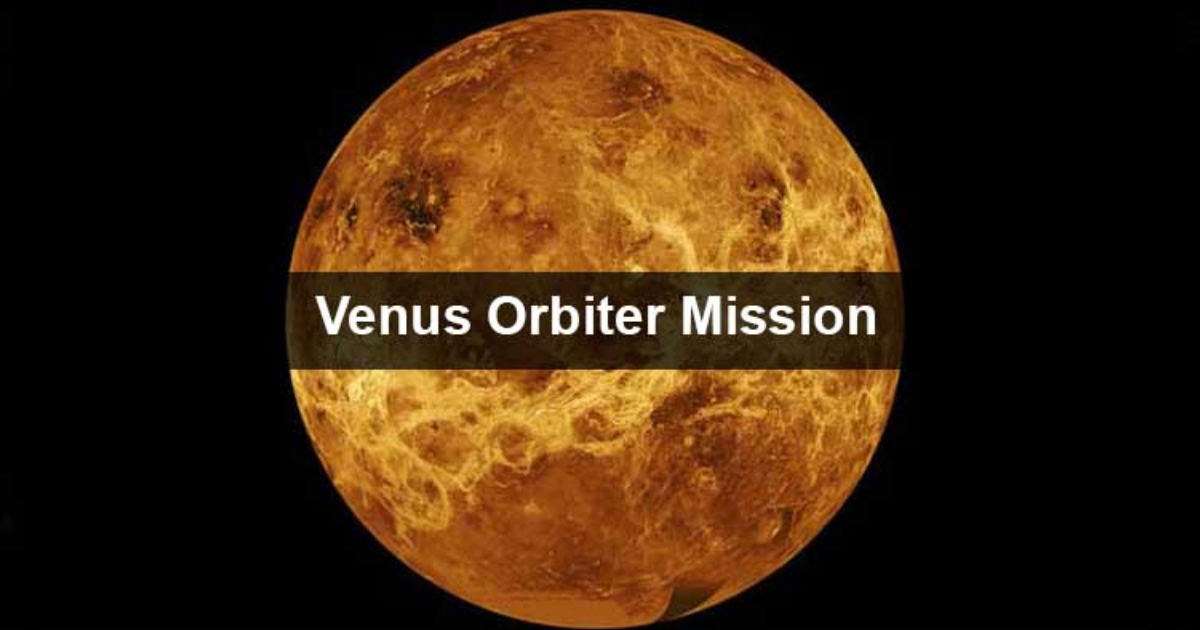
India’s proposed Venus Orbiter Mission (VOM), also known as Shukrayaan, is an upcoming planetary exploration mission in which Sweden has joined India as a collaboration partner.
Venus Orbiter Mission (VOM) / Shukrayaan
Sweden has joined India’s proposed Venus exploration mission:
“Shukrayaan” (Venus Orbiter Mission)
About Venus Orbiter Mission (VOM)
The Venus Orbiter Mission is:
“India’s first dedicated scientific mission to explore the planet Venus.”
It was approved in:
2024
Objective of the Mission
The mission aims to study:
Surface of Venus
Subsurface characteristics
Atmospheric dynamics
Solar influence on Venusian atmosphere
Why Venus is Important?
Venus is often called:
Earth’s “twin planet”
because:
Similar size and mass to Earth
But extremely different climate conditions today
“Venus likely formed under conditions similar to Earth but evolved into a runaway greenhouse world.”
Mission Timeline
Planned launch: March 2028
Approved: 2024
Launch Vehicle
The mission will use:
LVM3
It will place the spacecraft into:
Elliptical Parking Orbit (EPO)
Role of ISRO
The Indian Space Research Organisation (ISRO) will be responsible for:
Designing spacecraft
Mission development
Launch operations
International Collaboration
Sweden’s participation strengthens:
Scientific cooperation
Instrument development
Planetary research capacity
Scientific Significance
1. Understanding Planetary Evolution
Helps explain:
Why Venus became extremely hot
Differences between Earth and Venus evolution
2. Climate Change Insights
Venus is a natural laboratory for:
Runaway greenhouse effect
Atmospheric transformation
3. Atmospheric Science
Studies:
Cloud layers
Chemical composition
Solar wind interaction
Strategic Importance for India
Space Leadership
Strengthens India’s role in:
Interplanetary exploration
Technology Development
Improves:
Deep space communication
Navigation systems
Space instrumentation
Global Collaboration
Enhances partnerships with:
European countries
Space agencies and research institutions
Conclusion
“The Venus Orbiter Mission marks a major step in India’s planetary exploration programme, aiming to decode Venus’s extreme climate and atmospheric evolution.”
With international cooperation and advanced launch capabilities like LVM3, India is expanding its footprint in deep space science and interplanetary missions.